

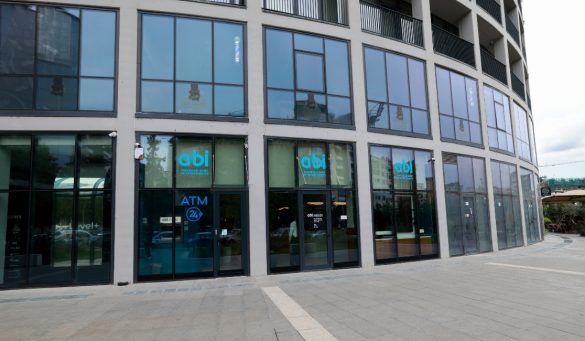
By John Manning, International Banker
Having celebrated 10 remarkable years in operation in 2025, American Bank of Investments (ABI Bank) has never been in fitter shape than it is today. With a commanding track record in recent years of consistently strong profitability, market-leading customer service and unrivalled expertise across key sectors, ABI has emerged as one of Albania’s most dynamic corporate-lending institutions. And by leveraging recently formed strategic partnerships to facilitate even more growth and exciting opportunities in the coming years, the future has never looked brighter for this ambitious mid-sized commercial bank.
Those 10 years of history have been crucial in enabling ABI to command such an enviable market position today. Early in its evolution, the bank defined a clear strategy, deciding to serve only specific markets, rather than trying to be everything to everyone and spreading itself too thin. This was partly out of necessity. Having started small and subsequently acquired and restructured two complex banks with high nonperforming loan (NPL) ratios, building the bank’s foundation and strengthening its underwriting standards to sufficiently robust levels took some time.
Since those crucial objectives were achieved, however, the bank’s leadership has sought to position ABI as a highly focused, entrepreneurial institution with particular strengths and expertise in corporate lending. By cultivating strong, enduring relationships with clients across key Albanian business sectors, including tourism, real-estate development and infrastructure—sectors in which gaining a deep understanding of the client is as important as how the financing is structured—ABI has carved out a distinctly advantageous niche as the only corporate-lending-focused boutique bank in the local market.
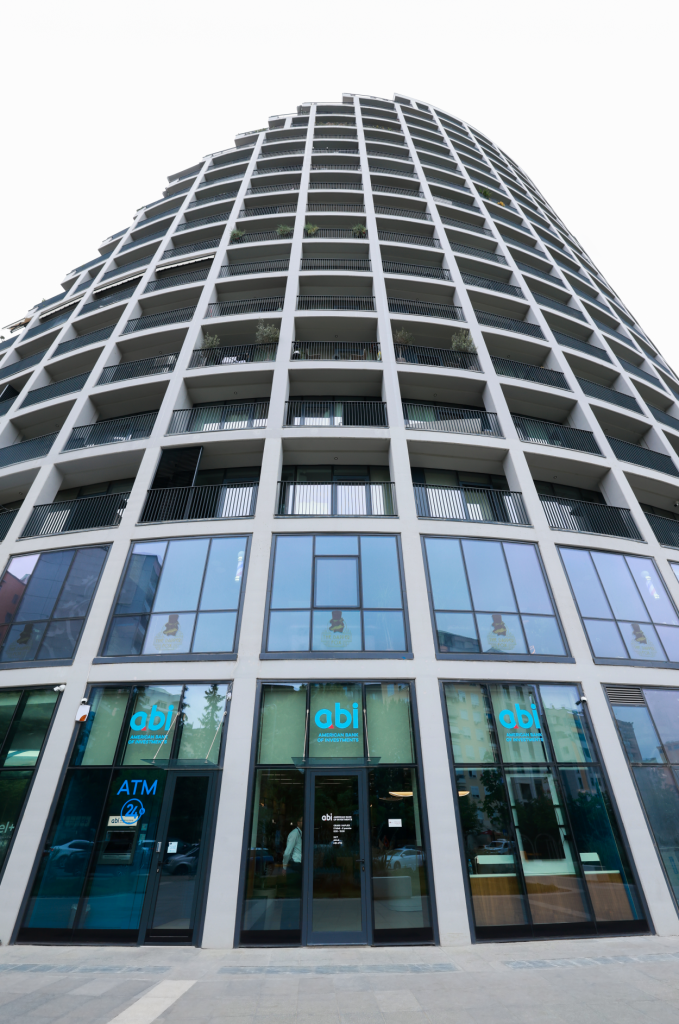
Operating with the boutique mindset of being close to the client, being fast and being accountable has proven highly effective in enabling ABI to provide tailored solutions to corporate clients.
Operating with the boutique mindset of being close to the client, being fast and being accountable has proven highly effective in enabling ABI to provide tailored solutions to corporate clients that serve both their immediate needs and their long-term goals. But it is perhaps its unwavering focus on being a responsible institution for both its clients and its ownership—largely by maintaining a disciplined internal culture at all times—that most visibly differentiates ABI in the local market.
Achieving this unique market position can also be credited to ABI’s laser focus on two key areas: human capital and execution discipline. Investing early in building teams with reputable, highly skilled senior employees has reaped significant rewards, while a direct performance-evaluation model has been established whereby all personnel—from senior leaders to junior staff—are assessed with clear metrics tied to tangible business contributions. Positive performance is then rewarded through a profit-sharing mechanism, ensuring that those who drive results participate directly in the bank’s annual success and aligning personal motivation with institutional performance.
The bank also credits its investments in systems and governance controls as crucial for facilitating growth without losing control. Again, the emphasis on combining agility and discipline has allowed ABI to rapidly grow its loan portfolio and profitability whilst keeping a firm lid on NPLs.
Last year’s success further underscores ABI’s growth ambitions, with the landmark integration of Albania’s second-largest SME and micro-lending company, NOA, a distinct milestone in the bank’s timeline.
Last year’s success further underscores ABI’s growth ambitions, with the landmark integration of Albania’s second-largest SME (small and medium-sized enterprise) and micro-lending company, NOA, a distinct milestone in the bank’s timeline. According to ABI, this consolidation is a pivotal move to extend its reach into micro, small and entrepreneurial businesses—a segment that is dynamic, resilient and closely linked to employment and local development and, as such, is central to Albania’s economy.
By leveraging ABI’s financial strength, governance, product breadth and operating infrastructure and combining them with the agility, proximity and specialised know-how that this segment requires, the NOA integration will do much to position ABI as a more complete financial institution. It will also allow the bank to tap into microbusinesses—a brand-new client segment for the bank—that will enable greater diversification of its lending portfolio. Given the potential to become the bank of choice for many small businesses on their journeys toward growth and maturity, the NOA collaboration presents an exciting opportunity with strong commercial upside for ABI.
As the bank acknowledges, however, this particular business requires a specific operating model. Beyond providing raw capital, serving micro and small businesses requires speed, local knowledge, practical solutions and the ability to understand clients’ realities, which are often very different from those of larger corporates. As such, the key challenge for ABI over the coming years will be to ensure not only that it can scale responsibly, but crucially that it can do so without losing responsiveness.
And given the bank’s historic forte in developing close, responsible relationships with business clients, it can further differentiate itself in the micro, small and entrepreneurial business segment by combining this expertise with genuine institutional strength. Indeed, the ABI and NOA combination is expected to have the largest branch network in Albania, thereby creating a real game-changer for the market.
And, of course, there’s the crucial technological aspect of banking, which, in ABI’s case, is only further cementing its position as a customer-focused lender on the cutting edge of modern banking innovation. Digital channels introduced in recent times include multi-signature workflows and open-banking capabilities, which, from the customer’s perspective, are making digital banking more practical, more secure and more aligned with real financial behaviour.
Multi-signature workflows are particularly important for business clients because they allow digital banking to reflect the internal approval processes companies actually use, making this channel extremely relevant for SME and corporate clients. Open banking, meanwhile, moves banking toward a more connected, flexible model, whereby customers benefit from enhanced integrations across platforms and services within a secure, regulated framework.
With the future of banking likely to belong to institutions that can seamlessly combine simplicity, security and connectivity, multi-signature workflows and open banking are essential in helping ABI deliver the latest optimised customer experiences. Customers increasingly expect their banks not only to hold their accounts, but also to fit naturally into their broader financial lives.
Recognising this new paradigm, ABI is working diligently on the innovation front to build digital infrastructure that keeps the bank relevant, useful and easy to work with over time. From this perspective, its modernisation strategy has been foundational in ensuring its future competitiveness.
To explore the impact of digitalisation on ABI’s future strategy and much more, we are joined by its chief executive, Mr. Andi Ballta.
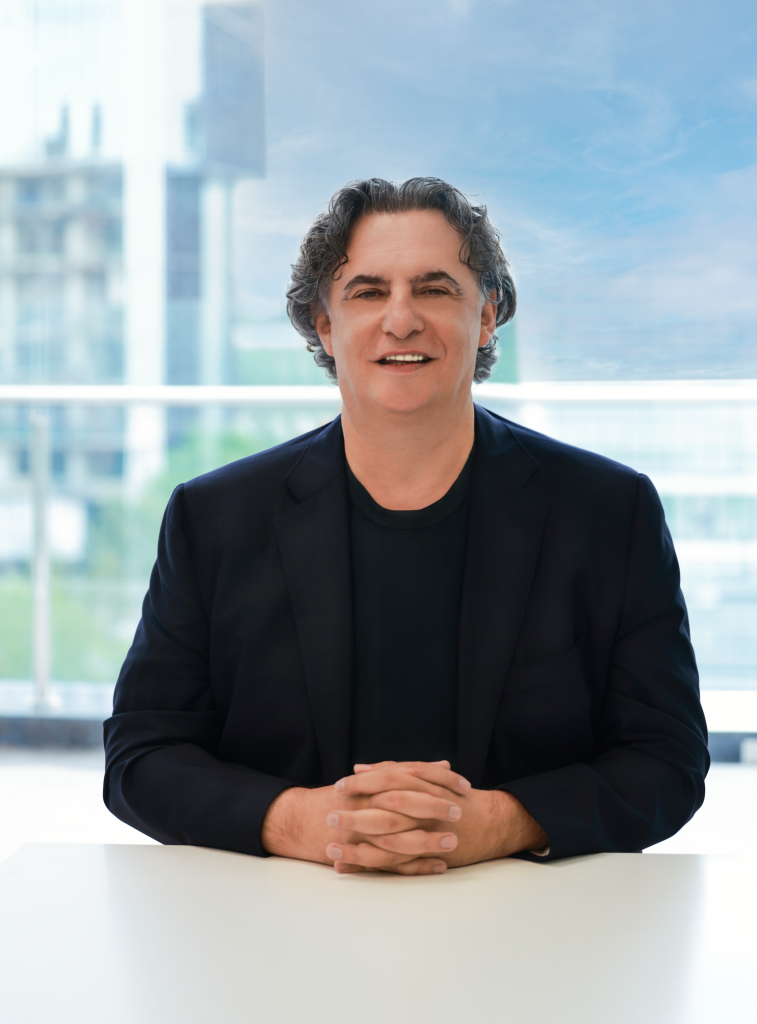
ABI has invested in expanding both its physical presence and digital capabilities. In a market in which digital adoption is accelerating rapidly, how should the balance between branch banking and digital banking evolve correctly?
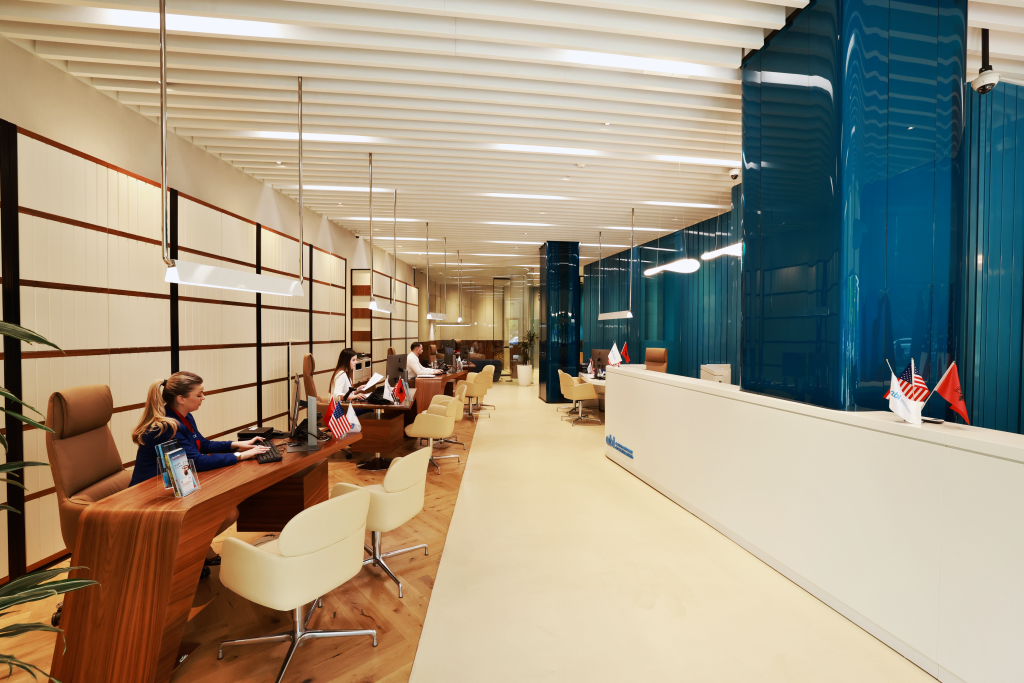
We do not see a choice between branch banking and digital banking, but rather a quest for how the two will reinforce each other. Our investment in expanding the branch network, together with NOA, was very deliberate. Reaching 63 branches and becoming one of the largest networks in the country has allowed us to be physically close to our clients, whether they are individuals, SMEs, large corporates or public institutions. In a market like Albania, that proximity and trust still matter a great deal, particularly for more complex financial needs.
At the same time, we fully recognise that digital adoption is accelerating. Clients increasingly expect speed, convenience and 24/7 access, and we have invested accordingly to meet those expectations.
The way we see the balance evolving is not by replacing branches, but by redefining their roles. Branches will increasingly focus on advisory, relationship management and more sophisticated services, while everyday transactions will continue to migrate toward digital channels.
An important element for us is ensuring that this transition happens in line with the realities of the Albanian market. Digitalisation should enhance the client experience, but not come at the expense of client understanding. Maintaining a strong level of client knowledge and personal interaction remains critical, especially in lending.
In that sense, our objective is to build an integrated model where digital channels provide efficiency and accessibility, and the branch network provides depth, trust and expertise.
You mentioned “large corporates”, a client segment in which ABI has established a particularly strong position. In an increasingly competitive environment, what do you see as the key factors that differentiate your bank’s service for corporate clients?
What differentiates ABI in the corporate segment is not simply our willingness to lend, but how we approach lending. We have built our position by developing a deep understanding of our clients and the sectors in which they operate. In a market like Albania, local knowledge is a real competitive advantage. It allows us to assess risk more accurately, structure transactions more effectively and move with a level of speed and confidence that is difficult to replicate without that proximity to the market.
This is particularly evident in our role in more complex transactions and, increasingly, in leading or actively structuring banking syndicates. Over the past two years, we have seen a clear shift toward banks with strong local expertise taking a more central role in financing larger and more sophisticated projects. We believe this trend will continue, as it addresses a gap that cannot be filled by relying solely on external perspectives.
At the same time, our client-centric approach remains fundamental. We operate with a boutique mindset by being accessible, responsive and solution-oriented. For corporate clients, this means not only financing, but also communication, flexibility and a genuine understanding of their long-term objectives.
Where do you see the greatest opportunities for further growth in this particular area of the business?
In terms of growth opportunities, we see three main areas. First, continuing to deepen our presence in sectors where we already have strong expertise, such as tourism and infrastructure, where the financing needs remain significant and increasingly sophisticated.
Second, expanding our role in structured and syndicated transactions, particularly for projects of national importance, where local leadership can add real value.
And third, leveraging our broader platform, including the integration with NOA, to build a more comprehensive offering that allows us to accompany clients across different stages of growth.
ABI has also played a role in developing Albania’s corporate-bond market and has built a strong lending presence in tourism, which you just touched on. How do these two areas reflect the bank’s broader approach to financing growth, innovation and long-term sustainability in Albania?
Both our involvement in the corporate-bond market and our strong presence in tourism financing reflect a consistent philosophy: supporting sectors and instruments that contribute to sustainable, long-term economic development in Albania.
Tourism is a good example. We see it not simply as a high-growth sector, but also as a catalyst for broader economic diversification. The strong cash flows generated by tourism are already enabling entrepreneurs in this sector to expand into areas such as energy, manufacturing, agriculture and infrastructure. In that sense, financing tourism is not supporting just one sector but the development of an interconnected economic ecosystem. Given that Albania is still at an early stage of its tourism cycle, we believe this remains one of the most compelling long-term opportunities in the country.
At the same time, our role in the development of the corporate-bond market reflects our commitment to deepening the financial architecture that supports that growth. As yields on government securities decline, it becomes increasingly important to create viable alternatives for both issuers and investors. Corporate bonds can play a key role in channelling capital toward leading domestic companies and strategic projects, while also encouraging greater discipline, transparency and market maturity.
For us, these are not isolated initiatives. They are part of a broader approach: combining traditional lending with capital-market development and aligning both with sectors that have strong long-term fundamentals.
Backing sectors with “strong long-term fundamentals” is crucial to building sustained strength for ABI. You are also recognised as an institution that invests in people and in the wider community. How does attracting and retaining top talent on the one hand and supporting cultural and social initiatives on the other hand build that strong institution?
I see these as two expressions of the same belief: that a strong institution is built both from within and in relation to the society around it. Internally, attracting and retaining talent starts with culture. People want to work in an environment where merit matters, learning is continuous, leadership is clear, and they can see a meaningful future for themselves. Compensation is important, but so are development, recognition and the sense of being part of something credible and ambitious. We want ABI to be not only a successful bank, but also a place where talented people can build long-term careers with purpose.
Externally, I believe responsible banking includes a broader contribution to community life. Financial institutions are part of the social fabric, and that means supporting areas that strengthen cohesion, optimism and national development, including culture, education and social initiatives. For us, this is not separate from performance; it is part of the institution’s identity. A bank should create financial value, but it should also be a place people are proud to work for and an institution that communities are proud to be associated with.
I presume longevity also matters, especially given that ABI recently marked its 10th anniversary. Looking back on that journey, what are the most important lessons the bank has learned?
One of the most important lessons is that growth in banking is only meaningful if it is sustainable. In the early years, particularly during the restructuring of the acquired banks, we learned that cleaning balance sheets and building strong risk foundations are not something you compromise on. They may slow you down in the short term, but they are what ultimately allow you to grow with confidence.
A second lesson is the value of focus. There is always a temptation in banking to expand into multiple segments and chase growth. Our experience has been that staying close to what you understand well—i.e., your clients and your competitive edge—creates far more value over time than diversification without depth.
Another key learning has been around people and culture. Strategy can be defined relatively quickly, but culture is built over time and tested in difficult moments. The periods of restructuring, as well as the following phases of growth, reinforced for us that an aligned, accountable and client-focused team is ultimately what sustains performance.
How has your own leadership evolved along the way, Mr. Ballta?
From a leadership perspective, my own evolution has followed a similar path. In the early stages, leadership was often more hands-on and operational, focusing on solving immediate challenges and stabilising the institution. Over time, the role shifted. It became more about setting direction, building the right teams and maintaining an overall view of the organisation without losing sight of the small, incremental improvements needed every day.
As ABI reaches about 900 staff, I am also emphasising the importance of allowing time in decision-making for myself and my senior team. While responsiveness is important, some of the most critical decisions benefit from reflection, thorough discussion and debate.
As ABI enters its next phase of development, what is the single most important strategic objective that you would like the institution to achieve over the next 18 months, and why does that priority matter so much?
Over the past decade, we have built strong momentum, but we are also aware that success can sometimes create its own pressure to grow faster each year and to continuously outperform prior years’ results. That is not, in our view, a sustainable mindset in banking.
Economic cycles are a natural part of every mature market. While Albania has benefitted from a relatively stable and positive cycle over the past decade, we operate with the understanding that this will not always be the case. Preparing the institution for a more normalised cycle is therefore critical.
This translates into two key priorities. First, maintaining discipline in how we grow by being more selective, with a sharper focus on risk mitigation, portfolio quality and capital, as well as liquidity efficiency, even if that means moderating the pace of expansion.
Second, and equally important, is the execution of integration. Consolidating ABI and NOA, particularly at the branch, systems and operating-processes levels, is essential to unlocking the full value of the platform we are building. This is not only about efficiency, but also about creating a more seamless client experience and a unified culture across the organisation.
We wish you all the best in your attempts to achieve those priorities, Mr. Ballta. Thank you for your time with us today.
