


Housing prices in the European Union have risen by almost 70% since 2015, while rents have increased by 25%, significantly outpacing income growth, according to data from the European Statistical Office, Eurostat.
The largest cost increases were recorded in Portugal, followed by the Netherlands.
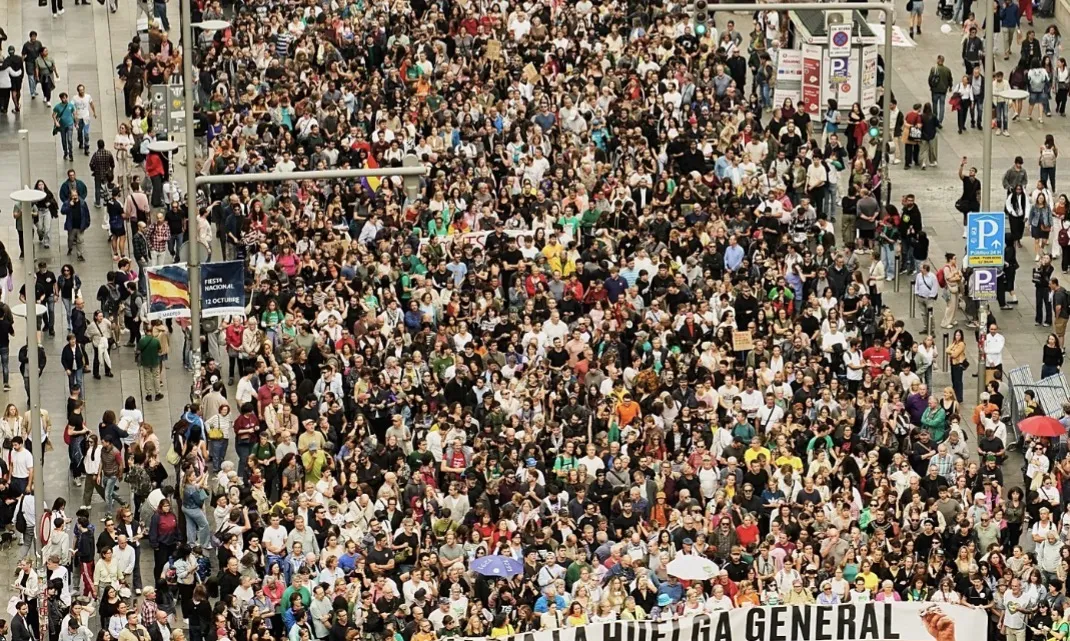
The rising cost of housing has sparked a wave of protests across Europe. Housing rights organizations and trade unions from France, the United Kingdom, Belgium, Spain, Italy, Portugal, and Greece have called for three days of coordinated protests, starting Friday, November 20.
Protesters are demanding that governments guarantee the right to housing and lower the costs of housing, food, and energy.
Governments across Europe have introduced various measures, from capping rent prices and stricter rules for short-term rentals to plans for building more affordable housing. These interventions aim to ease the burden on renters and buyers, who are facing rising prices and a housing shortage.
Here are the measures being taken in eight European countries to tackle this crisis.
Spain
The eviction of 87-year-old Maricarmen Abascal, who had lived there her entire life, in September sparked strong reactions across the country. The incident prompted Parliament to pass new laws limiting evictions and speculation in the real estate market.
However, lawmakers rejected the proposal for the automatic renewal of lease agreements, one of the protesters’ main demands. Meanwhile, the conservative People’s Party, which leads in the polls, has pledged to repeal these measures if it comes to power after the November 29 general election.
The left-wing government had already approved a law in 2023 that provided for increasing the number of social housing units and imposing rent controls in regions where the housing crisis was most acute.
However, so far these measures have been implemented only sporadically.
Barcelona, one of the most visited cities in Europe, has pledged to increase the number of apartments available on the market by not renewing around 10,000 licenses for short-term tourist rentals through Airbnb and other platforms.
Portugal
The center-right government, led by Prime Minister Luís Montenegro, has focused on fiscal measures to encourage owners to put their houses and apartments on the rental market.
It has also increased taxes on property purchases by non-residents.
However, in September, lawmakers approved a rental market reform that makes it easier and faster to evict tenants who do not pay rent. This decision sparked a wave of protests.
The Netherlands
The government of one of the most densely populated countries in Europe imposed rent price caps on a large portion of privately owned housing.
But many landlords preferred to sell their properties rather than rent them out, reducing the number of homes available for rent. Meanwhile, rents for properties not subject to the caps continued to rise.
Earlier this year, the government announced new measures to accelerate housing construction, ensuring that two-thirds of new homes are kept at affordable levels for buyers and renters.
France
Since 2023, the centrist government has promised a “supply shock” through measures aimed at boosting the construction of new housing and increasing the number of properties put on the rental market, including easing environmental regulations.
A bill currently being debated in Parliament provides for easing the rules that require owners to improve poorly insulated homes before renting them out.
The far right is calling for the complete removal of these obligations.
The draft law also aims to simplify procedures for building housing and provides greater tax relief for private landlords.
Germany
The shortage of affordable rental housing in Germany has brought housing cooperatives back into focus, associations owned by their members that offer an alternative to both renting and buying property.
Residents buy shares in the cooperative, which owns and manages the housing, while paying fees for the apartments they live in. This model helps keep costs low and protects tenants from speculation in the real estate market.
Currently, cooperatives manage about 10% of the rental housing in Germany.
Since 2010, in areas where the housing market is most strained, rents for new leases have been capped. This has helped curb prices but has also led to a decline in the construction of new housing.
The left-wing party Die Linke made the Berlin housing crisis one of the main campaign issues during the last local elections, promising to expropriate tens of thousands of apartments owned by large real estate companies. An initiative that the federal government is trying to block.
The United Kingdom
The Labour government aims to increase supply by building 300,000 social housing units, while also offering financial support to first-time homebuyers.
It has also banned no-cause evictions from housing and has limited rent increases to just once a year.
However, high interest rates, along with the tax and regulatory burden, continue to limit the construction of new homes needed to alleviate their chronic shortage.
Italy
Protests have prompted Prime Minister Giorgia Meloni’s government to cut taxes on rental income, a measure aimed at encouraging more landlords to put their houses and apartments on the market.
The government plans to make available around 100,000 additional homes over the next 10 years, by renovating existing social housing or building new ones, while simultaneously simplifying administrative and regulatory procedures.
Greece
Authorities have focused on curbing the growth of short-term rentals in one of Europe’s most important tourist destinations, especially in Athens and Thessaloniki.
The government has also limited its so-called “golden visa” program for foreigners who buy property in the country. Critics argue that this program has taken many homes off the market, making it more difficult for Greek citizens to find a home.
The subsidies allow first-time buyers to obtain mortgages with lower interest rates. Public funds are also offered to owners who commit to renting out the properties long-term after renovating them. /Adapted from Euronews, ekofin.al
