


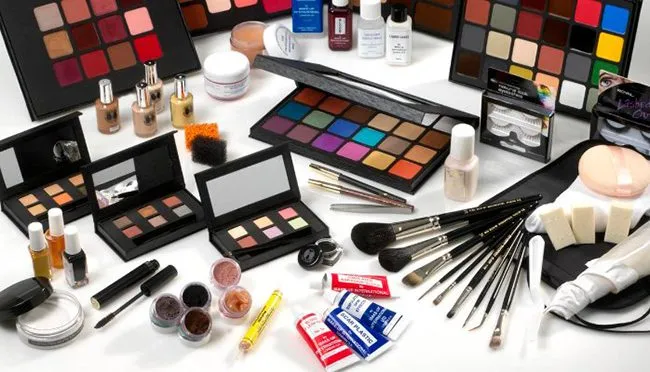
The cosmetics market in Albania is expected to be subject to stricter rules on safety, composition, labeling, and marketing of products, while businesses operating in this sector will face new requirements for documentation, transparency, and quality control.
The changes are provided for in the draft law “On Certain Additions and Amendments to Law No. 26/2017, ‘On Cosmetic Products’,” which has been published for public consultation.
According to the explanatory memorandum, the changes are not intended to replace the existing system for regulating cosmetic products, but to supplement it with clearer provisions, in accordance with European Regulation No. 1223/2009.
One of the most significant interventions concerns the composition of cosmetic products and the use of substances that may pose a risk to health.
The draft law provides for the prohibition of using substances classified as carcinogenic, mutagenic, or toxic for reproduction, known as CMR substances, of categories 1A and 1B.
However, the draft provides for limited exceptions, only in cases where several conditions are simultaneously met, including the absence of suitable alternatives, use for specific product categories, and a scientific assessment confirming the safety of the substance under the specified exposure conditions.
Products that are permitted to contain such substances must also comply with specific labeling requirements to inform consumers about potential risks and instructions for use.
Meanwhile, the government will adopt by decree the list of substances banned or with restricted use, as well as the rules for colorants, preservatives, and UV filters permitted in cosmetic products.
Another important change concerns the ban on testing cosmetic products on animals.
According to the draft law, testing on animals for finished cosmetic products, as well as for their ingredients, will be prohibited under the conditions specified by law and when valid and recognized alternative methods exist.
The ban also extends to placing on the market cosmetic products or ingredients that have been tested on animals to comply with legal requirements, using methods other than the recognized alternatives.
The draft law also establishes stricter conditions for the use of trade claims that a product has not been tested on animals. Manufacturers and distributors will not be able to use such a claim on packaging or in accompanying materials if the legal requirements related to the testing of the product, prototype, and its ingredients are not met.
Changes are also envisaged for cosmetic products containing nanomaterials, for which specific notification and safety assessment requirements are established.
According to the draft, the responsible person must electronically notify the ministry responsible for health six months before placing on the market products containing nanomaterials, under the conditions specified in the law.
The notification must include information on the identity of the nanomaterial, its physical and chemical characteristics, the quantity intended for marketing, the toxicological profile, safety data, and exposure conditions.
A portion of the changes directly affects businesses that import, distribute, or market cosmetic products.
The draft law strengthens distributors’ obligation to exercise due care in complying with legal requirements. In cases where a distributor, on their own initiative, translates the label of a cosmetic product already placed on the market, they must electronically submit to the ministry information about the product, the name before and after translation, as well as the identifying details of the distributor and the person responsible.
This measure aims to increase product traceability and prevent issues that may arise from changes in labeling information.
Meanwhile, the person responsible for the product must ensure that their information file is readily accessible to the controlling authorities, in electronic or other format, at the address stated on the label.
This dossier contains the documentation that enables verification of the product’s safety and its compliance with legal requirements.
Significant changes are also proposed for the labeling of cosmetic products marketed in Albania.
According to the draft, information on the nominal content, minimum expiration date, special precautionary measures for use, and the product’s function must be provided in the Albanian language.
In cases where, for practical reasons, the list of ingredients or precautionary measures cannot be placed directly on the packaging, the information may be provided via an instruction leaflet, label, strip, or card attached to the product, in accordance with the specified conditions.
Access to information on the composition of cosmetic products is also expanded for consumers. /ekofin.al
