
Argentina’s attempt to block the oil exploration and extraction project near the Falkland Islands has failed, after an international court backed by the UN rejected Buenos Aires’s request.
Argentina had sought to halt the project, arguing that there is an unresolved dispute over sovereignty of the islands, which are British overseas territory. However, the International Tribunal for the Law of the Sea ruled that it has no jurisdiction to hear cases related to territorial sovereignty. The decision was adopted with 18 votes in favor and only 3 against.
The Argentine government had argued that, as long as a territorial dispute exists, no action should be taken that could change the current situation, including the construction of oil wells. Buenos Aires also claimed that the marine environment in the disputed areas is protected by international law.
On the other hand, Great Britain countered the Argentine claims, stressing that no territorial dispute exists and that suspending the project would have major economic consequences for the islanders and the companies involved. After the decision, British Foreign Secretary Ed Miliband and Attorney General Ellie Reeves called on Argentina to “stop its broader economic pressure” on the territory.
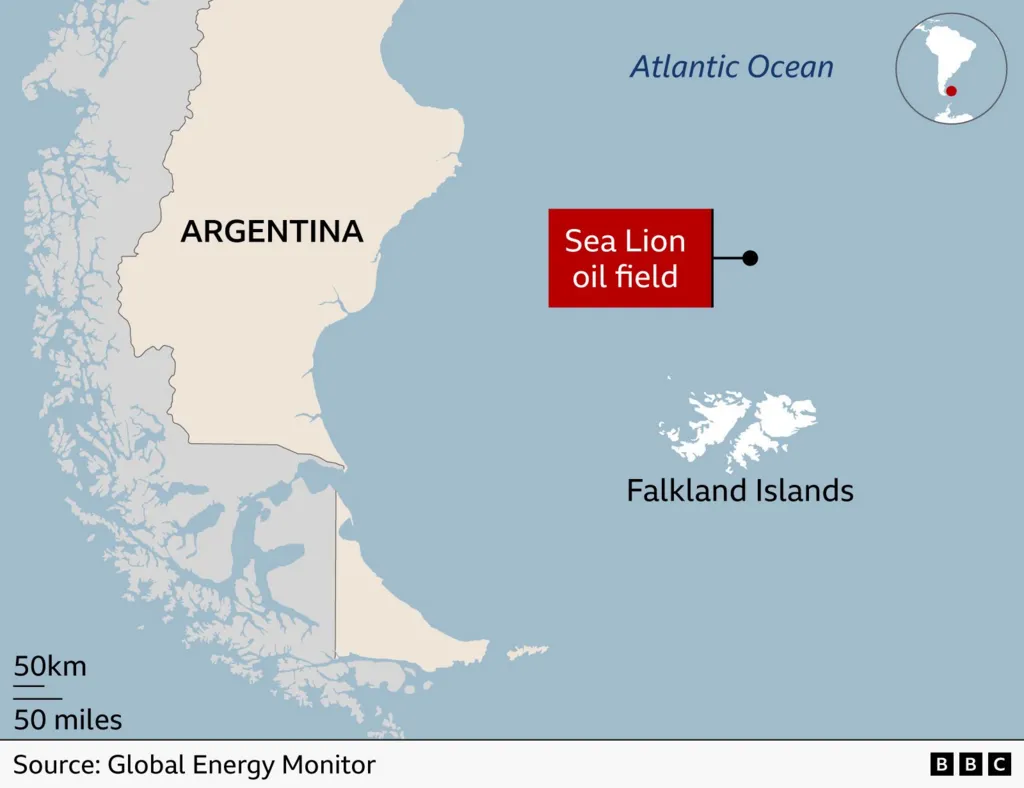
At the center of the dispute is the Sea Lion oil field, about 209 kilometers from the Falkland Islands, which is estimated to contain around 1.7 billion barrels of oil. British company Rockhopper Exploration and Israeli company Navitas Petroleum are expected to begin oil production within two years, a project that could bring significant revenue to the islands’ roughly 3,500 residents.
In a referendum held in 2013, 99.8 percent of residents voted in favor of the Falkland Islands remaining a British overseas territory, while only three people voted against.