


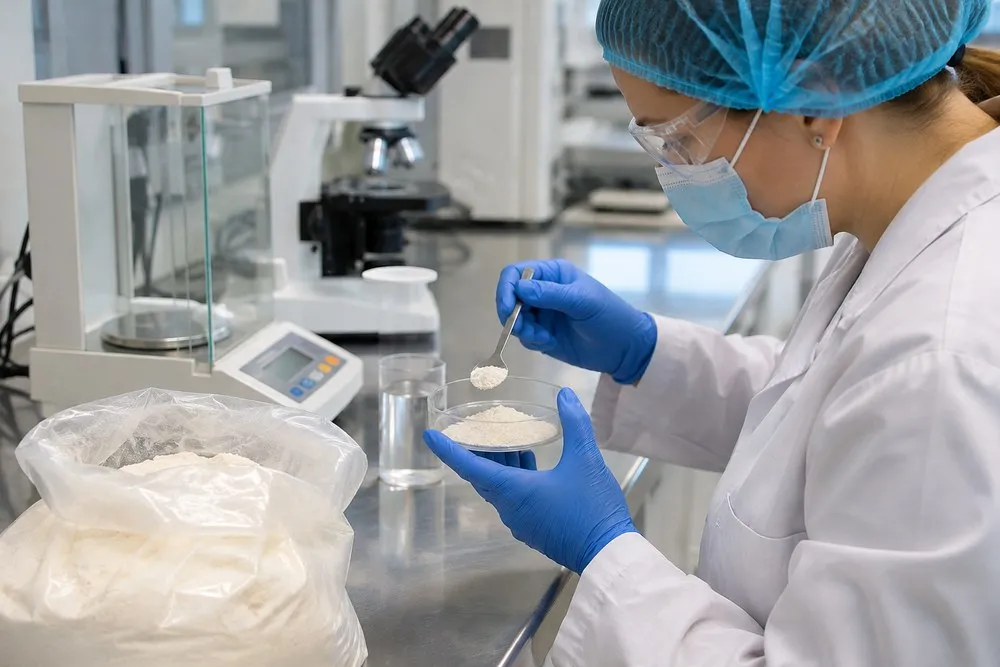
The laboratories of the National Food Authority do not have the necessary capacity to analyze a significant portion of the contaminants that threaten the food safety of cereals, flour, bread, and other grain-based products consumed by Albanian citizens.
The Supreme Audit Institution, in its performance audit report “Quality Control, Storage, and Importation of Cereals (with a Focus on Flour),” for the 2020–2025 period, has identified a series of problems related to the lack of laboratory accreditation, outdated equipment, inadequate working conditions, a shortage of reagents, and the use of analytical methods dating back to 1987.
According to the KLSH, the responsible institutions do not have a complete picture of the actual level of contamination of cereals and their products in the Albanian market, while the control system does not guarantee the timely identification of all potentially unsafe products.
Of the 4,893 samples of flour and bread, only 12 were found to be outside the standards
During the 2020–2025 period, the National Food Authority’s laboratories analyzed 4,893 samples of bread and flour, of which only 12, or about 0.25%, were found to be non-compliant.
The problems found are mainly related to the presence of live insects, worms, larvae, parasites, warehouse pests, phytosanitary impurities, as well as exceeding moisture and acidity levels.
But the KLSH warns that the low number of samples found outside the standards should not be interpreted as an indicator of a high level of food safety.
According to the auditors, the results largely reflect the fact that AKU’s laboratories check a limited number of parameters, mainly moisture, acidity, ash, gluten, porosity, and phytosanitary impurities.
A significant portion of chemical and biological contaminants are not monitored due to a lack of technical capacity and specialized equipment.
Hazardous toxins in cereals that are not analyzed in Albania
One of the audit’s most concerning findings relates to the inability to analyze a number of mycotoxins, which can be found in cereals and their products.
Currently, aflatoxins are the only group of mycotoxins monitored in Albania, and analyses for them are conducted by the Institute of Food Safety and Veterinary Medicine (ISUV).
According to the KSH report, several other mycotoxins, including deoxynivalenol (DON), zearalenone, fumonisins, ochratoxin A, and T-2 and HT-2 toxins, are not analyzed in any laboratory in Albania.
Additionally, no analyses are conducted for nickel in cereals, while capacities for monitoring heavy metals and other chemical contaminants remain limited.
T-2 and HT-2 toxins are produced by fungi of the genus Fusarium and are mainly found in oats, wheat, barley, and corn. They can form during cultivation, but also during storage under inappropriate moisture and temperature conditions.
The European Union has set mandatory maximum limits for these toxins in cereals, flour, bread, pasta, breakfast cereals, and foods for infants and young children. In Albania, these contaminants have not yet been included in the list of indicators that must be analyzed as part of official control.
Albania allows higher levels of some toxins than the European Union
The KSH has also identified differences between Albanian standards and those of the European Union for the maximum allowable levels of certain contaminants in food.
In the case of deoxynivalenol (DON), one of the most common mycotoxins in cereals, the maximum allowable limits in Albania are significantly higher than those of the EU.
For raw cereals, Albania allows up to 1,250 micrograms per kilogram, while the EU has set the limit at 1,000 micrograms per kilogram.
For hard wheat and raw corn, the Albanian limit remains 1,750 micrograms per kilogram, compared to 1,500 micrograms in the EU.
For flour, milling products, and pasta, Albania allows up to 750 micrograms per kilogram, while the EU has set the limit at 600 micrograms per kilogram. For bread and cookies, the Albanian limit is 500 micrograms per kilogram, compared to 400 micrograms in the EU.
Particularly concerning is the difference for cereals-based foods intended for infants and young children. The maximum allowable limit in Albania remains 200 micrograms per kilogram, while the European Union has lowered it to 150 micrograms per kilogram.
Therefore, the maximum allowable limit in Albania for this category of products is about 33% higher than that of the European Union.
But, beyond the differences in legislation, the main problem remains the fact that the AKU’s laboratories do not have the capacity to analyze these contaminants and to verify compliance with legal limits.
None of the seven regional AKU laboratories are accredited
The National Food Authority has seven regional laboratory sectors in Tirana, Durres, Fier, Vlore, Gjirokaster, Korce, and Shkoder.
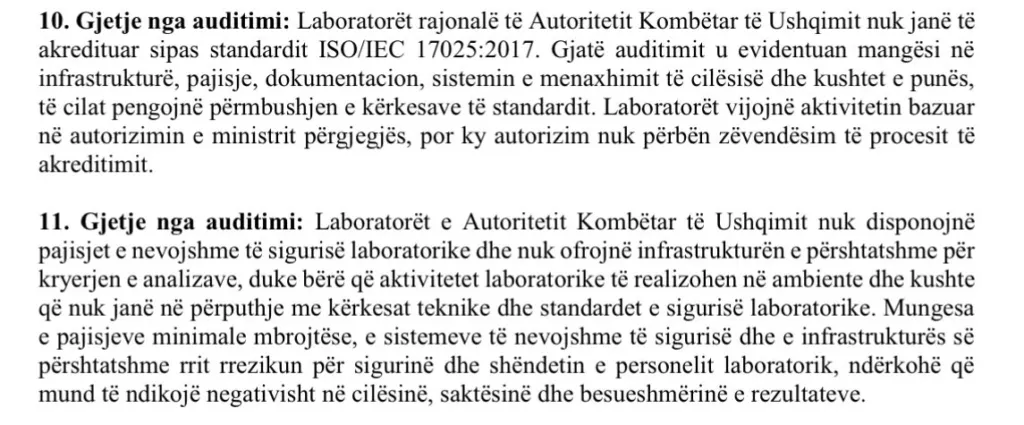
The audit shows that none of them is accredited according to the international standard ISO/IEC 17025:2017, which sets the requirements for the technical competence of laboratories and the reliability of analysis results.
The laboratories continue their activities based on authorization from the minister responsible for food safety, but the State Audit Office emphasizes that this authorization does not replace the accreditation process.
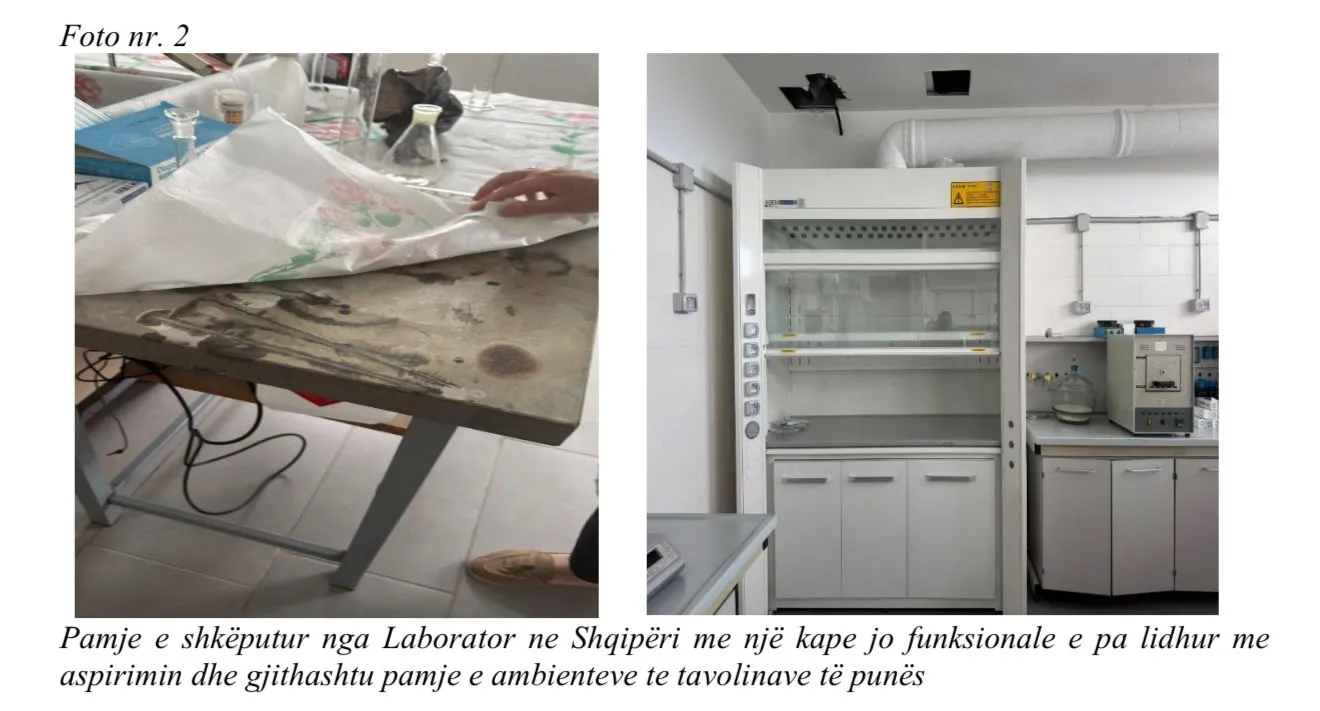
Auditors have identified deficiencies in infrastructure, equipment, documentation, the quality management system, and working conditions.
Some of the methods used to analyze food products still rely on the 1980s Albanian STASH standards, mostly from 1987, some of which have been superseded or revoked.
Food safety control, dependent on a single institution
Due to limited capacities, the National Food Authority relies on the Institute of Food Safety and Veterinary Medicine to conduct more specialized analyses, including aflatoxins, pesticide residues, Bacillus cereus, and protein in flour and wheat.
According to the KLSH, the ISUV, although it functions as the national reference laboratory, has been forced to carry out a significant volume of routine analyses that should normally be covered by the AKU laboratories.
This situation creates a high dependency on a single institution, where any service interruption, capacity limitations, or heavy workload can directly impact the implementation of food safety monitoring programs.
The electronic system created in 2018 does not work
Another issue identified by the State Audit Office relates to the management of laboratory analysis results.
Although the Laboratory Information Management System (LIMS) has been in place since 2018, it remains nonfunctional.
The AKU laboratories manage information through physical registers and Excel spreadsheets, while the results of analyses conducted at ISUV or in private laboratories are not recorded centrally.
In specific cases, such as in Shkodër, the results of analyses conducted in private laboratories are stored only in the individual inspection files.
This situation limits the traceability of samples, the exchange of information between laboratories and inspectors, as well as the ability to identify products or operators that pose a higher risk to consumers.
The Supreme Audit Institution calls for immediate intervention and the accreditation of laboratories
The Supreme State Audit Office has recommended that the National Food Authority and the Ministry of Agriculture and Rural Development, by 2026, draft and implement a detailed action plan for the accreditation of laboratories according to international standards, specifying deadlines, financial resources and institutional responsibilities.
Furthermore, immediate measures are required to modernize equipment, secure reagents, improve working conditions, and expand the range of analyses for mycotoxins, heavy metals, and other contaminants.
The State Audit Office recommends updating Albanian legislation in line with the latest European Union standards, including T-2, HT-2 toxins, and nickel in the monitoring programs, as well as functionalizing the electronic laboratory information management system. /ekofin.al