


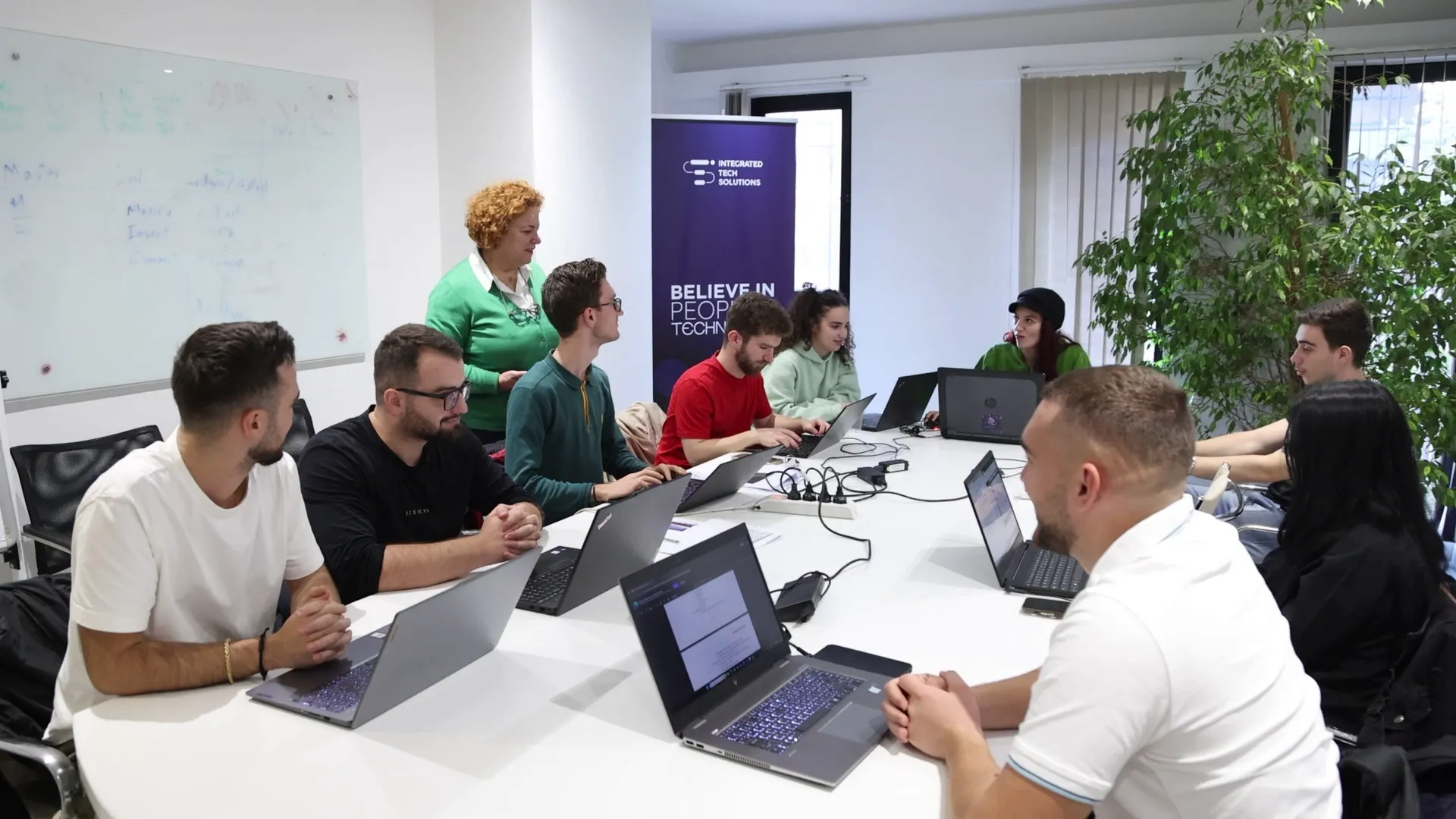
About 120,000 students are enrolled in public and private universities in Albania in the 2026–2027 academic year. But for many young people, entering university doesn’t just mark the start of professional training and preparation for the future job market. It is also driven by the need to enter the job market right away to cover the costs of studying and living.
Rent, food, transportation, bills, and university expenses make employment a necessity, especially for students living away from their families. Under these conditions, working during studies is not always a choice to gain experience or build a career, but often a necessity to finance their continuation. The problem lies in the opportunities the market offers: how much income students earn, under what conditions they work, and how their involvement relates to their academic training.
In an analysis of the opportunities and challenges of student employment, Ekofin.al asked experts Erion Muca, an employment and career expert, and Dalina Gjipali, director and partner at EPPC Albania & Kosovo, about the reality of part-time work in Albania.
Jobs for income, not necessarily for a career
Erion Muca, an employment and career expert, estimates that the Albanian market offers students mainly simple and elementary jobs, with little connection to their field of study or academic status.
“The job market for students is focused on simple, elementary job opportunities and very few that are related, relevant, or similar to both the field they are studying and their student status,” says Muça.
According to him, a significant portion of students work to earn income, but that income often isn’t enough to cover all living expenses.
The most common positions include working as cashiers, retail sales associates, customer service representatives, waiters, and bartenders. These roles can give young people experience in communication, responsibility, and organization, but they do not necessarily represent a step toward the profession for which they are being educated.
Muca also highlights students who have developed specific skills and manage to commercialize them. For this group, earnings can be higher than those of students working in typical service positions. A small portion engages remotely through online work, where income depends on the service offered and individual skills.
Another sector where some students have focused is the real estate market. According to Muca, this sector can offer significant income through sales commissions, but usually without a guaranteed base salary, which makes earnings dependent on performance and the opportunities to close deals.
Meanwhile, call centers, which for years have been an important employment alternative for young people, have lost ground in the market. Muca notes that the number of employees in this industry has shrunk and some students no longer prefer it, partly due to issues related to the operations of certain companies.
Part-time on paper, full-time in practice
Another problem is related to how student work is organized and declared. Even when the employment relationship is registered as part-time, the actual commitment can require long hours, making it difficult to combine it with classes, exams, and academic preparation.
“For students, apart from the call center sector, real estate, and online work—where they set their own hours—most other jobs may be declared part-time, but the work students actually do, in terms of hours, is full-time,” Muca argues.
Students who come from out of town often have less room to refuse unfavorable working conditions, as they must cover not only daily expenses but also rent and living costs in the city where they study. This economic dependence can push them to accept schedules and conditions that do not align with their academic needs.
A student’s job should be a bridge to their profession
For Dalina Gjipali, director and partner at EPPC Albania & Kosovo, working during one’s studies should not be seen only as a source of income. It should also create the link between theoretical training and the demands of the job market.
“Beyond being a source of income for students, which is a very important factor for many of them, part-time work should also serve as a bridge between the classroom and the job market,” emphasizes Gjipali.
According to her, for this model to work, the responsibility must be shared between universities and employers. Higher education institutions must offer more flexible schedules, career guidance, internships recognized as part of the studies, and real collaboration with businesses.
On the other hand, companies must create genuine part-time positions with formal contracts, predictable schedules, and tasks that provide students with skills applicable to their future careers.
“The job market needs to create genuine part-time jobs with formal contracts, predictable schedules that respect academic commitments, and roles that also give students skills and professional experience,” she says.
This approach would help ensure that work is not merely an economic obligation alongside studies, but part of the process of preparing for the job market. An economics student, for example, could benefit more from an entry-level position in finance, accounting, or business administration than from a job unrelated to their field of study, provided the conditions and schedules are suitable.
The same logic applies to students of technology, communication, engineering, or other fields. Even entry-level positions, when related to their academic profile and accompanied by mentorship, can provide concrete experience, professional contacts, and better employment opportunities after graduation.
Gjipali notes that, in many international markets, student employment is more structured and often tied to the field of study. In Albania, however, according to her, their involvement remains mainly in support and service positions, without necessarily creating a natural transition into a profession.
“There is a legal basis for part-time work, but there is still not a proper ecosystem for student employment. We lack university flexibility and a more structured link between the study program and the job role,” emphasizes Gjipali. /ekofin.al