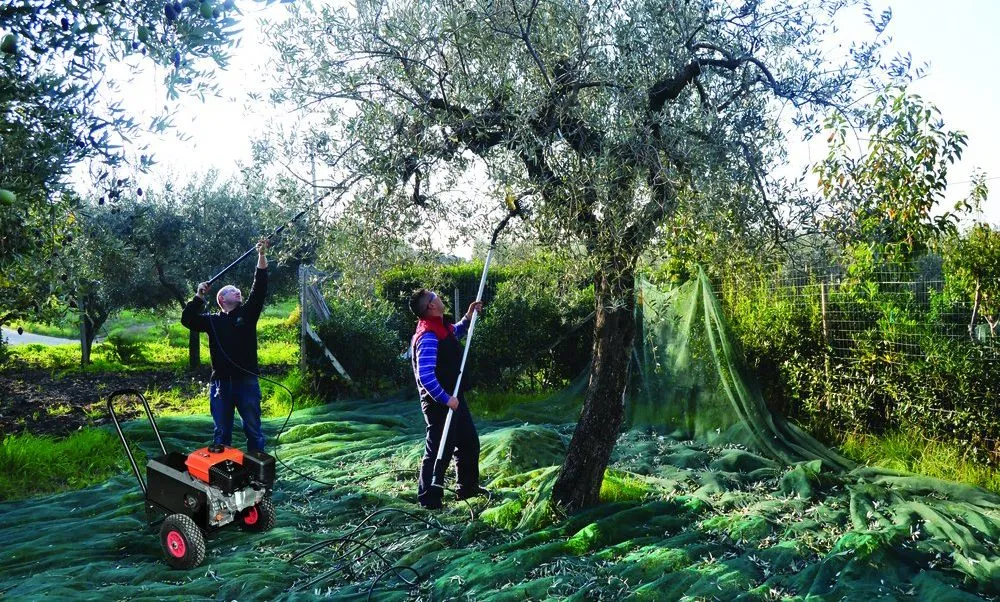
For three consecutive decades, Greek agriculture was kept afloat by the sweat of Albanian seasonal workers. In the 1990s and early 2000s, Albanian migrants were the silent pillars that revived rural economy and construction in Greece, but they often faced a harsh climate of prejudice, nationalist rhetoric, exclusionary bureaucracy, and minimum wages that did not reflect their real contribution.
Today, market laws and economic realities have brought about a reversal that sounds like an irony of fate. As Albanian migrants move on to more lucrative markets in Europe, return to Albania, or become landowners themselves, Greek farmers are facing a bitter reality. The crops are at risk of rotting in the trees because no one can replace the Albanians.
Although Athens has signed agreements to bring in workers from Egypt or Asian countries like India, Pakistan, and Bangladesh, the farmers themselves admit that the difference in labor is like night and day. Albanians know the trade well and speak Greek, making communication and work much more efficient, writes Protothema.
Furthermore, according to Greek farmers, Albanian workers are accustomed to seeing a job through to the end, even working at night when necessary. On the other hand, the workers who recently arrived from Asia ask for a break every four hours, tire more quickly, and refuse to work night shifts.
The departure of Albanians from the Greek fields has also brought about a complete reversal of roles. Many of them, along with Bulgarians and Romanians, are traveling by charter flights to Germany, where daily wages can reach up to 100 euros.
Another group is choosing to return and work in Albania, where wages have risen and there are no immigration costs. Meanwhile, as Dimitris Manokou, chairman of the Imathia Agricultural Workers’ Union, points out, many Albanians who have lived in Greece for 30 years have already bought their own orchards, ranging from 2 to 4 hectares. Those who once worked by the day now hire workers themselves.
In a desperate attempt to retain the workforce, Greek farmers have doubled wages in four years, from the €30–40 they were in 2021. Today, an experienced worker is paid 80 to 90 euros per day, often with food, lodging, and transportation covered.
However, this cost is driving farmers toward bankruptcy. With olive oil selling for only €3.20 per kilogram, a team of four workers costs €320 a day — the value of 100 kilograms of olive oil, not including other expenses. As a result, about 10% of Greece’s olive production is being left unharvested, while the total shortage in agriculture is estimated at between 70,000 and over 200,000 workers. /Capital.al