
Albania is explicitly including foods produced from animal cell and tissue cultures in the category of novel foods, creating a clearer legal basis for authorizing products such as lab-grown meat.
The new draft law “On Food,” currently in public consultation, provides that the production and placing on the market of these products are subject to the appropriate authorization, with the provisions set to take effect on August 1, 2028.
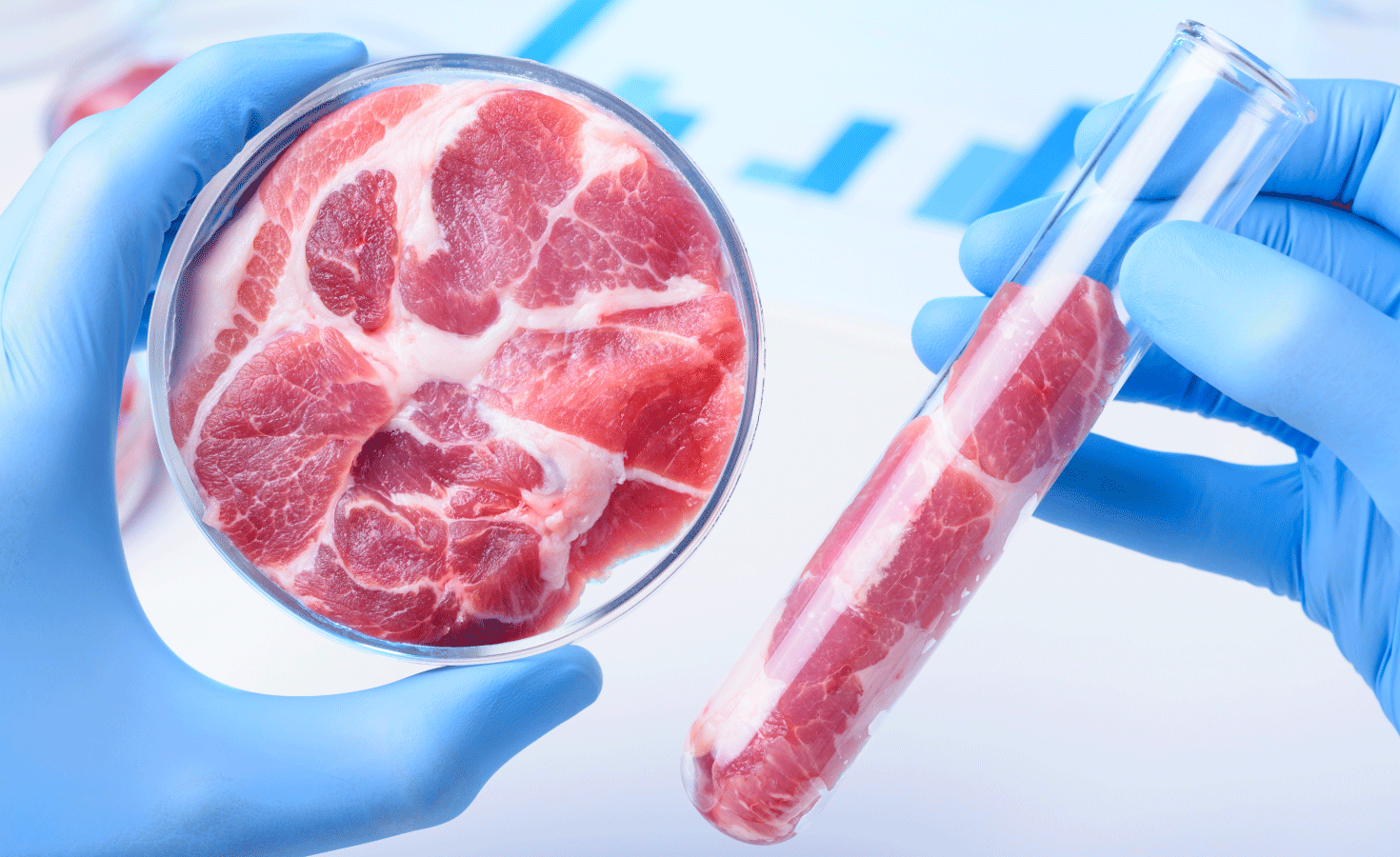
The provision relates to one of the newest developments in the food industry, where meat can be produced by cultivating animal cells in controlled environments, without the need to slaughter animals for its production.
The technology differs from the production of plant-based meat substitutes. In the case of cultured meat, the product is derived from animal cells, whereas plant-based alternatives are produced from ingredients such as soy, peas, or other plant-based proteins.
The Albanian draft law does not explicitly use the term “lab-grown meat,” but in Article 31 it includes foods composed of, isolated from, or produced by cell or tissue cultures derived from animals, plants, microorganisms, fungi, and algae.
This formulation aligns with the category of novel foods defined in European Union legislation.
Production in Albania will require national authorization
According to Article 32, novel food products intended to be produced in Albania and not covered by a valid EU authorization may only be produced and placed on the market after obtaining national authorization.
The authorization will be granted by a special commission, based on an assessment of the product’s safety and its compliance with the relevant criteria of the European legislation harmonized in Albania.
The Commission will be composed of five members: three representatives from the ministry responsible for food and two representatives from the competent authority.
The scientific risk assessment by the Permanent Commission for Risk Assessment will also be taken into consideration in the decision-making process.
For products that have been authorized in the EU and appear on the relevant lists, the draft law provides for the recognition of the European authorization through a simplified verification procedure.
This means that a product authorized at the European level will not require a second Albanian authorization, but will have to meet the authorization conditions and undergo the relevant verification.
What is happening in the European Union?
As Albania establishes its authorization framework, food products from animal cells remain an area still under development in the European Union.
According to information published by the European Food Safety Authority (EFSA), updated on October 21, 2026, the EU had not yet authorized any food product derived from animal-based cell cultures.
EFSA reports that the first application for this category was submitted in September 2024 and was related to a product derived from duck cells for the production of foie gras.
Meanwhile, five cell culture-derived foods of plant origin were authorized on the European market.
This distinction is important for how the Albanian draft law may be implemented. While cultured meat products obtain the relevant European authorizations, their production in Albania will require review under the prescribed national procedure.
Is it the same as genetically modified food?
Cultured meat from animal cells is not necessarily genetically modified food.
Cell cultivation technology and genetic modification are different processes, although in certain cases they can be used together.
The draft law treats foods derived from cell cultures within the category of novel foods, while products that contain or are produced by genetically modified organisms are also subject to the requirements of the relevant legislation.
The current Albanian law already provides for broad categories of novel foods and their authorization. The novelty of the draft law is the explicit inclusion of products from cell cultures, along with more detailed rules for national authorization and the recognition of European authorizations.
For placing products on the market in violation of authorization requirements, the draft law provides for fines ranging from 200,000 to 300,000 lek.
The provisions for novel foods and authorizations will take effect on August 1, 2028./ekofin.al
