

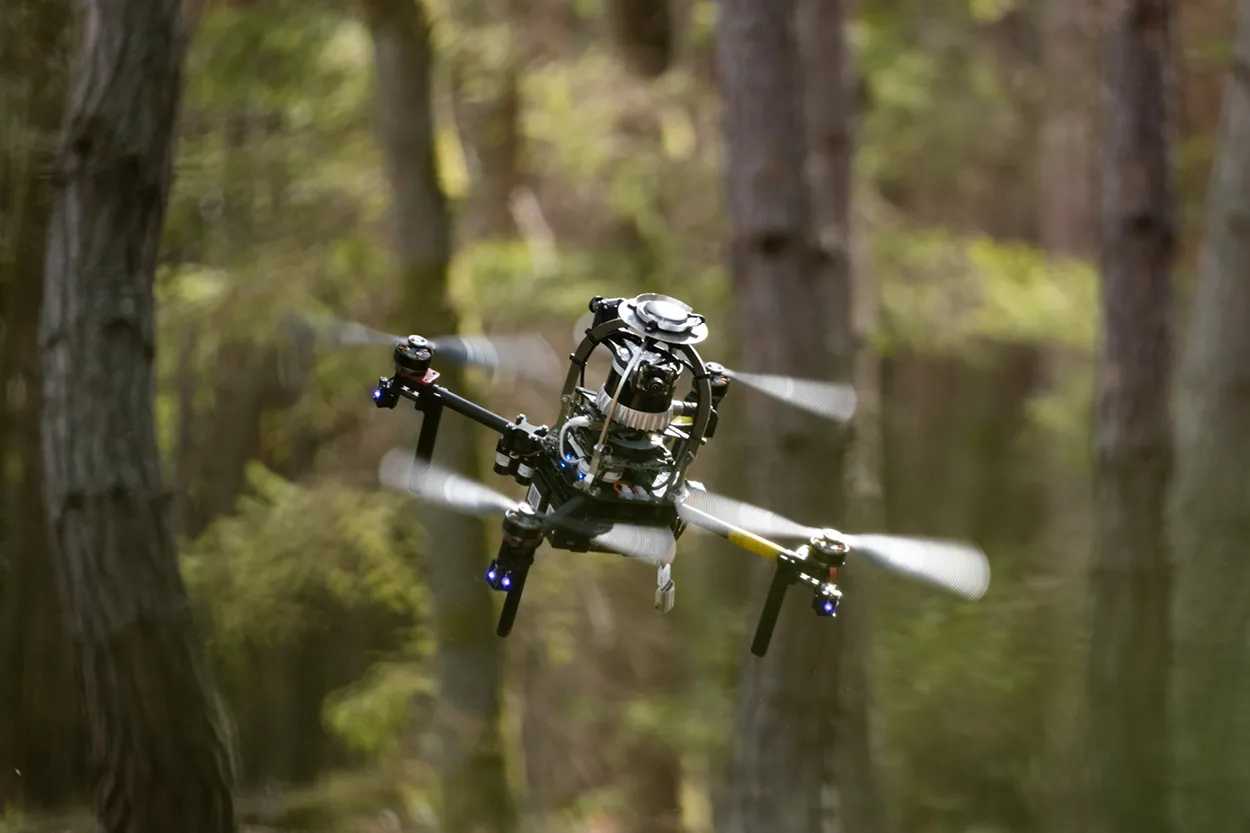
Instead of traditional seedling planting, hundreds of thousands of seeds will be distributed by air using specialized drones. Albania aims to expand the use of this technology to restore forests damaged by fires, especially in areas where human intervention is difficult due to the mountainous terrain.
The National Agency for Protected Areas has prepared a pilot project covering 136.74 hectares in Mount Dajti National Park, in the Lurë–Mali i Dejës National Park, and in the Bredhi i Hotovës–Dangëlli National Park.
According to the procurement procedure documents, between 513,000 and 684,000 biological capsules are planned to be distributed in these territories. They will contain not only seeds but also materials that help retain moisture, protect the seeds, and create favorable conditions for germination.
Drones will be guided by advanced satellite navigation systems, while the terrain will be digitally mapped to identify planting areas. Using multispectral and thermal cameras, the development of vegetation and the effectiveness of the intervention will then be monitored.
The bulk of the project will focus on Mount Dajti, covering 87.5 hectares. Only on Mount Priska is intervention planned on 75.6 hectares, where, according to expert assessments, natural regeneration after the fires is almost nonexistent across most of the damaged area.
In Lurë, over 38 hectares will be treated, while in Bredhi i Hotovës another 11 hectares. Among the species selected for forest restoration are black pine, ash, fir, hornbeam, and mountain maple.
Drone-based afforestation technology was previously tested in the Korçë region as part of a project supported by the United Nations Development Programme. This time, the goal is to create an institutional model that can be applied to other protected areas of the country. If the technology proves effective, it could change the way Albania restores its forests, enabling faster interventions even in the most challenging mountainous territories. /Scantv
