

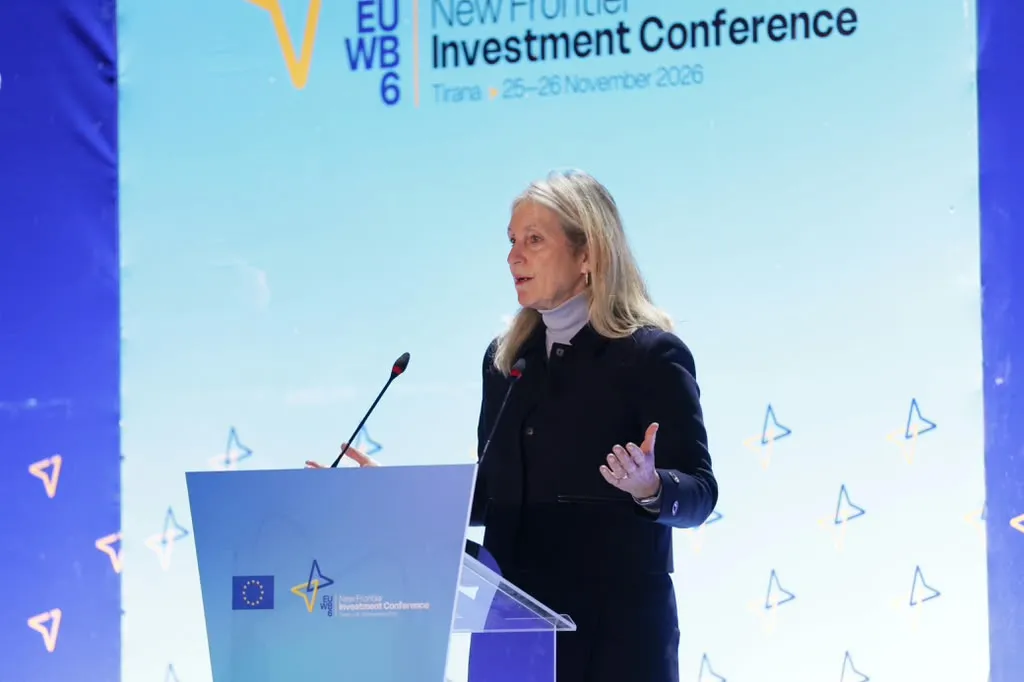
The Director-General of DG GROW at the European Commission, Kerstin Jorna, stated today that the Western Balkans represent a strategic opportunity for European investment and economic growth, emphasizing the importance of the region’s gradual integration into the EU’s single market.
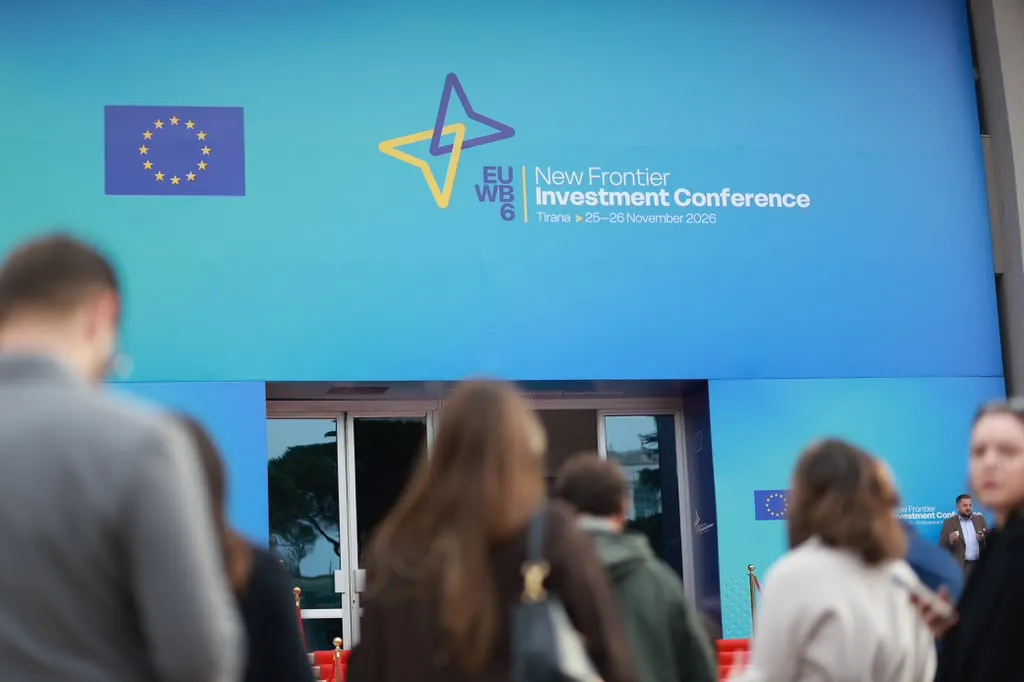
During her speech at the EU–Western Balkans Investment Conference, “A New Investment Frontier,” held at the Palace of Congresses in Tirana, Jorna urged investors and businesses to harness the region’s potential.
“We want your money to work here, in Albania. The time to invest in the Western Balkans is now,” Jorna said, emphasizing that the region is a space where the next wave of European economic growth can be built.
Referring to global economic and trade developments, she said that in an increasingly complex world, size and cooperation take on special importance. According to her, the European Union needs more robust supply chains and integrated markets to face global competition.
Jorna described the EU’s enlargement as a priority and strategic choice, in the common interest of both member states and those aspiring to membership.
She highlighted the experience of the 2004 enlargement, emphasizing that since then the European Union’s economy has grown by 27%, while the countries that have joined the EU since 2000 have become about one-third richer compared to the period before accession.
According to her, this development is linked to increased productivity and competitiveness, while the enlargement process represents an opportunity to further strengthen the European economy.
“The European Union is your trading partner, your investor, and your financial backer,” Jorna said, noting that trade with the Western Balkans has grown by 5% in 2025.
She also emphasized that EU direct investments in the region have reached around 40 billion euros as of 2024, describing them as an indicator of Europe’s confidence in the Western Balkans’ economic potential.
Speaking about support for businesses, Jorna underlined the importance of access to capital, energy, technology, and markets, as well as creating conditions for enterprise expansion and strengthening competitiveness.
“Governments implement reforms, but it is you, the businesses, who turn these reforms into jobs and concrete opportunities,” she said.
In this context, Jorna emphasized the gradual integration of the region’s countries into the European single market, describing this process as a journey that must be developed step by step, standard by standard, and sector by sector.
Referring to the Albanian expression “avash-avash,” she said that gradual integration does not imply slow progress, but rather steady and clear-cut advancement that brings concrete benefits to the region’s businesses and economies.
Jorna stated that the European Commission is working on new integration opportunities in key economic sectors, mentioning the creation of trade facilitation and the alignment of rules, with the aim of allowing companies to export and transport goods to the EU market without further checks, in accordance with the relevant standards.
She also mentioned discussions on the legal framework and opportunities for cooperation in sectors such as electronics, emphasizing that business engagement can accelerate this process.
According to her, products from companies in the region must be tested and certified according to EU standards, so that they can be marketed in the European market without repeated procedures and controls.
Another important objective, according to Jorna, is the creation of a common European industrial space, where the region’s companies can be part of supply chains and cooperate with partners across Europe.
“Let’s build this common industrial factory together,” she said, emphasizing that small and medium-sized enterprises should also benefit from new opportunities for market integration and expansion.
In conclusion, Jorna emphasized the importance of creating new partnerships through direct business-to-business (B2B) meetings, which can help strengthen supply chains and connect Western Balkan companies with the European market.
“Borders are not where Europe ends, but where Europe grows,” Jorna said in her message, emphasizing the prospect of the region’s cooperation and economic integration.
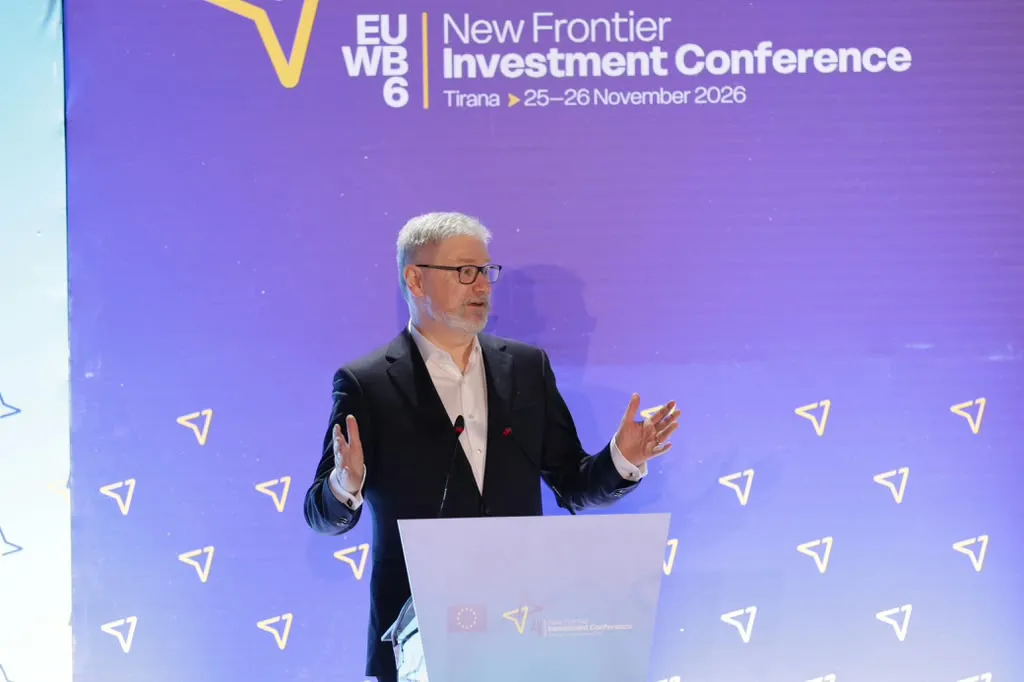
Meanwhile, the founder and chairman of the Berlin Global Dialogue, Lars-Hendrik Roller, assessed today that Albania has many investment opportunities and is in a strong economic position.
Roller emphasized that Albania currently has economic growth of 4%, as well as a reduction in public debt.
“People may say that Albania needs to do this to convince the market. That’s true, but your deficit is in good shape. The macroeconomic situation in Albania, with all its problems, looks quite good. The question is how sustainable this position will be,” he said.
Roller emphasized that the country still needs to address challenges related to the business environment and the rule of law in order to join the EU.
“You are a small country but you have grown quickly. Albania has much to offer beyond all its problems; you have many investment opportunities,” he said.
The EU–Western Balkans Investment Conference, “A New Investment Frontier” brings together in Tirana representatives of European institutions, the region’s governments, international financial institutions, investors, and private sector leaders, with the aim of promoting investments, strengthening competitiveness, and accelerating economic integration.
