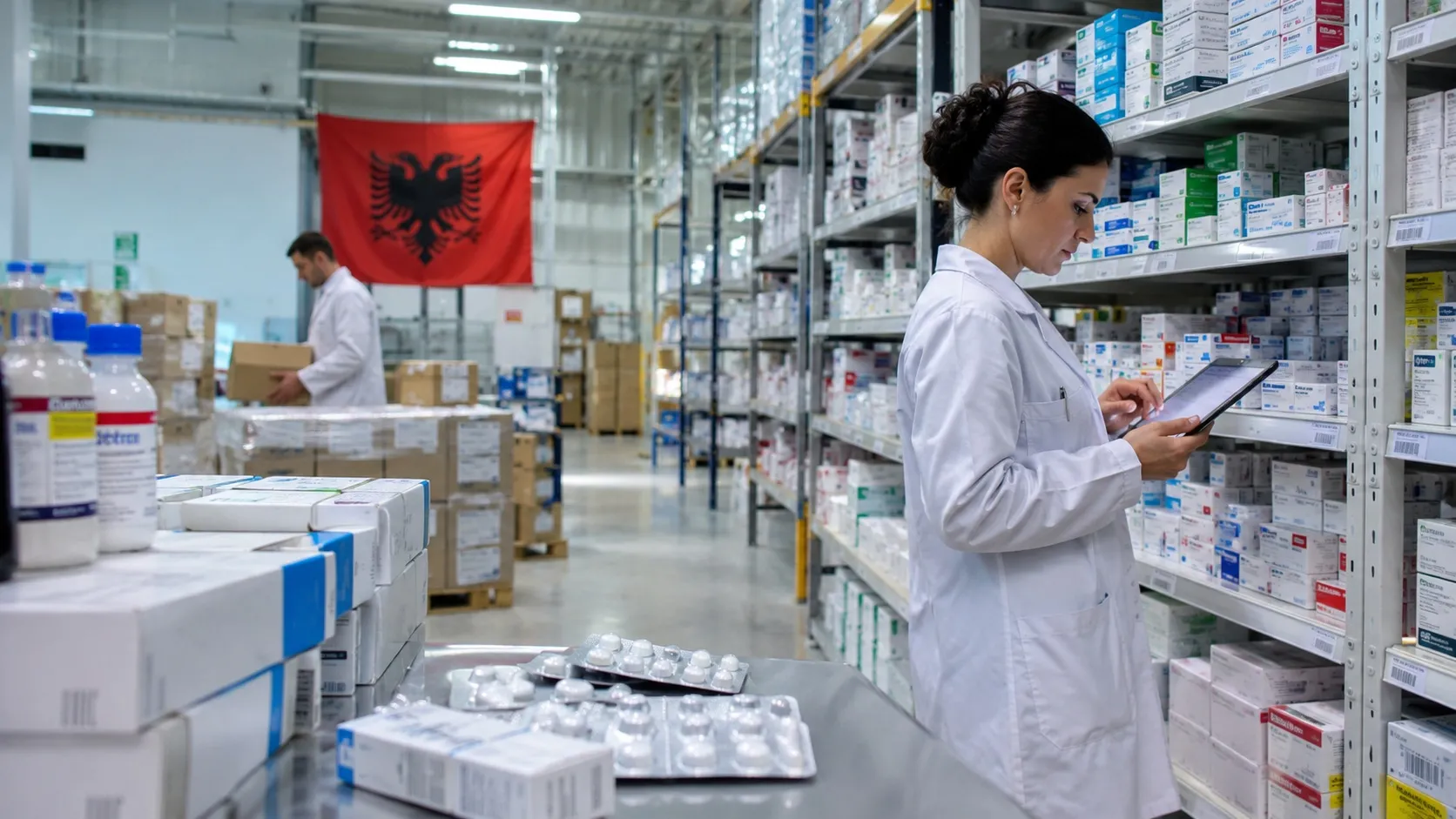
The government is preparing to change the supply model for the public health system’s procurement of medicines and medical devices by creating a 100% state-owned joint-stock company called “MedAL” J.S.A.
The Ministry of Health and Social Welfare has drafted a bill that provides for the concentration in a single structure of the processes of planning, procurement, import, storage, transport, and distribution of medicines, medical devices, and other health products.
The new company will also have the authority to develop domestic drug manufacturing capacities in Albania, establish other companies, participate in the capital of private firms, and enter into public-private partnerships.
Why is the drug supply model changing?
In the explanatory memorandum accompanying the draft law, the Ministry of Health acknowledges that the current supply system is characterized by a high degree of fragmentation, which has direct consequences for patients and public funds.
Failed tenders, prolonged procedures due to appeals, and the lack of a national stock management system have caused repeated interruptions in medicine supply, which in many cases are financially compensated for by the patients themselves.
The next issue relates to the limited size of the Albanian pharmaceutical market, which does not offer sufficient economic interest for international companies to market certain categories of drugs, especially innovative medicines, orphan drugs, and specialized hospital treatments, the report emphasizes.
Through the centralization of procurement, the government aims to increase the state’s negotiating power with pharmaceutical companies, reduce unit costs, and ensure continuity of supply.
Healthcare procurements are transferred to the new company
“MedAL” will serve as the central purchasing authority for public healthcare institutions, organizing joint procurement procedures, negotiating contracts, and administering agreements with domestic and international suppliers.
With the start of the new company’s operations, the relevant procurement procedures that have not yet been published in the Electronic Procurement System will no longer be handled by the Centralized Purchasing Operator (OBP).
The company will prepare each year a plan of needs for pharmaceuticals and medical equipment, based on actual consumption, clinical protocols, stock levels, market analysis, and budgetary funds.
The annual list of products and services will be approved no later than December 31 of each year.
Import of medicines not authorized in Albania
The draft law provides for the creation of a special mechanism for the import of medicines that are lacking in the Albanian market or that do not have marketing authorization in the country.
With prior authorization from the competent authority, “MedAL” may import medicines that are authorized for marketing in an EU country but are not authorized for marketing in Albania and have no application under review.
In exceptional circumstances, for special therapeutic needs or public health emergencies, the import of products that are not authorized in either Albania or the European Union will also be permitted.
The conditions for the import, verification, labeling, traceability, and monitoring of these products will be determined by a decision of the Council of Ministers.
Pharmaceutical manufacturing in Albania and partnerships with the private sector
The state-owned company will not be limited to procuring and distributing medicines. The draft law grants it the right to develop domestic production capacities for medicines and medical devices, to establish other companies, or to participate in the capital of public and private companies, whether domestic or foreign.
Cooperation with the private sector can also be carried out through public-private partnerships (PPP), joint ventures, or other contractual forms.
The terms for negotiations with private entities will be approved on a case-by-case basis by the Council of Ministers.
Regardless of the percentage of capital it will hold in the companies it participates in, “MedAL” will have the right of veto for changing the statute, increasing or decreasing the capital, the distribution of profits, the admission of new shareholders, and the reorganization or dissolution of the companies.
Additionally, the state-owned company will be able to offer services to private hospitals and health institutions, provided that this activity does not compromise the supply to the public system.
State-owned properties may be used as collateral.
The draft law provides for the possibility of transferring state-owned real estate to the new company for the implementation of investment projects.
With the approval of the Council of Ministers, these properties may also be used as guarantees, collateral, or mortgages to secure financing, increase the company’s capital, and improve its liquidity.
However, funds intended for the procurement and supply of public health institutions cannot be used to finance participation in other companies or to cover their losses.
Funding from the budget, with no specified cost
The initial capital of “MedAL” will be financed by the state budget, while other sources of financing will be revenues from services provided to public and private institutions, donations, and other lawful sources.
Service fees will be determined by a decision of the Council of Ministers.
The draft law provides that the company’s financial obligations will not be transferred to the state budget, but will remain the responsibility of the company itself.
Although the Ministry of Health confirms in its report that the establishment of the company will have financial effects on the state budget, the documentation does not specify the amount of initial capital, the costs of setting up the infrastructure, the operating expenses, or the expected savings from centralizing procurement.
Strategic Stockpile and Electronic Monitoring of Medicines
The company will create and manage a stockpile of critical medical products, with the aim of responding to health emergencies and supply chain disruptions.
The establishment of an integrated electronic platform is also planned, through which contracts, inventories, consumption, costs, warehouse levels, and the distribution of medical products will be monitored.
The Ministry argues that this model will enable the timely identification of drug shortages, the standardization of products, and better control over the use of public funds.
As reference models for the reform, the report mentions the public company Amgros in Denmark and the public enterprise SPMS in Portugal, which carry out centralized procurement for the health systems of these countries.
Procedures for establishing the company within 60 days of the law’s entry into force.
The Ministry of Health will represent the state as the company’s sole shareholder, while the Supervisory Board will be composed of five members, two representatives from the Ministry of Health and one representative each from the Ministry of Finance, the Health Insurance Fund, and the National Agency for Medicines and Medical Devices.
The draft law provides that within 60 days of the law’s entry into force, procedures will be followed for securing the capital, selecting the governing bodies, adopting the statute, and registering the company in the Commercial Register.
The regulations provided for in the draft law will be adopted within three months. /ekofin.al