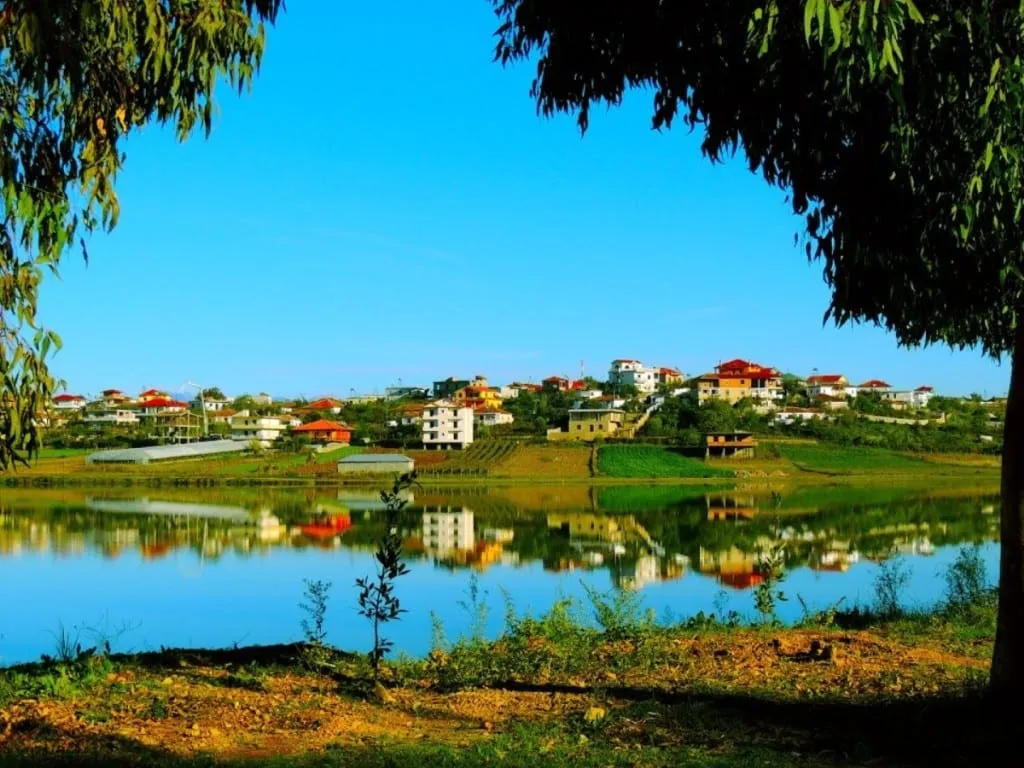
The government has approved new criteria for certifying agritourism operations and constructing facilities for them, specifying minimum farm sizes, accommodation capacities, the origin of food products, and procedures for obtaining building permits.
Entities offering accommodation may have up to 60 beds, while at least 70% of the food and beverages provided must be sourced from the entity’s own farm and from local producers.
The decision also provides for the recovery of grants and tax benefits in cases where entities have used the certification to obtain public support without actually carrying out agritourism activities.
Only certified operators will be entitled to use the designation “Agroturism” in their trade name or on the premises where they operate.
Minimum criteria for farms
To be certified as agritourism, a farm must have at least 1 hectare of land under its ownership or use, planted with agricultural crops.
For livestock farms, the minimum required area is 0.5 hectares, while the minimum number of animals varies according to the category of activity.
The decision also allows the combination of at least two animal categories, provided that each meets at least 50% of the respective minimum threshold.
In the case of aquaculture units, a water area of at least 3,000 square meters is required, used for the cultivation of fish, mussels, or other aquatic organisms.
Operators must provide food and beverage services, as well as entertainment or educational activities related to the farm and its surroundings. Accommodation remains an optional service, but when offered, capacity may not exceed 60 beds.
The origin of food supplies will be verified through invoices.
The decision establishes requirements for the origin of the products that agritourism establishments offer to customers.
Compliance with these criteria will be assessed annually, not for each individual supply or product.
To prove the origin of the farm’s products, entities must have production records, documentation of agricultural or livestock activity, and invoices for the sale of the products produced.
For supplies from local producers, documented commercial contracts or relationships are required, accompanied by tax invoices and a supplier register.
Products of other origins must also be accompanied by documentation proving their origin, including tax invoices, veterinary certificates, phytosanitary certificates, and customs documents, depending on the product category.
These requirements tie the maintenance of agritourism status not only to the existence of a farm but also to actual production activity and commercial relationships with local farmers.
For coastal constructions, permits will be approved by the National Council for Territory and Water (KKTU).
Development and building permits for structures serving agritourism will be issued by the municipalities, in accordance with local planning documents.
For investments within the coastal belt, the authority to approve permits belongs to the National Council for Territory and Water (KKTU).
After obtaining the development permit, the investor must be issued a preliminary certificate for agro-tourism activities by the ministry responsible for tourism. Without this document, the entity cannot be issued a building permit, and the development permit is considered revoked.
For projects approved by the National Council for Territory and Water (KKTU), the registration of the decision in the registers of the State Land Registry enables the conversion of the cadastral entry from “arable land” to “building plot.”
The decision also provides procedures for areas where a local general plan is missing. In these cases, municipalities must obtain an opinion from the Territorial Development Agency and the ministry responsible for tourism, which have 15 business days to notify the outcome of the review.
The mayor decides within 7 working days on the approval of the development permit. The change of the cadastral entry from “field” to “parcel,” in cases under municipal jurisdiction, is carried out only after the building permit is registered.
Return of grants and tax benefits for sham agritourism operations
One of the provisions with a financial impact on investors relates to the use of agritourism status to benefit from public funds or tax relief.
If it is determined that an entity has benefited from grants, exemptions or reductions of local taxes, but does not actually carry out the agritourism activity or discontinues it immediately after receiving public support, the revocation of the certificate will constitute grounds for losing the right to benefits and for initiating procedures to recover the funds and benefits received.
The decision to revoke the certificate will be communicated to the municipalities and institutions that have granted financial support, so they can initiate the appropriate procedures.
The certificate may also be revoked if false information is found in the application documentation, repeated violations of the criteria are detected, or the conditions are not met even after its suspension.
Monitoring of the entities will be carried out by the inspectorate responsible for tourism, in cooperation with tax authorities, food safety institutions, and other competent authorities.
Certificate with a five-year validity
Applications for the certification of agritourism will be submitted through the e-Albania portal and reviewed by a five-member commission, three representatives from the ministry responsible for tourism and two from the ministry responsible for agriculture.
If the documentation is incomplete, the applicant will have 15 working days from the notification to complete it. The commission reviews the documentation within 15 working days of its completion, and may also request on-site inspections.
The final certificate will be valid for five years, with the right to renewal. Meanwhile, the validity of the preliminary certificate will be tied to the term of the building permit.
For applications submitted before the decision’s effective date for which a final decision has not yet been made, the certification criteria will be evaluated under the rules in effect on the date of application, while the review procedures will be conducted under the new decision.
The decision enters into force upon publication in the Official Gazette and repeals Decision No. 22 of January 12, 2018, as amended, which until now regulated the certification of agritourism and the construction of structures for their operation.