


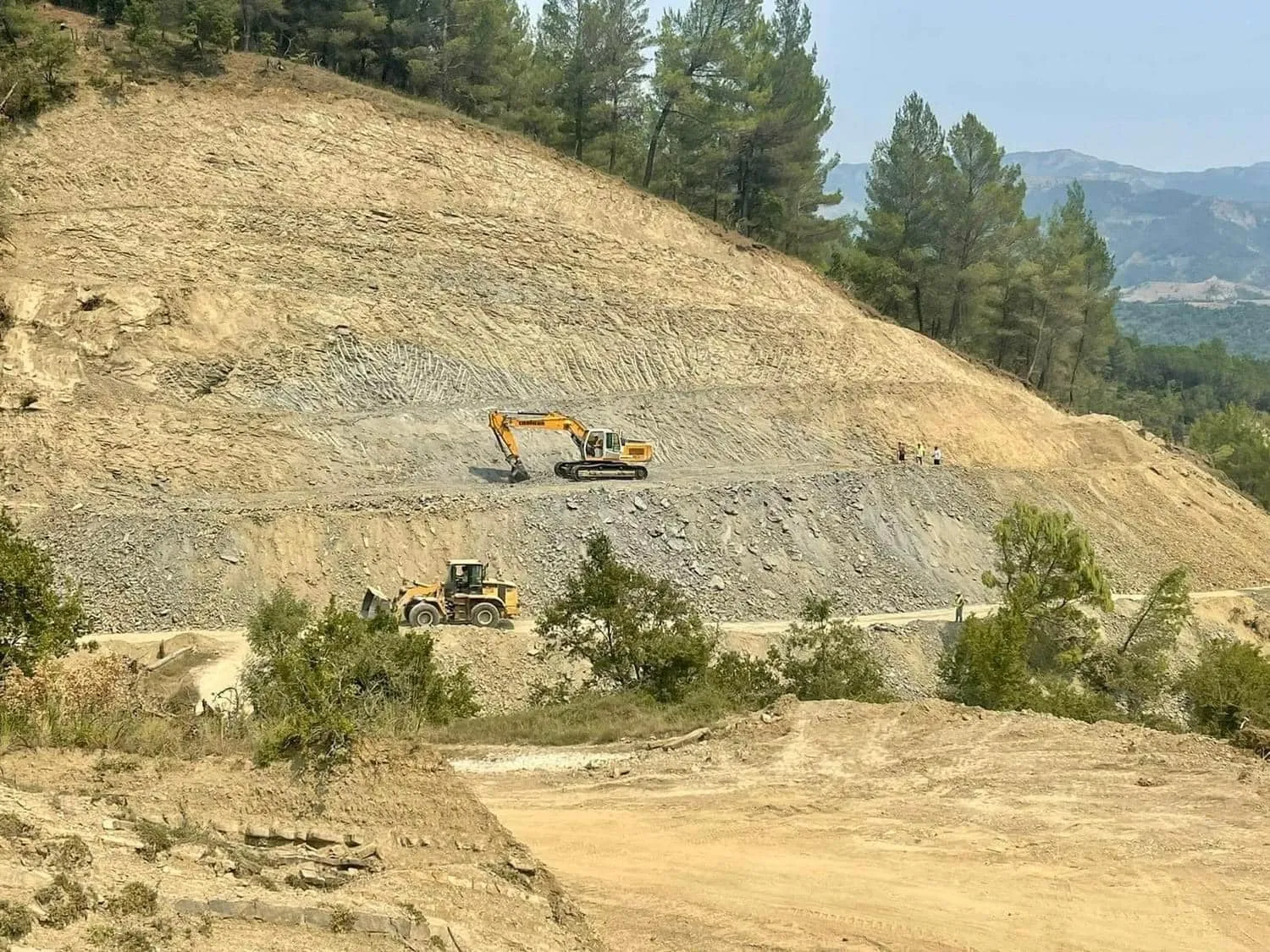
Public investments in Albania remained 25.45 billion lek below the final plan during 2025, mainly due to the failure to implement projects with foreign financing.
According to the Supreme State Audit, out of 157 billion lek planned for capital expenditures, 131.58 billion lek were realized, or 83.8% of the plan. Only investments with foreign financing amounted to 15.83 billion lek below forecast, representing 62.2% of the entire difference.
The KLSH report on the implementation of the 2025 budget finds that investments with foreign financing reached 20.3 billion lek, compared to a final plan of 36.12 billion lek. This means that only 56.2% of the planned funding for this category was realized, while 43.8% remained unrealized.
The underperformance was noted even though budget forecasts for investments were reduced during the year. Only with the normative act of December 19, 2025, the overall capital expenditure plan was reduced from 164.14 billion to 157.03 billion lek. Even after this revision, carried out just a few days before the end of the year, the difference between the plan and the realization remained significant.
However, compared to 2024, total capital investments have increased by 16.15 billion lek. Investments with foreign financing have also recorded an increase of 2.87 billion lek. The issues identified by the audit are therefore related to the failure to meet the 2025 targets, despite the increase in expenditures compared to the previous year.
Foreign financing, problems also with planning and reporting
According to the report, the Supreme State Audit (KLSH) identified irregularities in the administration of projects with foreign financing. For 25 projects, expenses amounting to 150 million lek were reported, although no funds were planned for them in the budget, even after the changes approved in December.
Meanwhile, in 67 other projects, actual expenditures exceeded the approved funds by 1.07 billion lek. According to the audit, these differences were not settled through budget revisions or reallocations during the year, contrary to the budget implementation requirements.
According to the data, another problem is related to the way investments are registered. The Supreme State Audit (KLSH) found that 677 million lek were reported as capital expenditures financed by foreign funds, although in fact they represented current expenses such as salaries, insurance contributions, and operating expenses. Of this amount, 615 million lek were financed by grants and 62 million lek by loans.
This classification method, according to the audit, has led to an overestimation of expenses reported as investments and an underestimation of current expenses.
There have also been problems in reconciling the data. For investments with foreign financing, the Supreme State Audit (KLSH) found differences of 394 million lek between the data of the debt responsible structure and those of the treasury, related to the use of different exchange rates and the handling of disbursement commissions.
The EU Growth Plan, excluding investment expenditures during 2025
Another case of non-fulfillment is related to the European Union’s Growth Plan for Albania. In the final 2025 budget, 700 million lek were allocated for this investment component, but no expenditure was realized.
According to the report, within the Growth Plan, financing of 228.47 million euros was planned for investment projects, but no disbursement for this component was made until the end of 2025 due to the non-finalization of agreements with the European Investment Bank and the European Bank for Reconstruction and Development.
Meanwhile, investments with domestic financing also remained 6.95 billion lek below plan, although their realization was higher, at 93.9%. Other shortfalls were found in the Reconstruction Fund, with 1.84 billion lek, and investments from higher education institution revenues, with 135 million lek.
The audit also raises concerns about the composition of the reported investments. Investments with domestic financing included capital transfers of 9.17 billion lek to agencies and public enterprises, mainly Albcontrol and the Albanian Investment Corporation, which do not directly represent the creation of tangible assets by budgetary units. According to the SSA, this practice affects the comparability of data between years and the evaluation of actual investments./ekofin.al
