


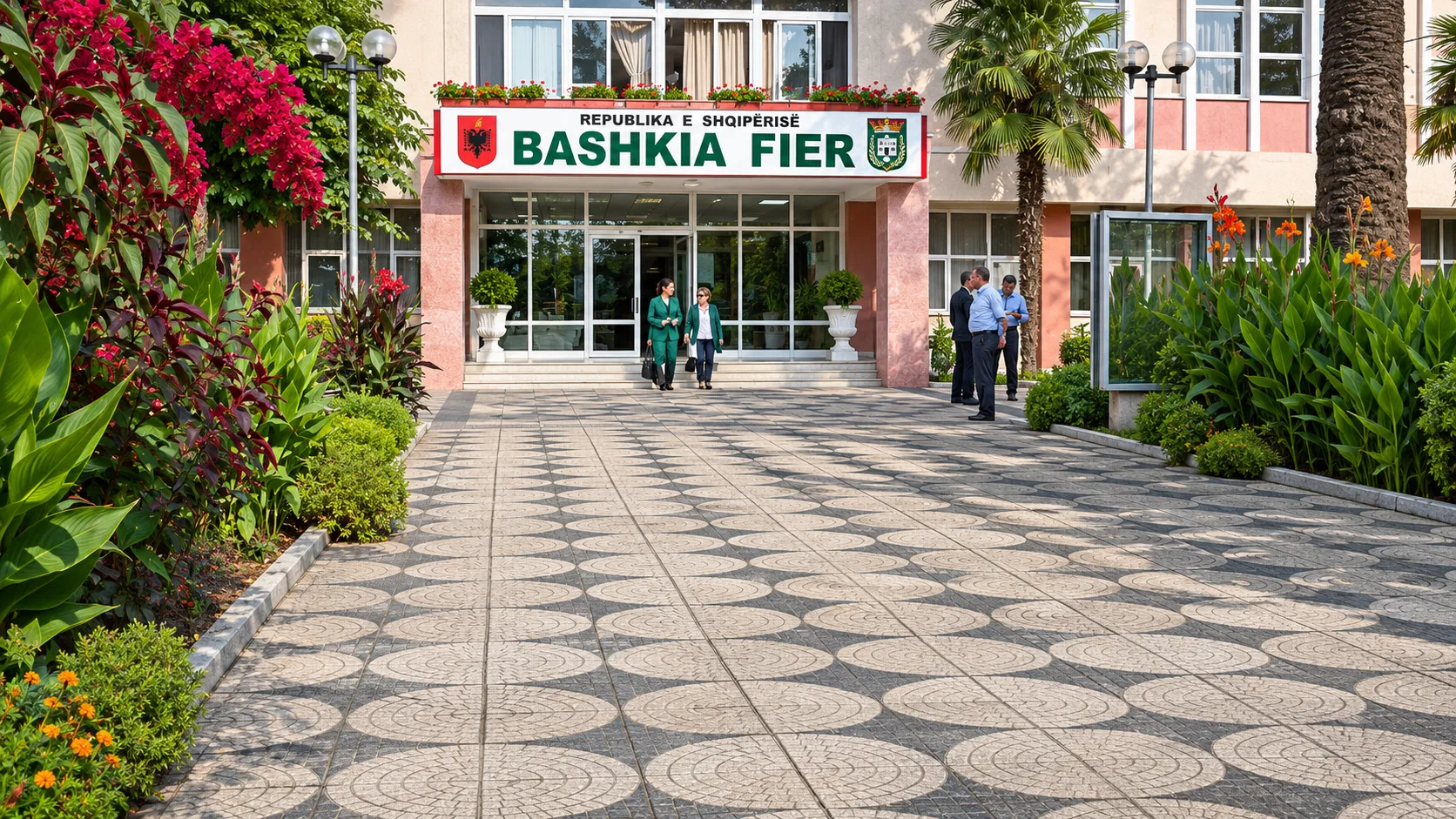
Fier Municipality closed the year 2025 with about 1.15 billion lek of unspent funds, of which 660.6 million lek belonged to capital investments. While only 27% of the planned investments were realized, the municipality’s overdue liabilities increased 11.6 times compared to the beginning of the year, reaching 28.7 million lek.
The findings are part of the final report of the Supreme State Audit (KLSH) on the financial audit of Fier Municipality, which highlights weaknesses in budget planning and implementation, investment management, and the settlement of obligations to third parties.
According to the report, the initial budget for 2025 was approved at 2.73 billion lek, but during the year it underwent some changes, reaching 3.47 billion lek. The net increase was about 732.7 million lek, or 26.8% more than the initial plan.
However, actual expenditures reached only 2.32 billion lek, or 67% of the revised budget. This means that about one third of the planned funds remained unrealized.
Investments, the main problem in budget implementation
The largest shortfall was recorded in capital investments. Out of 906.5 million lek planned, Fier Municipality spent only 245.9 million lek, leaving 660.6 million lek unrealized, or about 73% of the funds allocated for this category.
Investments account for more than half of the difference between the revised budget and the actual expenditures of 2025.
Meanwhile, expenditures for salaries and social security contributions were realized at 91%, while operational expenditures reached 66%. The differences indicate that the budget underperformance was particularly concentrated on investments, compared to personnel expenses.
KLSH notes that successive budget changes have not been accompanied by a sufficient pace of project implementation. According to auditors, the initial planning had not fully reflected the real needs and financial resources that the municipality would manage during the year.
A significant part of the budget increase was related to funds carried over from the previous year. From the changes made during the year, about 444.3 million lek additional were directed towards investments, while about 288.4 million lek were directed towards current expenditures.
However, the increase in available funds was not reflected to the same extent in the realization of investments.
For this reason, KLSH recommends improving financial planning, limiting budget revisions when necessary, and strengthening the monitoring of projects and investment contracts.
Unpaid liabilities increased 11.6 times, also for investments in schools.
Alongside the failure to realize investments, the audit highlights a significant increase in overdue liabilities.
At the end of 2024, Fier Municipality had about 2.5 million lek in unpaid liabilities, mainly for investments. Full repayment of these was planned for 2025, but according to the Supreme State Audit, no payment was made for these obligations.
Furthermore, during the year, new liabilities amounted to 26.3 million lek, bringing the total stock to 28.7 million lek by the end of December 2025.
Of the new liabilities, about 21.4 million lek are related to municipal funds, while 4.8 million lek come from investments financed by the line ministries through the Regional Development Fund.
The list of unpaid bills also includes important projects for the community. Just for the reconstruction of the nine-year school “Liri Gero,” about 17.7 million lek in new obligations from municipal funds are identified, while for the rehabilitation of sports fields about 3.7 million lek are noted.
Other obligations relate to the reconstruction of the “Janaq Kilica” school, the rehabilitation of the Vjosë–Levan–Fier irrigation canal, and the works for protection against the Vjosa River.
From previous years, unpaid obligations remained for the “Naum Kacaku” school and the rehabilitation of the irrigation scheme by the Martina Branch, phase two.
KLSH finds that the non-payment of inherited obligations, accompanied by the creation of new ones, contradicts the legal requirements for budget system management and financial discipline. For these reasons, KLSH requests that budget planning be based on real implementation capacities and project progress, so that approved funds are translated into realized investments and further accumulation of liabilities is avoided./ekofin.al
