


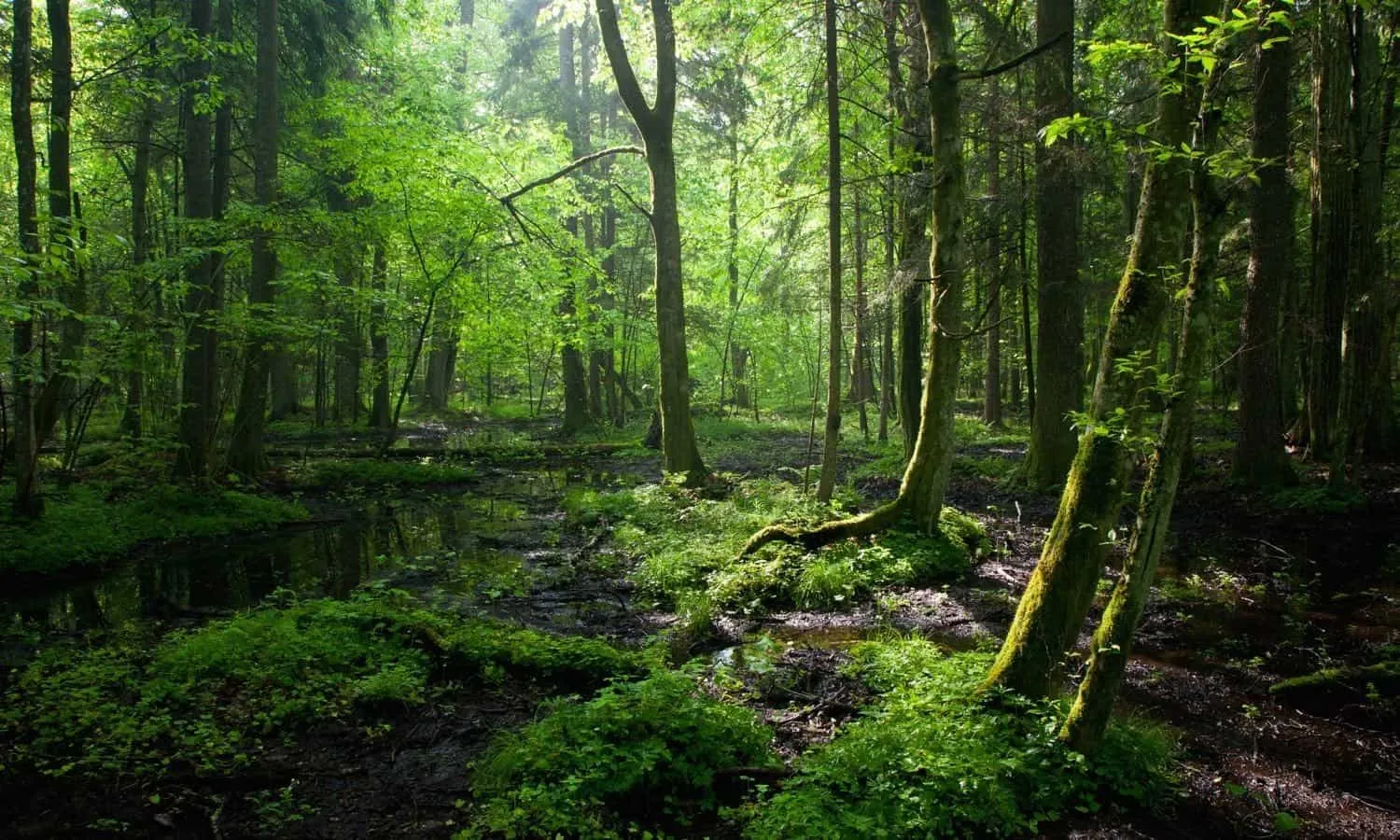
Damage from human interventions, tree cutting, construction, extraction of inert materials, and natural phenomena have caused dozens of natural monuments in Albania to lose the values for which they were declared protected. The government is preparing a decision to revise the national list, proposing the removal of 59 monuments and the inclusion of 26 new structures.
The Ministry of Environment has prepared the draft decision “On the approval of the revised, updated list of Albanian natural monuments,” which aims to reflect the real state of the country’s natural assets and improve their management.
According to the report accompanying the draft decision, the existing list contains 721 Natural Monuments, of which 297 are biomonuments and 424 are geomonuments, distributed throughout the territory of Albania.
The reassessment carried out has revealed that some of these monuments no longer exist, have been severely damaged, or have lost the natural characteristics that justified their legal protection.
For this reason, the studio that conducted the evaluation proposed the removal of 59 Natural Monuments from the list, while 26 other objects have been identified as candidates to be included for the first time on the national list.
If all these proposals are reflected in the final list, the net change for the 721 existing monuments would be a reduction of 33 objects. However, the final number must be confirmed by the annexes of the decision, also taking into account the three monuments declared by separate acts.
From deforestation to construction, the reasons for losing status
The report highlights a series of factors that have influenced the degradation of natural monuments.
Among the main causes mentioned are cutting, drying or burning of monumental trees, construction interventions, extraction of aggregates, pollution, and unauthorized exploitation of natural resources.
Some of the damages are also related to natural processes such as erosion, landslides, extreme weather conditions, and hydromorphological changes.
In other cases, the proposal to remove it from the list is not necessarily related to the destruction of the monument, but to the fact that the object is located within another protected monument.
The document emphasizes that the reassessment is based on geographic analysis, ecological assessment, legal criteria, and scientific standards, with the aim that the new list reflects the actual condition of the buildings on site.
The Red Stone Cave, blocked by debris
One of the most problematic cases identified in the document is that of the Red Stone Cave, in the village of Muhurr in Dibër county.
According to the report, the monument has been located, but the cave entrance is blocked by deposits of inert materials related to stone extraction activities.
This situation has made it impossible to fully assess the interior of the cave.
Based on the situation found and the position of the Regional Administration of Protected Areas in Dibër, the proposal to remove this monument from the list has been upheld.
The case shows the impact that economic activities and interventions in the territory can have on natural heritage, especially when they take place near facilities with special protection status.
Vlashaj in Dibër, the pine forest that lost its natural value
Another monument for which the status removal is proposed is the Vlashaj area, in the Dibër district.
This area, covering an area of 50 hectares, was declared a Natural Monument in 1996.
According to information provided by the Regional Administration of Protected Areas, the territory was covered by an old black pine forest but suffered damage during the years of transition.
The current situation, according to the institutional assessment, no longer justifies the continuation of the protection status.
For this reason, it has been proposed to remove the monument from the list, documenting its condition through photographs and geographic coordinates.
Shkodër, five monuments saved from removal
Not all monuments initially identified as problematic will lose their protected status.
In Shkodër County, additional field verifications have confirmed the existence of five Natural Monuments: the Chestnuts of Reç, the Oak of Cilikoj, the Cave of Hus and Pus, the Cataract Cave, and the Fairy Cave.
It has been confirmed that there is no need to remove these items from the list.
The situation is different for the monument “Vidhat at Pusi i Markajve,” which no longer exists in its original location. For this reason, its removal has been proposed.
In Berat County as well, the monuments “Sterra e Borës” and “Sterra Uvlen,” also known as the Ramie Well, have been reconfirmed.
The habitat of the Albanian Tulip preserves its natural values
A positive result of the monitoring process is related to the habitat of the Albanian Tulip (Tulipa albanica) in Kukës County.
This monument, covering an area of 35.5 hectares, was declared protected in 2023.
According to the report, during the blooming period in 2026, habitat monitoring was conducted, which showed that it is in good condition.
No visible changes in surface area or signs of damage were observed in the number of individuals of the species compared to the condition at the time of the declaration.
Meanwhile, for the “Zhej” monument in Gjirokastër County, the document states that the area preserves natural and landscape values, but the territory is now included in the “Zagori” National Park.
For this reason, clarification of its legal and administrative status is required.
Another 26 new monuments on the protection list
Alongside the proposals for the removal of damaged monuments, the reassessment process has identified 26 new natural objects that could receive the status of Natural Monuments.
According to the document, these objects have special scientific, natural, aesthetic, landscape, or cultural values.
In their selection, geological formations, water sources, monumental forests, rare habitats, scientific research potential, and connections with local history and traditions were taken into consideration.
The identification is based on field explorations, scientific data, recommendations from academic institutions, and suggestions from local communities.
The report does not list individually the 26 proposed objects, referring to the relevant annexes of the draft decision.
Every monument will have a digitized passport
Another important change concerns the improvement of the technical and geographical documentation of Natural Monuments.
The project foresees the design and digitization of standardized passports for each monument.
These documents will contain data on morphological, biological, and ecological characteristics, area, geographic coordinates, and photographic materials.
The goal is for the responsible institutions to have more accurate information about the condition of the facilities and to more easily identify overlaps with other protected areas or with infrastructural developments.
Such a database is also expected to support territorial planning, scientific research, and the sustainable development of nature tourism. /ekofin.al
