


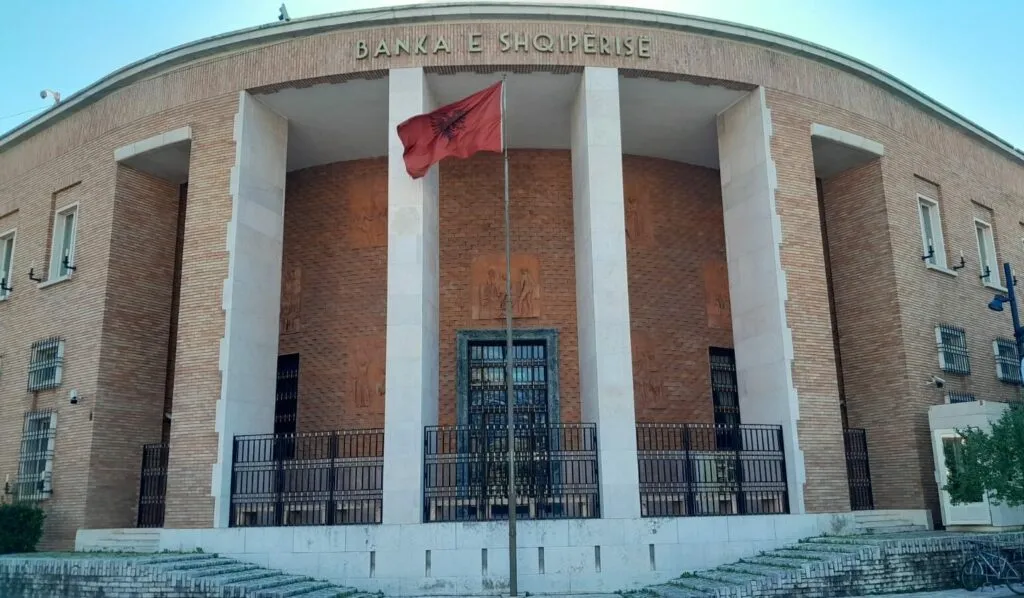
The rise in energy and food prices on international markets, the escalation of geopolitical conflicts, and the tightening of monetary policies by major central banks are creating an increasingly uncertain environment for the Albanian economy. The Bank of Albania warns that external shocks may bring new inflationary pressures, while the increase in interest rates in international markets could affect financing conditions and the outlook for economic activity.
In the 2026/IV Monetary Policy Quarterly Report, the Bank of Albania notes that the global economy showed higher growth rates during the second quarter of the year, but this trend was accompanied by strengthening inflationary pressures during the third quarter.
According to the report, the escalation of the conflict in the Middle East and the ongoing war between Russia and Ukraine have directly affected the prices of energy, raw materials, and food products, increasing costs for importing economies, including Albania.
Brent crude oil reaches 97 dollars per barrel, raw material prices rise by 30%
One of the most concerning developments identified by the Bank of Albania is the sharp increase in the prices of basic goods in international markets.
During the third quarter of 2026, the commodity price index increased on average by 30% year-on-year. In September alone, the growth rate of this index reached 47.8%, reflecting the escalation of tensions in the Middle East.
The price of Brent oil was quoted on average at 97 dollars per barrel during the third quarter, an increase of 40.6% compared to the same period last year. This followed the 54% increase recorded in the second quarter.
The Bank of Albania notes that tensions in the Middle East have increased uncertainty about global oil supply, especially due to difficulties in using alternative transport routes to bypass the Strait of Hormuz.
For Albania, an economy heavily dependent on fuel imports, the rise in oil prices on international markets is passed on to the costs of transportation, production, and distribution of goods, creating additional pressures on consumer prices.
Food prices increase by 12.4%, impact from the Russia-Ukraine war
External pressures are not limited only to energy.
According to the report, the international food price index rose by 12.4% during the third quarter of 2026, up from an increase of about 10% in the previous quarter.
A significant impact has come from the increase in grain prices, as a result of the intensification of the conflict between Russia and Ukraine, two of the world’s main exporters of these products.
Obstacles in maritime transport through the Black Sea have affected international supply and price increases.
These developments have direct significance for Albania, as the rise in prices of imported grains and other food products may affect the prices of bread, flour, and processed products, as well as the costs of the food industry.
Inflation in the Eurozone reaches 3.8%, in Italy 4.1%, and in Greece 5.1%
The rise in international prices has also been reflected in Albania’s main trading partner economies.
In the Eurozone, inflation reached 3.8% in September 2026, up from an average of 3.1% during July and August.
In the United States, inflation accelerated to 3.7%, up from an average of 3.4% in the previous two months.
An even stronger increase has been recorded in two of Albania’s main trading partners.
In Italy, inflation reached 4.1% in September, up from 3.2% in August. In Greece, it rose to 5.1%, up from 3.7% in August and 2.7% in July.
According to the Bank of Albania, the increase in energy prices has been a determining factor in the rise of inflation in these economies.
This situation presents a double risk for Albania. On one hand, higher prices in partner countries could increase the costs of imported goods. On the other hand, a possible weakening of purchasing power and economic activity in these countries could affect demand for Albanian exports.
The European Central Bank and the FED raise interest rates
The strengthening of inflationary pressures has also brought changes in international monetary policies.
In September 2026, the European Central Bank raised the three main interest rates by 0.25 percentage points, bringing them respectively to 2.50%, 2.65%, and 2.90%.
During the same period, the United States Federal Reserve raised the base interest rate range by 0.25 percentage points, bringing it to 3.75%–4.00%.
According to the report, this was the first base rate hike by the FED since 2023.
The tightening of monetary policies has been accompanied by an increase in government bond yields in international markets.
The yields on 10-year bonds in the US and the United Kingdom have risen above 5%, while increases have also been recorded in European markets.
In the Eurozone, the spreads between government bond yields and German ones have widened, especially in France, where political uncertainty and concerns about public finances have played a role.
These developments signal a more expensive international financing environment, which could also impact the Albanian economy, especially through borrowing costs in foreign markets and financing conditions in euros.
Albania, average inflation of 3.2% in the third quarter
Despite external pressures, inflation in Albania has remained close to the Bank of Albania’s target of 3%.
According to the report, average inflation reached 3.2% during the third quarter of 2026, up from 3% in the second quarter.
However, the monthly trend has shown a slowdown, as inflation dropped from 3.4% in July to 2.9% in September.
The Bank of Albania assesses that the rise in inflation during the year has been mainly influenced by the increase in the prices of oil and unprocessed foods.
On the other hand, the slowdown in rent growth has helped ease domestic inflationary pressures. Core inflation fell to 2.8% during the third quarter.
Another factor that has limited the impact of the international price hike on the Albanian economy has been the overvaluation of the lek.
According to the Bank of Albania, the strengthening of the local currency has partially offset the transmission of rising international prices to the Albanian market.
However, this protective effect does not completely eliminate the impact of rising energy and food prices.
Inflation could rise above target until early 2027
The outlook for the coming months remains conditioned by international developments.
The Bank of Albania forecasts that inflation will rise somewhat above the 3% target in the short term, until early 2027.
This forecast is related to higher prices of raw materials on international markets and rising inflation in partner trading countries.
Going forward, inflation is expected to gradually converge toward the target, supported by the anticipated normalization of energy prices and international supply chains.
However, the institution warns that the prolongation or escalation of geopolitical conflicts could change this perspective.
Further increases in energy prices and possible supply disruptions would put additional pressure on production costs and consumer prices.
At the same time, the slowdown in economic activity in partner countries could weaken foreign demand and negatively affect Albanian exports. /ekofin.al
