


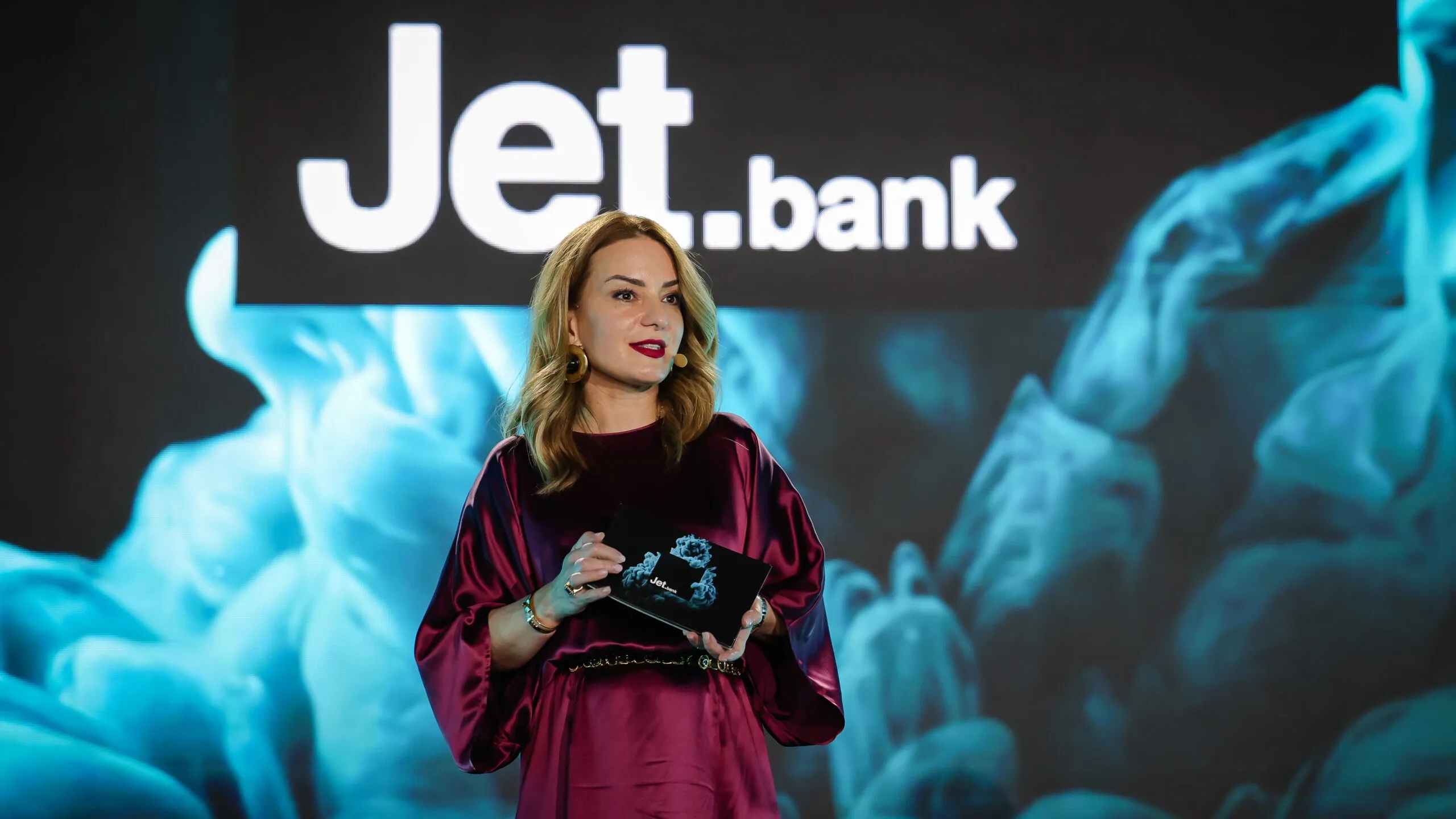
The entry into the market of the country’s first fully digital bank marks a new phase in the modernization of the Albanian financial sector.
The banking sector in Albania is undergoing significant changes, as the shift towards digital financial services is transforming the way customers manage their money and how banks compete to attract it.
The Bank of Albania is helping to accelerate this transition through the modernization of the national payment infrastructure and regulatory reforms aimed at promoting innovation and competition.
Holta Zaçaj, First Deputy Governor of the Bank of Albania, sees digitalization “not merely as a matter of technological improvement,” but as a “foundation for the long-term economic development of our country, financial inclusion, and building trust in financial institutions.”
The foundations of this digital future are being partially built through a series of legal reforms and improvements to the national payment infrastructure, which are being implemented by the central bank.
The launch of the AIPS EURO system in 2022 made domestic euro transfers faster and cheaper, while Albania’s membership in the Single Euro Payments Area (SEPA) in October 2025 reduced cross-border payment costs in euros.
A new instant payment system, based on the European TIPS model, is expected to become operational in Albania in November, enabling transactions to be carried out at any hour of the day, seven days a week.
Alongside infrastructural improvements, the adoption of legislation on payment services, aligned with that of the European Union, has laid the foundation for the development of open banking and increased competition among non-bank financial providers.
Changes in the market are creating opportunities for new operators to enter the Albanian financial system. One of these is Jet Bank, which started operations in June as the first fully digital bank in Albania, with a model of operation without physical branches, built from scratch.
“Our experience shows that entry into the Albanian banking market is possible when you offer a convincing proposal and make the necessary preparations. We had to demonstrate sound governance, strong controls, and operational readiness, as required by every bank,” says Fatbardha Rino, executive director of Jet Bank.
Jet Bank has built its operations on technology provided by international partners, including Backbase for the digital banking platform and Oracle for the core banking system.
“We see that the biggest unmet demand is in everyday banking services, especially for those people who have a bank account but continue to have more complicated money management or it takes longer than necessary. Having a bank account and receiving good service are not always the same thing,” Rino states.
According to her, Jet Bank’s model as the only fully digital bank in Albania “allows us to build our service around customer needs, reducing documentation and the need to visit a bank branch. Customers have more important things to do than organizing their day according to the bank’s schedule.”
Considerable room for expansion
However, Albanian banks continue to face an economy that largely relies on the use of physical cash.
According to the Bank of Albania, during 2025 an average of only 29 electronic payments were made for each adult, while cash payments continue to dominate small businesses.
This indicates that there is still considerable room for the expansion of digital banking services.
For this reason, existing banks are investing in new services and modernizing their technology, including the use of artificial intelligence (AI) to simplify processes and improve efficiency.
At the National Commercial Bank (BKT), transactions carried out at physical branches have almost halved over the past three to four years, while digital transactions have doubled.
“Digital transformation has been a strategic priority for BKT and is now delivering concrete results,” says Fatih Karlı, the bank’s deputy executive director.
BKT is using artificial intelligence for document processing and other internal functions, while gradually expanding its use to services offered directly to clients.
According to Karlı, the bank is moving from a model where priority is given to mobile phone services (mobile-first) to an organization that places artificial intelligence at the center of its operations (AI-first), emphasizing careful testing and human supervision.
Similar developments are happening across the sector, where banks are investing significantly in the technologies that support their operations.
OTP Bank Albania is modernizing its core banking and payment systems, automating processes, and introducing a new digital platform.
The goal is to create a “bank that relies more on data, enabling faster decision-making and more personalized experiences for customers,” says Bledar Shella, CEO of OTP Bank Albania. /Adapted from The Banker, ekofin.al
