


The Assembly has approved amendments to the Law on Social Housing, expanding support programs for citizens seeking to purchase a home or cover rental costs. The amendments provide zero-interest loans for housing up to 6 million lek, 3% subsidized interest loans for housing up to 20 million lek, as well as state coverage of up to 50% of rent for eligible categories.
The law expands the number of housing programs from six to eight, adding new financial instruments, especially for young people, students, early-career professionals, and families struggling to secure housing.
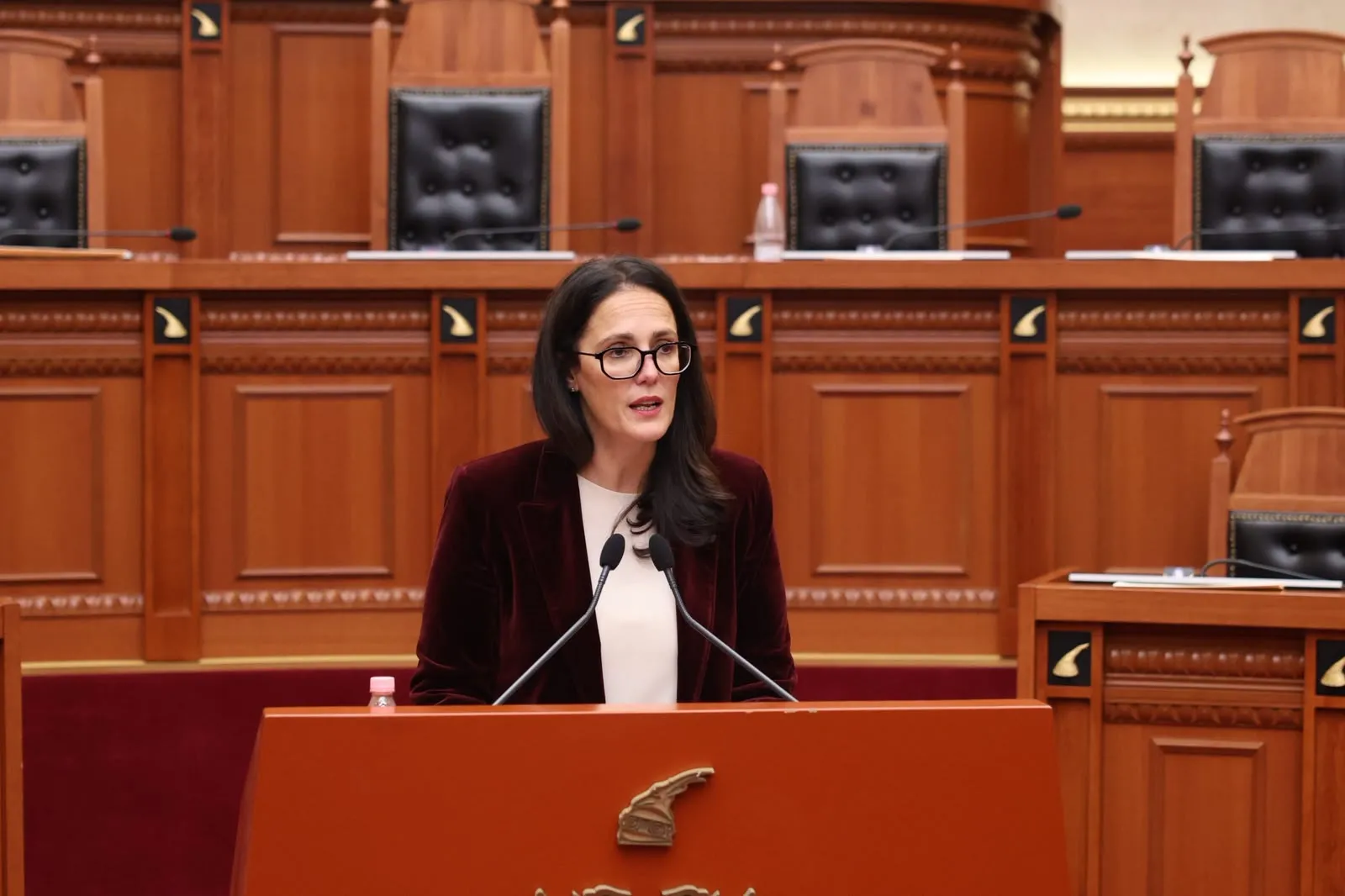
Presenting the changes in Parliament, Minister of Economy and Innovation Delina Ibrahimaj stated that the reform aims to create greater opportunities for affordable housing, at a time when housing prices and rental costs have become a significant burden for many families.
Zero-interest loan, monthly installment drops from 32,000 to 17,000 lek
One of the main innovations of the law is the zero-interest loan program for the purchase of homes valued up to 6 million lek.
The program aims to support young people, master’s students, early-career professionals, and other categories that meet the legal criteria.
According to the example presented by Minister Ibrahimaj, for a loan of 6 million lekë with a 30-year repayment term, the monthly installment with a 5% market interest rate would be about 32,000 lekë.
With the state fully subsidizing the interest, the monthly installment drops to about 17,000 lek.
This means that a beneficiary family can save about 15,000 lek per month, or 180,000 lek per year, compared to a loan with 5% interest.
In total, over a 30-year period, the theoretical interest savings could reach about 5.4 million lek, if the 5% benchmark rate remains unchanged throughout.
3% interest loan for housing up to 20 million lek
In addition to zero-interest loans, the law provides another support instrument for the purchase of housing valued up to 20 million lek.
In this case, beneficiaries will be able to obtain loans at a subsidized 3% interest rate, while the state will subsidize the difference between the market interest rate and the level set by the program.
For example, if a bank offers a loan at 5% interest, the beneficiary will pay 3% interest, while the two percentage-point difference will be covered by the state, according to the program’s terms.
Another facilitation concerns the possibility of using financial guarantees for the initial contribution required by banks when granting mortgage loans.
This instrument is aimed at helping citizens who have sufficient income to cover the monthly installments but do not have the necessary savings for the initial payment on the home.
The state will pay up to 50% of the rent
Another important program is the rental subsidy for students, young people, and professionals who move from their city for study or employment.
According to the approved changes, the state will cover up to 50% of the eligible rent, depending on eligibility criteria and reference values approved by municipal councils.
This means that the subsidy will not necessarily be calculated on the actual rent of each lease agreement, but on the acceptable value according to the program’s rules.
For example, if the eligible rent for a dwelling is 30,000 lekë per month, the maximum subsidy can reach 15,000 lekë, while the remainder will be covered by the beneficiary.
The measure aims to ease the cost of living for students and young people who move to cities with greater study and employment opportunities.
Applications through the “Your Home” platform
The electronic platform “Your Home,” which is currently under development, will be used to administer the rent subsidy program.
Through this platform, citizens will be able to apply for financial support, track the status of their applications, and get information about procedures and eligibility criteria.
At the same time, landlords will be able to list the properties they offer for rent, creating a mechanism that connects housing demand with supply.
Minister Ibrahimaj emphasized that the objective is to transition to fully electronic applications and to avoid requiring citizens to submit documents that state institutions already possess.
Rent-to-own, payments can be recognized as part of the home’s price
The law also provides for the rent-to-own program, an instrument that allows families to gradually transition from tenant status to owner status.
Under this mechanism, a portion of the rent payments can be recognized as a contribution toward the purchase of the dwelling.
This creates the opportunity for families that lack the immediate financial capacity to purchase a property to first secure rental housing and then transition to ownership under the program’s terms.
11.5 billion lek from developers remain unused in municipalities
One of the most important financial elements of the reform is the creation of the Fund for Housing and Social Cohesion.
This fund will pool resources from the state budget, private sector contributions, revenues from housing projects, and other lawful sources.
It will also include the 3% contributions for social housing collected by municipalities as part of new construction developments.
According to data presented by Minister Ibrahimaj, currently around 11.5 billion lek, equivalent to approximately 115 million euros, from developers’ contributions for social housing remain unused in municipalities’ accounts.
Through the new fund, these resources are intended to be activated and used to finance housing programs, especially in areas where the demand for social and affordable housing is highest.
The 30-40-30 model: social and affordable housing in the same neighborhoods
The legal changes also introduce the 30-40-30 urban development model, which aims to avoid the creation of isolated neighborhoods based on residents’ income levels.
Under this model, in projects where it will be implemented, 30% of the units will be dedicated to social housing, 40% to affordable housing, and 30% to the open market.
The goal is for families benefiting from social programs to live in the same communities as other families, with shared access to schools, infrastructure, and public services.
“We don’t want to build neighborhoods where there’s only one income bracket. We don’t want families benefiting from social housing to live in isolation,” Ibrahimaj said.
The Board for Social and Affordable Housing is Established
The law also provides for the establishment of the Board for Social and Affordable Housing, as part of the new institutional structure for administering the programs.
Municipalities will continue to have a key role in identifying families in need, assessing applications, and implementing housing programs.
Meanwhile, new financial and digital mechanisms aim to improve coordination between the central government, local units, and the private sector. /ekofin.al
