


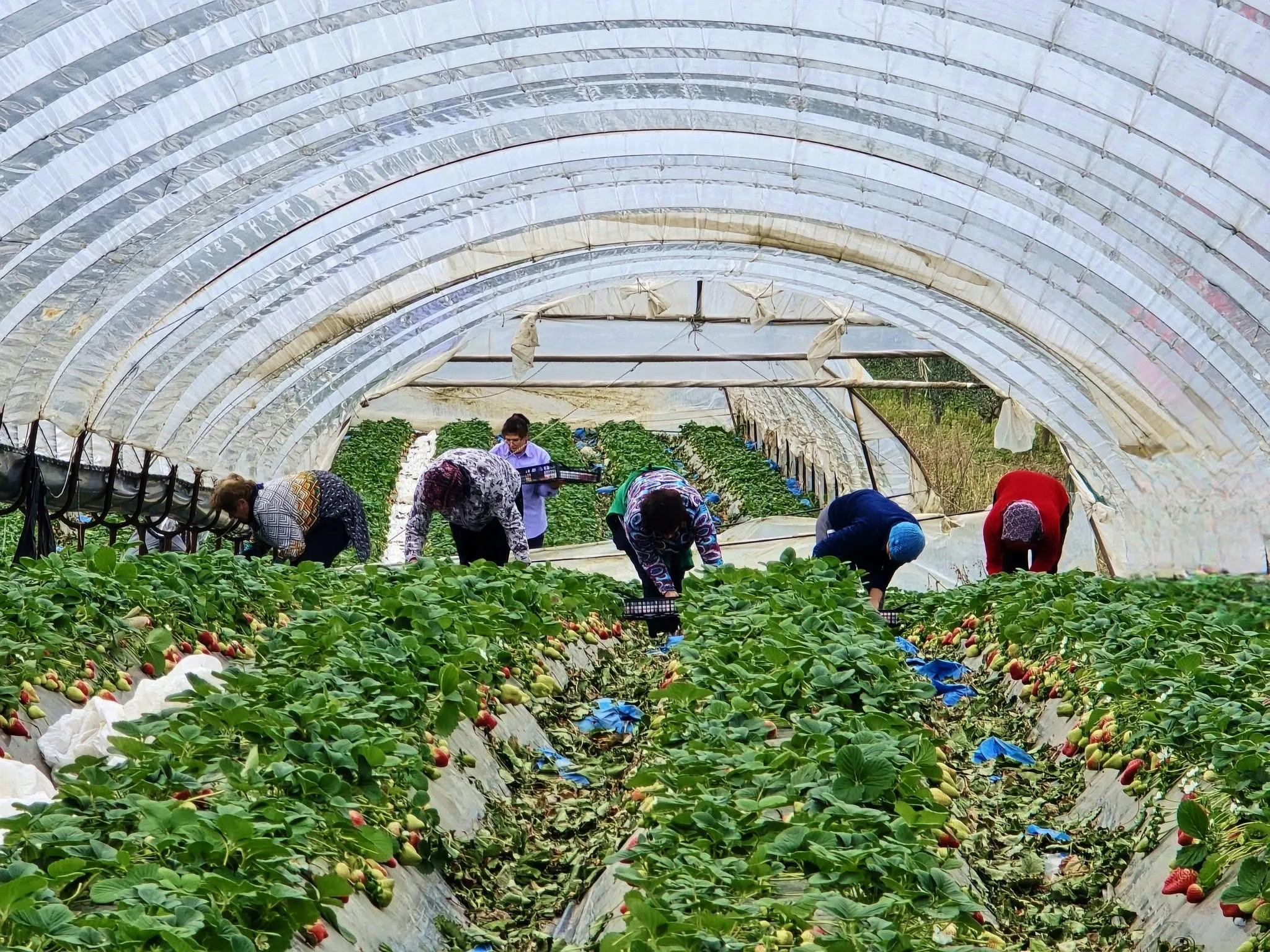
Albanian agriculture is facing deep structural weaknesses, while the contraction of livestock farming, land fragmentation, low productivity, and the instability of support policies are limiting the sector’s competitiveness. Although Albania has managed to develop competitive exports of vegetables, citrus, and medicinal plants, a significant portion of agricultural production remains exposed to imports and market risks.
These are some of the main findings of the latest World Bank report, titled “From Farm to Market: An assessment of agri-food sector competitiveness in the Western Balkans and Moldova,” which analyzes the competitiveness of the agri-food sector in the Western Balkan countries and Moldova.
In the chapter dedicated to Albania, the World Bank highlights that agricultural development is characterized by two different realities. On one hand, private investments have encouraged the expansion of production in vegetables, greenhouses, citrus fruits, and olives, while on the other hand, traditional sectors, especially livestock and cereals, are facing production declines and loss of competitiveness.
The report emphasizes that Albania’s considerable natural and climatic potential has not been accompanied by a sustainable transformation of the sector, mainly due to small farms, insufficient investments, and institutional weaknesses.
Livestock farming is declining, Albania loses one third of its cattle
One of the most concerning developments identified by the World Bank is the continuous contraction of livestock farming.
According to the report, Albania has lost nearly one-third of its cattle herd over the past decade, while over a longer period their number has dropped from over 630,000 heads in 2006 to around 300,000.
The decline has also affected the number of sheep and goats, reflecting significant changes in the structure of the rural economy.
The World Bank identifies emigration, aging farmers, low productivity, feed costs, and insufficient investments as factors that have contributed to this shrinkage.
The situation is particularly problematic in the dairy sector.
According to the report’s data, the collection of raw milk has fallen by 20–25% over the past decade, while the number of dairy farms has been reduced from over 70,000 to less than 45,000.
The production structure remains highly fragmented, with farms typically owning only 2–3 cows. The average yield is estimated at 2,500–3,000 liters per cow, less than half the level of regional competitors.
Another indicator of poor productivity is the average weight of cattle carcasses, which in Albania is estimated at around 150–170 kilograms, compared to 250–300 kilograms in neighboring countries.
These weaknesses have contributed to the increased need for imports. The report highlights that Albania imports over 10 million liters of milk per year, alongside considerable quantities of cheese and other dairy products.

Dependence on imports for some basic food products constitutes another significant problem highlighted in the report.
According to the World Bank’s analysis, domestic production covers about 55% of wheat consumption, 55% of pork consumption, and only 24% of poultry meat consumption.
For beef, the self-sufficiency level is estimated at around 79%, while for milk it reaches 98%.
This situation changes significantly for several other agricultural products, where Albania manages to produce more than it consumes.
According to World Bank indicators, self-sufficiency reaches 157% for strawberries, 131% for cabbage, 127% for cucumbers, 122% for peppers, 117% for watermelons, and 116% for tomatoes.
For mandarins as well, domestic production exceeds consumption, with a self-sufficiency level of about 115%.
Meanwhile, Albania remains dependent on imports of certain citrus fruits, with domestic production covering about 62% of orange and 60% of lemon consumption.
These data demonstrate that the competitiveness of Albanian agriculture is concentrated in a few specific crops, while other sectors struggle to meet the demand of the domestic market.
Cereal areas shrink, while vegetables and citrus expand.
The World Bank notes significant changes in the structure of agricultural production over the past two decades.
The areas cultivated with cereals have been reduced from around 145,000–150,000 hectares to 130,000–135,000 hectares, while the areas planted with vegetables, olives, citrus, and medicinal plants have expanded.
This transformation has been driven mainly by market demand and private investments in crops with higher economic value.
However, the World Bank assesses that the shift from grains to more profitable products should not necessarily be seen as a negative development.
The problem lies in the lack of a competitive feed production system for livestock and the low productivity of existing farms.
In this way, the contraction of grain production and the weaknesses of the livestock sector create a continuous dependence on imports of animal feed and other agricultural products.

The report highlights that Albania has made progress in agricultural product exports, especially tomatoes, cucumbers, peppers, watermelons, citrus fruits, and medicinal plants.
The development of production in greenhouses and the ability to supply international markets during early seasonal periods constitute significant competitive advantages.
However, the World Bank warns that a large portion of Albanian products compete mainly through low prices and not through quality differentiation or established brands.
Export prices for many products are lower than the reference levels of the European Union.
This makes Albanian competitiveness vulnerable to rising production costs, wages, transportation, and agricultural inputs.
According to the report, to maintain and expand its position in European markets, Albania needs to invest more in production standardization, certification, post-harvest storage, processing, and the organization of supply chains.
On the other hand, the European Union remains the main source of Albania’s agricultural imports, representing over two-thirds of them. Italy and Greece rank among the main suppliers.
Apples under import pressure, small farms lose competitiveness
Another sector that presents weaknesses is apple production.
The World Bank notes that production is fragmented into thousands of small plots, while only 23 orchards cover areas over 5 hectares.
This structure limits opportunities for mechanization, investments in technology, refrigeration storage, and sales organization.
According to the report, apple imports increased from around 6 million dollars in 2020 to over 8 million dollars in 2023 and 2024.
Small farmers face increasingly strong competition from imported products, while larger producers have better opportunities to invest in new varieties, irrigation systems, and modern technology.
The World Bank classifies the apple sector among the activities that require structural interventions to improve competitiveness.
Blueberries, honey, and medicinal plants, potential for development
Despite the problems, the report identifies several sectors with considerable potential for increasing production value and expanding exports.
Blueberries are considered a product with significant development potential, especially due to international market demand and high sales value.
However, the development of this sector requires investments in quality planting materials, technology, irrigation systems, and production standards.
Honey production is also considered an activity with potential, but with issues related to standards, certification, and traceability.
Medicinal and aromatic plants, olives, citrus fruits, and greenhouse vegetables rank among the sectors where Albania has developed competitive advantages.
However, these sectors also remain exposed to climate change, market fluctuations, and quality issues.
For mandarins, the report particularly highlights the risk of climate damage, including hail, while for olives it highlights fluctuations in yield and production quality.
The World Bank criticizes the instability of public support
Beyond production issues, the report raises concerns about how supportive policies for Albanian agriculture are organized.
The World Bank assesses that the sector is characterized by high dynamism in private investments, but by weak and unstable public support.
According to the analysis, agricultural policies have been more oriented towards short-term subsidies and income support, rather than towards investments that could change the structure and productivity of the sector.
Such an approach has not been sufficient to encourage farm modernization, cooperation among producers, and their integration into market chains.
The report also highlights the need to strengthen institutional credibility and capacities, improve veterinary services, food safety standards, and develop instruments compatible with the European Union’s Common Agricultural Policy.
In its recommendations for Albania, the World Bank calls for the restoration of a sustainable and investment-oriented support framework, focusing on competitive horticulture sectors and export chains, as well as special interventions addressing weaknesses in livestock farming and the animal feed system.
It is also recommended to manage risks in traditional fruit sectors and support products with high development potential.
In conclusion, the World Bank report shows that the main challenge for Albanian agriculture is not simply increasing production, but the transformation of the sector’s economic model. /ekofin.al
