


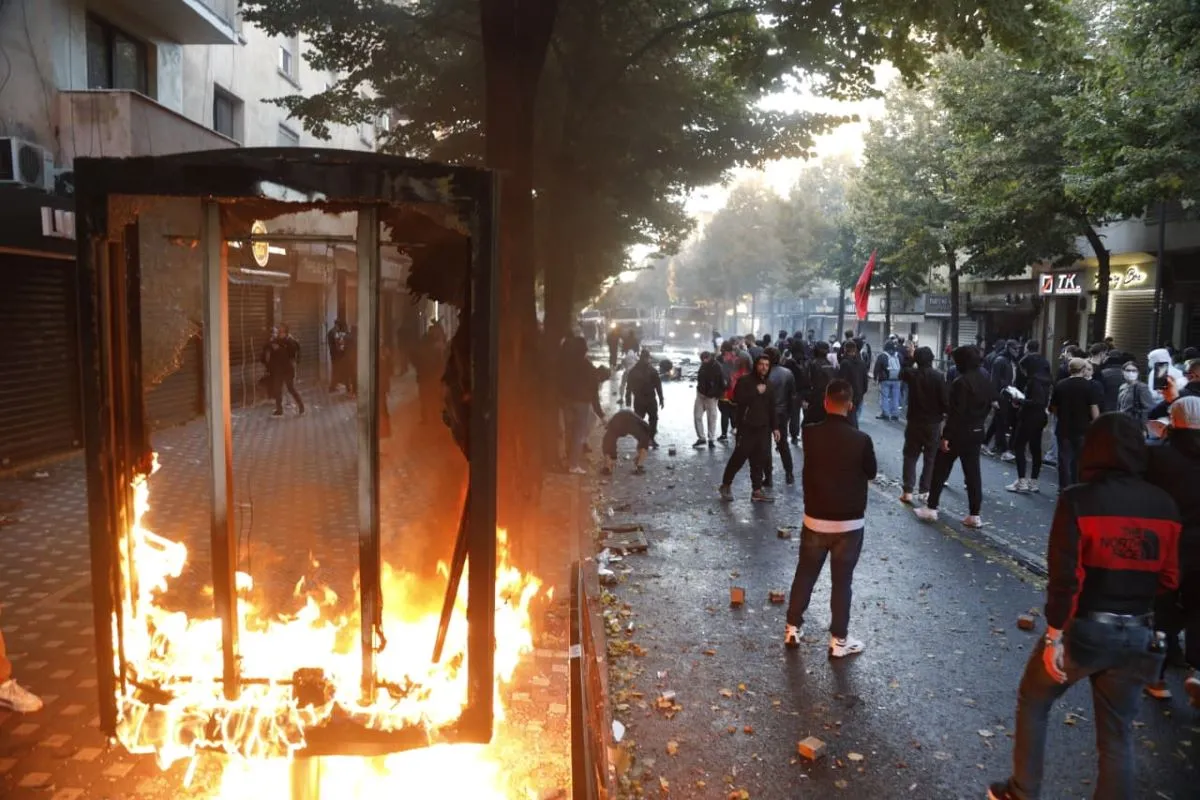
The violent protest in Tirana has caused and continues to cause damage to public infrastructure and businesses, leaving behind a considerable economic bill shared among several actors: the public budget, private businesses, and insurance companies.
The first part of the bill relates to public property. Damage to road signage, lighting, sidewalks, bus stations, urban spaces, and public institutions translates into considerable expenses for repairs and restoring infrastructure to its previous condition. These damages will be covered by the budgets of the Municipality of Tirana and the state, and the value of this bill must be determined by identifying the damages and the specific costs of the repair.
Another part of the cost is related to direct damages caused to private entities, mainly banking institutions, microfinance institutions, mobile company stores, as well as service businesses.
The sharing of the economic burden in this case does not necessarily end up with the taxpayers. Financial liability depends on the nature of the damage, ownership of the damaged property, insurance coverage, and legal possibilities to claim compensation from the responsible persons.
A significant portion of the affected businesses, mainly banks, have their damages covered by insurance companies, as they are legally required to insure against vandalism and theft due to the nature of their business. Meanwhile, other businesses that have simple property insurance do not receive compensation from the insurance.
In this case, there may also be coverage from the state budget, as the Minister of Economy, Delina Ibrahimaj, has appealed to affected businesses to identify and document the damages suffered and to report them to the Ministry so that every case can be assessed and followed up with the responsible institutions.
At this stage, since the protest is still ongoing, business associations do not yet have an official inventory of damages or cost calculations, making it difficult to determine the total value of the protest’s economic bill.
To determine the cost of the protest, complete data from the responsible institutions on damages to public property, as well as from affected businesses, is needed. Only after these expenses are identified can a clear separation be made between the cost covered by public funds, losses to the private sector, and damages for which compensation may be claimed./Scantv
