


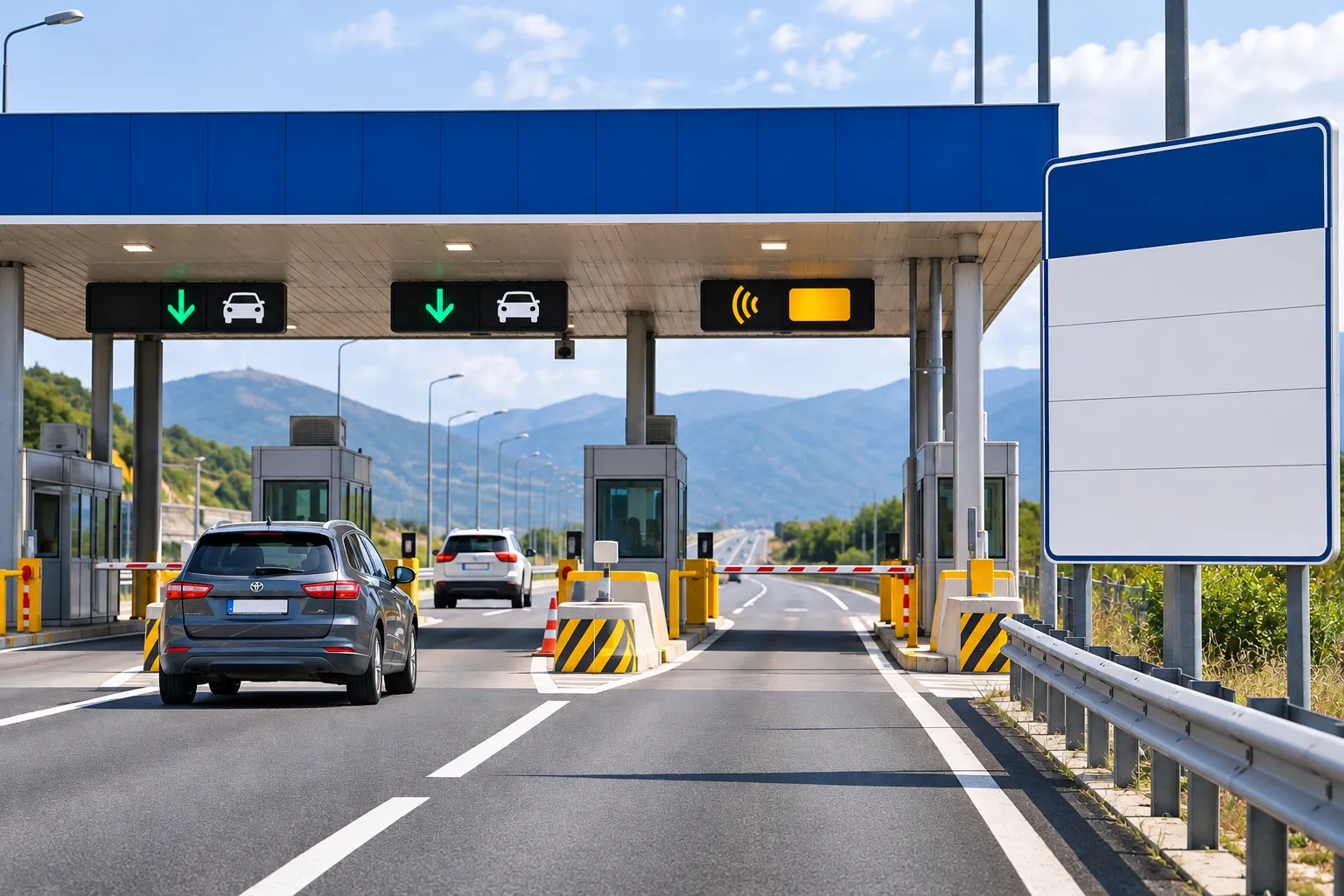
Albania plans to expand the use of electronic road toll systems, starting with the highest-traffic segments of the trans-European transport network (TEN-T). The Sectoral Transport Strategy and the 2030 Action Plan foresee 200,000 euros for preparing the legal and technical framework of electronic tolling during 2028–2029, while system testing on selected roads is scheduled for the period 2030–2032.
In the future, the measure may affect private vehicle drivers and operators transporting goods and passengers, depending on the routes included in the scheme. However, the strategy does not yet specify the exact segments where the tolling will be applied, the payment amounts, or the categories of vehicles that will be subject to them.
According to the document, the Ministry of Infrastructure and Energy will be responsible for developing policies and the legal and technical architecture of the system, in cooperation with the Ministry of Finance, the Albanian Road Authority, DPSHTRR, and AKSHI.
For this preparatory phase, 100,000 euros are planned for 2028 and another 100,000 euros for 2029.
The system is intended to comply with the European Eurovignette Directive, which regulates the charging for the use of road infrastructure for certain categories of vehicles, as well as with the European Electronic Road Charging Service (EETS), which aims to facilitate the interoperability of electronic payment systems between countries.
Piloting on high-traffic roads, still without a determined cost
After preparing the legal and technical framework, the strategy foresees moving to the testing phase of electronic tariffing.
According to the Action Plan, piloting will be carried out on selected segments of the TEN-T network, with priority given to those with high traffic, during the period 2030–2032. The Albanian Road Authority is the institution responsible for this phase, in cooperation with the Ministry of Infrastructure and Energy.
Unlike system preparation, for which 200,000 euros have been allocated, piloting does not yet have a cost specified in the document.
The strategy also sets as a condition that the relevant infrastructure and systems must be fully prepared before the start of testing.
This means that the plan does not yet specify the introduction of new tolls on a specific road, but rather the creation of conditions for the possible application of electronic tolling in certain segments.
Electronic charging is part of a broader program for the digitalization of road transport. The strategy aims to integrate it, where implemented, with traffic management systems, real-time information, and national transport platforms.
The document foresees the expansion of intelligent transport systems along the TEN-T network, including cameras, sensors, and electronic information systems for vehicle drivers. /ekofin.al
