


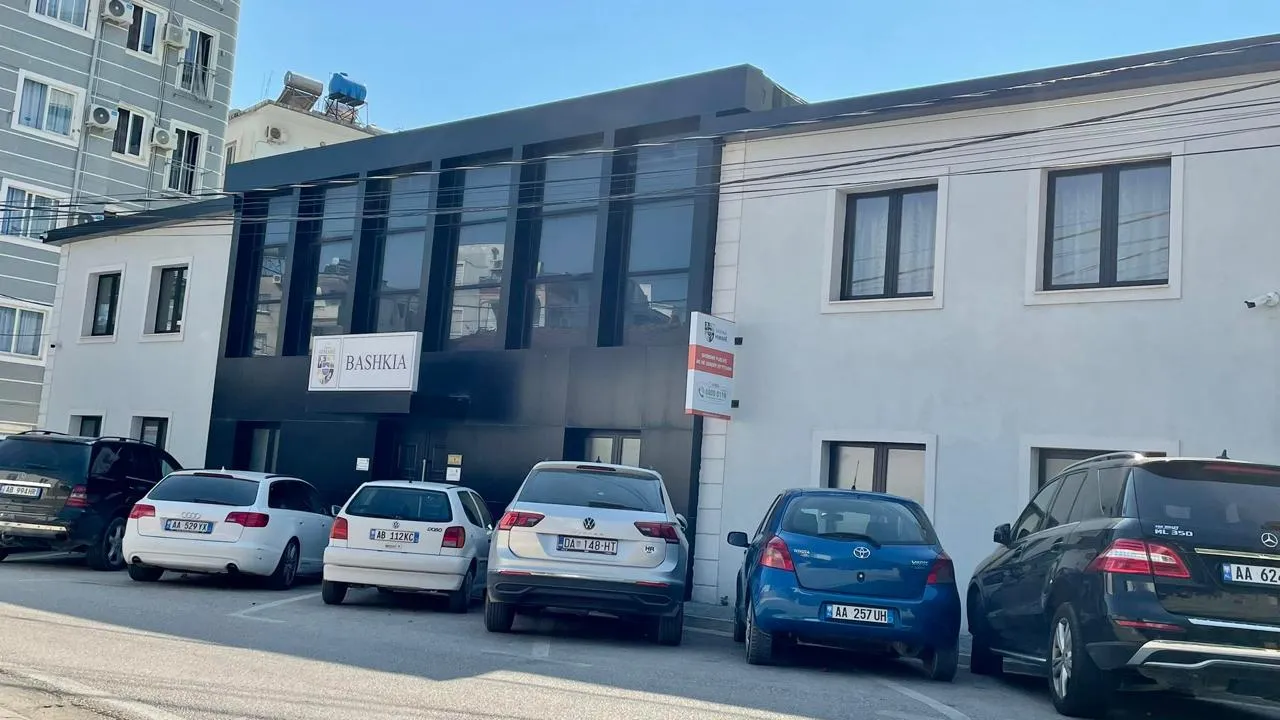
Himarë Municipality shows significant problems in revenue administration, recording public assets, and financial reporting.
The Supreme State Audit has identified 16 findings in the audit for the period 2023–2025, among which 314.8 million lek of unpaid taxes and fees stand out, the lack of inventory of assets valued in the billions, and discrepancies between the municipality’s balance sheets and Treasury data.
315 million lek in uncollected taxes and fees
At the end of 2025, unpaid obligations to the Himarë Municipality reached 314.8 million lek, or about 3.15 million euros.
Of this amount, 171.3 million lek belong to businesses and other entities, while 135 million lek are family liabilities. Also, 4 million lek are related to the infrastructure impact tax for legalizations and 4.5 million lek to authorization fees for the trade of hydrocarbons.
The Supreme State Audit (KLSH) calls for measures to collect these obligations, which constitute significant revenues for financing public services and investments in a municipality with developed tourism activity and in the property market.
Over 22.6 billion lek of land and plots without documented inventory
Public assets of the Municipality also show problems. According to the Supreme State Audit (KLSH), accounting and physical inventories are missing for land, plots, and plots valued at 22.62 billion lek.
Inventory shortages were also found for buildings and structures valued at 1.53 billion lek, roads and waterworks valued at 915.5 million lek, as well as studies and research valued at 182.7 million lek. Similar problems are also evident for machinery, equipment, and means of transport.
These deficiencies complicate the verification of assets, the accuracy of their value, and the calculation of depreciation. However, the absence of inventories does not imply that the assets are physically missing or that their value constitutes proven economic damage.
The municipality reports zero liabilities, the Treasury records 48.5 million lek
Discrepancies were also found in financial obligations to third parties. In the 2025 balance sheet, the Himarë Municipality reported zero lek liabilities to suppliers and various creditors.
However, the data reconciled with the Treasury show liabilities of 48.49 million lek, while the Ministry of Finance also reports 2 million lek in unpaid investment invoices.
According to the SSA, this indicates a lack of complete and accurate identification of liabilities, undermining transparency regarding the real financial situation of the municipality.
Billions of lek in investments and revaluations without sufficient documentation
The audit revealed deficiencies in documenting investments in long-term tangible and intangible assets valued at 2.4 billion lek, for which accounting information and supporting documentation are missing.
Similar problems are evident for equity participation, valued at 231.3 million lek, and reserves from the revaluation of long-term assets, valued at 23.23 billion lek, inherited over the years.
KLSH requests the analysis and clarification of these accounts to ensure the reliable reflection of public assets.
Difference of 157 million lek in tax revenues
According to the report’s data, inaccuracies were also found in the recording of revenues and expenses.
The municipality has recorded 2.79 billion lek in revenue from taxes and levies, while Treasury data shows 2.95 billion lek, with a difference of 157.3 million lek.
Current grants were reported at 304.2 million lek, compared to 197 million lek according to the Treasury, resulting in an overestimated amount of 107.15 million lek.
Meanwhile, expenditures for goods and services have been underestimated by 51.2 million lek, while for 517.4 million lek other expenditures, analyses and supporting information are missing.
KLSH auditors also found the inclusion of 1.46 billion lek in revenues carried over from the previous year in the performance statement, although these should not affect the results of the fiscal year.
According to the Supreme State Audit (KLSH), these inaccuracies distort the municipality’s financial result. In conclusion, the Municipality was given 15 organizational measures and one measure to reduce tax debt and improve the collection of local obligations. /ekofin.al
