


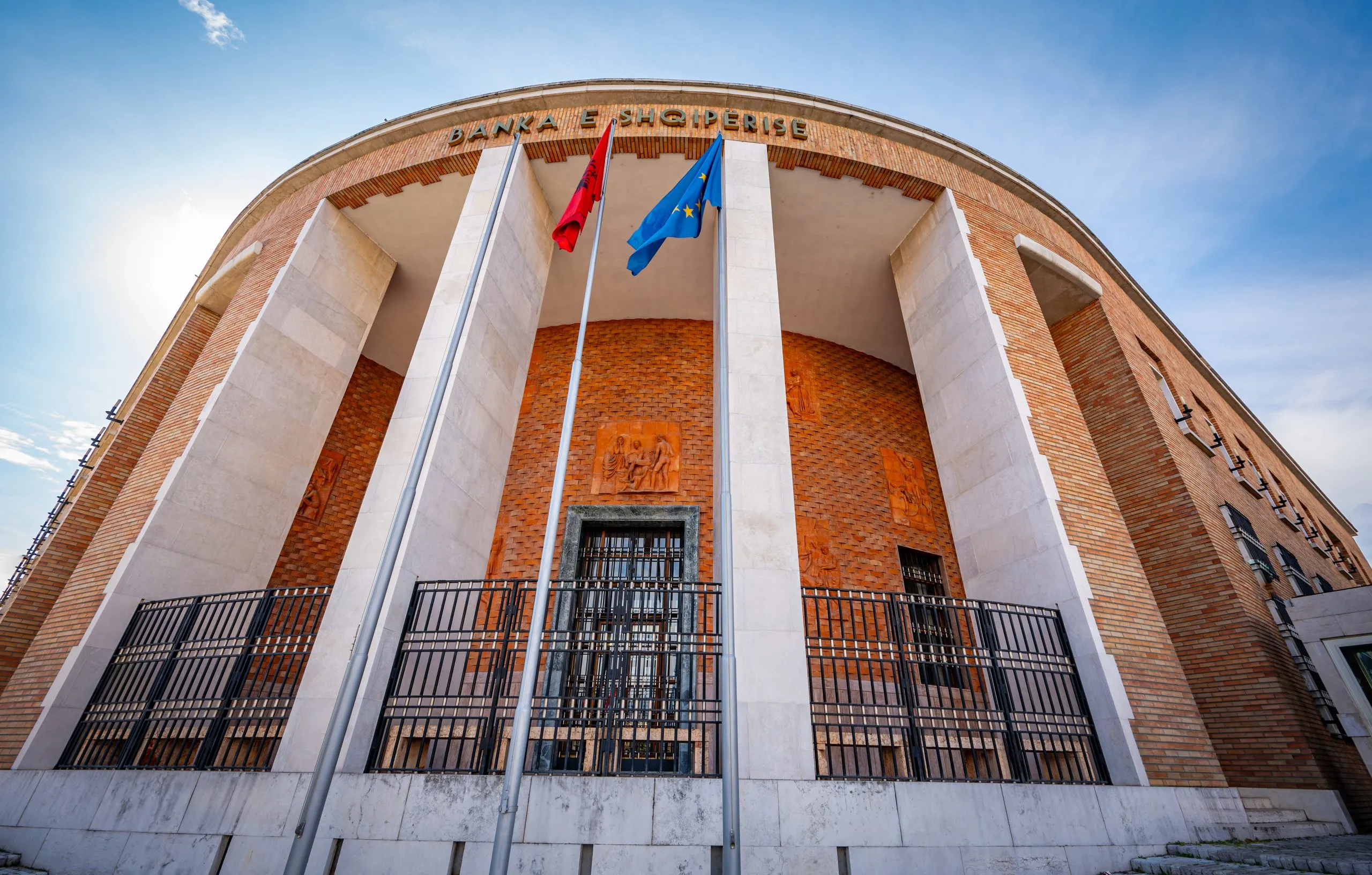
The European Commission’s report on Albania assesses the legal and regulatory advancements undertaken by the Bank of Albania.
In 2024, the European Commission called for strengthening guarantees for the independence of the Bank of Albania. In 2025, among the main recommendations was the full alignment of the law on the Bank of Albania with EU standards. The latest report emphasizes that “The legislation is aligned with the EU acquis on central bank independence and the prohibition of public sector monetary financing.” This wording marks the transition from partial to full approximation in two fundamental areas. The report highlights that the new law on the Bank of Albania was adopted in October 2026.
The independence of the central bank is a key demand of the EU. It supports monetary decision-making in line with the institution’s mandate, while the prohibition of public sector monetary financing sets clear limits on its direct financing by the central bank. For these two pillars, the report confirms the alignment of legislation with European standards.
At the same time, the report reconfirms the high level of alignment with European rules on preventing privileged access of the public sector to financial institutions.
The new positive assessment comes after the recognition in the 2025 report of the Bank of Albania’s contribution to maintaining price stability. The positive assessments also extend to the modernization of payments. The report highlights the changes undertaken by the Bank of Albania within the framework of payment systems. According to data cited in the report, electronic payments increased by 23% during 2025. The Commission also reflects preparations for the instant payment system, based on the TIPS model, for which commercial banks have begun the testing phase.
Another important indicator is the stability of the banking sector. The report describes it as well-capitalized and profitable, with strong liquidity positions. In December 2025, the capital adequacy ratio reached 20.4%, significantly above the minimum requirement of 12%. Meanwhile, non-performing loans fell to 3.8% in May 2026, the lowest level since 2008.
These indicators are accompanied by an increase in financing for the economy. Credit to the private sector recorded an annual growth of over 14% in the first half of 2026. In this context, the Commission notes that banking supervision remained cautious, while the Bank of Albania improved monitoring of banks’ exposure to real estate and lending standards. The report also reflects measures taken to manage risks related to the rapid growth of housing loans.
The Commission also reflects the strengthening of regulatory requirements for the prevention of money laundering and terrorist financing. The changes undertaken by the Bank of Albania to the relevant regulations and to the licensing requirements for banks aim to enhance due diligence and address MONEYVAL’s recommendations.
The report also sets out tasks for continuing reforms, including the implementation of payment legislation, advancing the immediate payment infrastructure, and further aligning banking regulation with the EU.
