


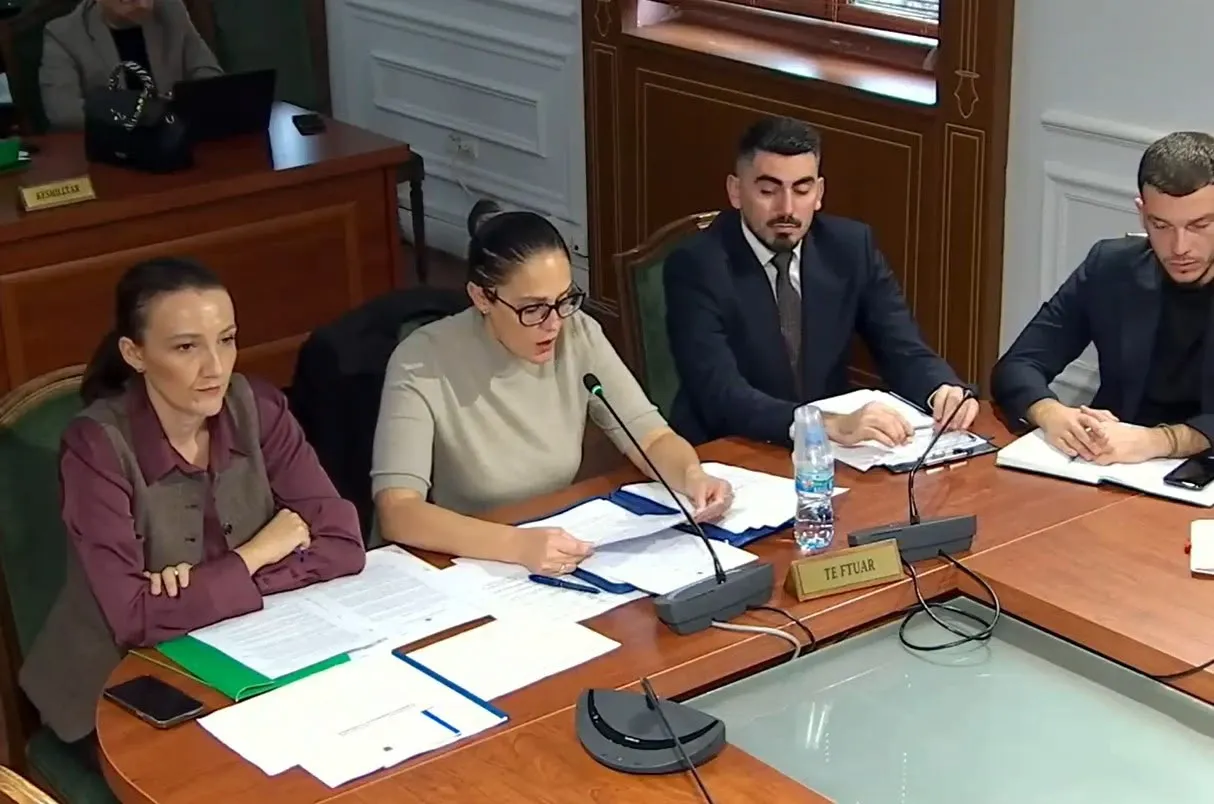
The Minister of Economy and Innovation, Delina Ibrahimaj, today presented the draft law on social housing to the Commission on Legal Affairs and Public Administration.
Ibrahimaj said that the rise in housing prices, especially in the central areas of large cities and mainly in Tirana, makes it necessary to create new mechanisms for affordable housing.
“Economic development and the phase of economic development we are currently in allow us to continue caring for vulnerable groups, but also, based on the increased income, it creates space and the opportunity to care for those categories that are not considered in need but require affordable housing,” Ibrahimaj declared.
Ibrahimaj announced that since the approval of the social housing law in 2018, 31,000 Albanian families, or about 100,000 citizens, have benefited from rent subsidy programs, soft loans, social housing, and housing condition improvements.
“Over 14,000 families have been supported with rent payments, over 7,000 have benefited from soft loans, more than 1,000 social housing units have been built, while housing conditions have improved for more than 6,000 other families. Just this year, 300 quotas have been opened for zero-interest loans for public administration employees, whose applications are still under evaluation. Meanwhile, 700 other citizens have signed loan contracts for the purchase of homes,” she said.
Minister Ibrahimaj said that another problem the draft law aims to address is the lack of savings for the initial down payment that banks require to finance a residence.
“Without savings, it becomes impossible for an Albanian family to pay the advance payment that banks require for purchasing a home. For this reason, the draft law foresees the possibility for public institutions to enter into agreements with other entities to provide guarantees that will cover the initial prepayment. For families who can repay the loan and do not meet the requirements for the initial contribution or collateral, this guarantee could facilitate obtaining financing,” she emphasized.
Another innovation of the draft law is the creation of the Fund for Housing and Social Cohesion, which will combine sources from the state budget, contributions from the private sector, income from housing activities, and other legal sources.
According to Ibrahimaj, the fund will enable the income generated from housing projects to be reinvested in other programs in this field.
Ibrahimaj also presented another element of this draft law, which is the 30-40-30 model for the development of housing projects, aiming to integrate families with different income levels into the same neighborhoods.
“We want families benefiting from social housing to be a natural part of our neighborhoods and cities, with schools, transportation, services, and public spaces, and through the draft law and the 30-40-30 program, which refers to the construction of neighborhoods where 30% of neighborhoods will be dedicated to social housing, 40% will be dedicated to affordable housing, and 30% will be for sale or rental use in the free market. We guarantee that neighborhoods will not be created where there are only categories of needy strata, but these categories will be integrated with other citizens and will become an integral part of the city,” Ibrahimaj continued. /ATSH
