


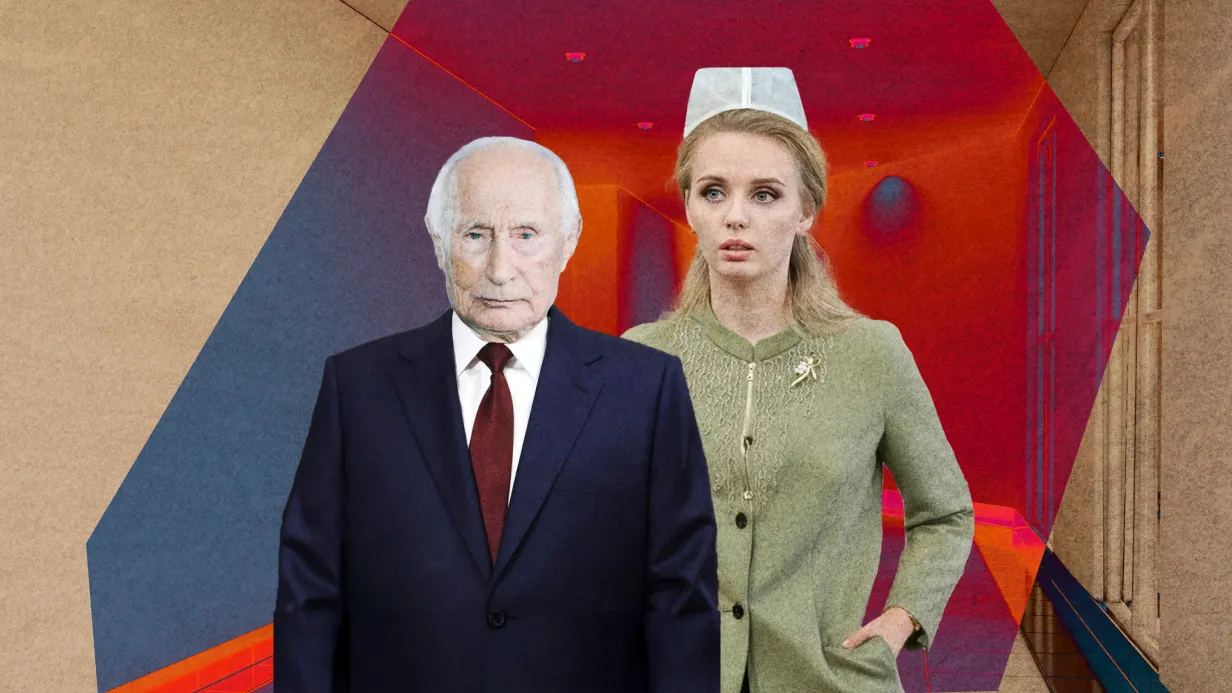
Russia is undertaking one of the most ambitious projects in the fields of medicine and scientific research, aiming to significantly extend human lifespan and, at a later stage, to surpass the biological limits of aging.
For this purpose, Moscow has planned investments of more than 2 trillion rubles, financing research for cell regeneration, the development of anti-aging treatments, and the creation of human organs in the laboratory.
At the head of this initiative is Maria Vorontsova, the eldest daughter of Russian President Vladimir Putin, who is also an endocrinologist. She has presented a two-phase strategy, where the initial goal is to increase life expectancy to 85 to 90 years, while the long-term goal is to overcome the natural limitations of the human body.
During a recent forum held at the Skolkovo Management School in Moscow, Vorontsova spoke about the possibility of scientific progress that would allow, as she put it, “the deception of God or nature.”
However, the Kremlin’s ambition to extend human life comes at a paradoxical moment for Russia, which is facing heavy human losses due to the war in Ukraine. According to the Ukrainian armed forces, more than 54,000 Russian soldiers were killed or wounded in October of this year alone.
Putin’s daughter’s plan to extend human life
Maria Vorontsova is one of the leading figures in Russian genetic research and longevity programs. She leads the Institute of Medical Research and Education at Moscow State University and has been involved in scientific projects funded by the Russian state.
Although Vladimir Putin has not publicly identified her by name as his daughter, Vorontsova plays an important role in this sector. In 2022, after the invasion of Ukraine, the U.S. Department of the Treasury imposed sanctions on her, designating her as the head of Kremlin-funded genetic research programs.
In 2025, it also received a grant of 30 million rubles from the Russian Science Foundation to create a laboratory that will study cell regeneration and aging processes.
The strategy she presented initially envisions harnessing the body’s natural potential to achieve a lifespan of 85 to 90 years. For this reason, she emphasizes the importance of healthy eating, regular medical check-ups, and the formation of good habits from childhood.
The second phase is much more ambitious and aims to intervene in the biological processes that determine aging. According to Vorontsova, progress in this direction could become a reality within the next one or two decades, although science still faces significant limitations so far.
One of the main obstacles is the fact that aging is not officially recognized as a disease, which complicates the development and approval of drugs aimed at treating it.
Over 2 trillion rubles for the anti-aging vaccine
The longevity project is part of a broader strategy promoted by Vladimir Putin himself.
In February 2024, the Russian president announced the national program “New Technologies for Maintaining Health,” which began implementation in 2025, along with another initiative called “Long and Active Life.”
For both programs, Russia has planned investments exceeding 2 trillion rubles.
Part of the funds will be used for genetic research and the development of an experimental treatment that has been described as an “anti-aging vaccine.” According to the Russian Deputy Minister of Science and Higher Education, Denis Sekirinsky, this approach aims to block a gene linked to cellular changes that occur during the aging process.
Meanwhile, the official goal of the Russian authorities is to save 175,000 lives by 2030 through these programs.
Human organs in miniature pigs and 3D bioprinting
In addition to anti-aging treatments, Russian scientists are also experimenting with advanced technologies for creating human tissues and organs.
According to an investigation published by The Wall Street Journal in May, researchers are working on using 3D bioprinting of living tissues, as well as the possibility of growing human organs inside miniature pigs.
Scientists claim to have managed to print human cartilage and a mouse thyroid gland. The ultimate goal is for this technology to enable the replacement of human organs by 2030.
The Kremlin has also confirmed to the American newspaper the involvement of several research institutions in state-supported scientific programs.
In the same vein, Russian Deputy Prime Minister Tatyana Golikova stated in 2025 that the country aims to start producing an anti-aging drug in the period 2028-2030.
The paradox of longevity at a time when Russia is losing thousands of soldiers in Ukraine
Moscow’s ambition to save 175,000 lives by 2030 contrasts with the human losses caused by the war in Ukraine.
In 2024, the independent Russian media outlet Meduza compared the government’s objective with estimates at that time, according to which more than 120,000 Russian soldiers had been killed in the war.
Since then, the toll has worsened significantly. According to the British Ministry of Defence, by early September, Russian losses in the war had exceeded half a million people, including dead and wounded.
Meanwhile, data from the Russian state statistics agency, Rosstat, show more than 450,000 war-related deaths, according to the latest estimate cited by the publication.
Despite this situation, Putin has set concrete targets to increase the country’s average life expectancy. The goal is for it to reach 78 years by 2030 and 81 years by 2036, up from the current reported 74.2 years.
However, the differences between men and women remain significant. The life expectancy of Russian men is about 68 years, significantly lower than in the United States and most Western European countries.
Putin and Xi Jinping discussed immortality
The Russian president’s interest in extending life is not new. According to The Wall Street Journal, Putin has shown interest for years in anti-aging treatments and body regeneration technologies.
One of the most talked-about episodes was recorded in September 2025, during a military parade in Beijing, when an open microphone captured a conversation between Putin and Chinese President Xi Jinping about the possibility of extending human life.
Xi commented that in the past people rarely reached the age of 70, whereas today a person of that age is still considered young. For his part, Putin spoke about advances in biotechnology and the possibility of repeated replacement of human organs, also mentioning the possibility of achieving immortality.
The Chinese president added that people could live up to 150 years during this century.
The physicist behind the Kremlin’s ambitions
Another important figure in the Russian program is physicist Mikhail Kovalchuk, head of the Kurchatov Institute, one of the country’s main research centers.
Kovalchuk is the brother of banker Yuri Kovalchuk, considered one of Putin’s closest allies. He also oversees a federal program for the development of genetic research, which includes Maria Vorontsova.
The physicist believes that science will enable the repair and replacement of parts of the human body in the future. He stated that, although it is difficult to speak of immortality, the scientific abilities to repair the organism will improve significantly.
According to a Kremlin source cited by Meduza in 2024, the initiative to extend life is closely linked to Kovalchuk’s personal interest in eternal life.
Skepticism in the Russian scientific community
Despite the large funding and ambitions of the Kremlin, the project has sparked skepticism among Russian researchers and doctors.
Some of them have questioned the scientific basis of the declared objectives, arguing that research promoted by Putin’s collaborators has so far not produced a significant number of expert-reviewed publications in leading international scientific journals.
Alexander Ostrovsky, a Russian researcher who left the country after the invasion of Ukraine, told The Wall Street Journal that without scientific publications, one cannot speak of genuine results.
He also raised doubts that some of the scholars might present to Putin exactly those promises the president wants to hear, with the aim of securing funding for their projects.
Thus, while Russia aims to invest billions to extend human life and challenge aging, it remains to be seen whether these ambitions will turn into concrete scientific achievements or remain big promises for a still uncertain future.
