


The Minister of Finance, Petrit Malaj, presented the draft law for the 2027 budget at the Conference of Chairpersons, describing it as an instrument to guarantee sustainable economic growth, fiscal consolidation, and to accelerate Albania’s integration process into the European Union. The draft budget, approved by the Council of Ministers, foresees over 10 billion euros in public expenditures for the budget period, while for 2027 revenues are estimated at 907.9 billion lek, or about 9.4 billion euros.
During the presentation, Malaj emphasized that the budget was drafted taking into account political and economic developments, the country’s needs, and real financial possibilities, aiming to maintain a balance between revenues and expenditures. He identified three main pillars of the budget: social welfare and support for citizens, fiscal stability and the sustainability of public finances, as well as investments, reforms, and European integration.
The Ministry of Finance has prepared a draft budget that responds to the country’s needs and the real financial capabilities we have, while on the other hand maintaining a balance between revenues and expenditures. The newly approved 2027 draft budget by the Council of Ministers clearly reflects the priorities for the period 2027-2029.
Pensions and social support in focus
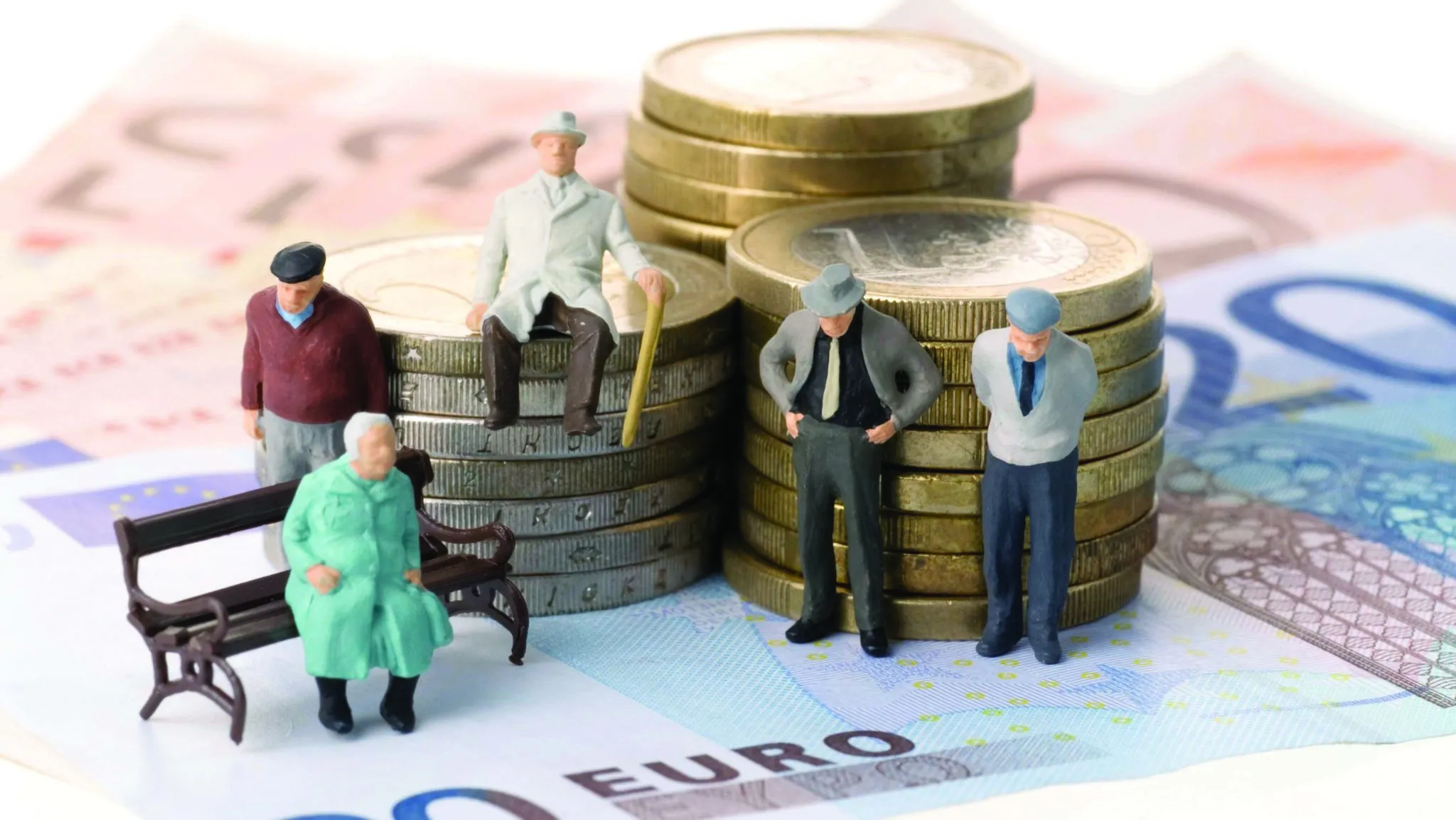
One of the main directions of the draft budget is increasing support for pensioners, families with children, and vulnerable categories. According to Malaj, from January 1, 2027, the monthly bonus for pensioners will be doubled, with a projected cost of 20 billion lek for the state budget. Meanwhile, pension indexation is planned to be carried out earlier, in April 2027, with a fund of 1.35 billion lek.
“The 2027 draft budget has three main priorities that also determine the direction of the country: the first is social welfare and support for citizens; the second is fiscal stability and sustainable public finances; and the third is investments, reforms, and integration into the EU. One of the government’s main priorities will be support for the elderly. Pensions hold a special place in the budget’s priorities through measures aimed at increasing financial support for pensioners and improving their incomes. Specifically, in this budget, we foresee approaching the indexation of pensions in April 2027, with a fund projected at 1.35 billion lek. Also, starting from January 1, 2027, the monthly bonus for pensioners will be doubled, with a total cost to the state budget of 20 billion lek. The economy is creating more employment power, inflation continues to remain at the rate set by the Bank of Albania and continues to stay at 3%. Foreign direct investments continue steady growth. Overall, these results demonstrate that Albania is progressing at a steady pace, bringing its economy closer to that of the European Union. Budget revenues in 2027 are projected to be 9.4 billion euros.”
Funding for social protection is projected at 279.7 billion lek, about 30% of total budget expenditures. The measures include doubling payments for children with disabilities and recognizing social and health insurance contributions for their caregivers.
Financial support for children up to the age of five will also continue, with amounts that increase depending on the order of birth, as well as personal income tax compensation up to 48,000 lek for families with children under 18 years old. About 1.3 billion lek per year has been allocated for social services and affordable housing.
“Among the main measures, we can mention: Doubling payments for children with disabilities, as well as recognizing social and health insurance contributions for their caregivers. Continuing the baby bonus, but this time through monthly support until the age of 5, where the amount progressively increases for the first, second, and third child. About 1.3 billion lek per year for social services and affordable housing. Compensation from personal income tax up to 48,000 lek will continue for families with children under 18 years old.” Education, 93.6 billion lek funding
Education is another priority sector, with projected expenditures at 93.6 billion lek for 2027, or 4.5 billion lek more compared to the previous level of funding. The focus is on increasing scholarships for students in need, improving school infrastructure, and expanding services for students.
The draft budget foresees an additional 1.1 billion lek for scholarships for students in need, 400 million lek for improving basic education infrastructure, and 500 million lek for the “After School” program, which aims to extend children’s stay at school until 5:00 PM. An additional 100 million lek is also allocated for scientific research.
“Education is a direct investment in the future of the country. For this reason, the 2027 Draft Budget foresees that the expenditures of this sector will reach 93.6 billion lek, an increase of 4.5 billion lek compared to the previous level of funding. The main priorities to be financed are: an additional 1.1 billion lek for increasing scholarships for students in need. 400 million lek extra for improving basic education infrastructure. 500 million lek will be invested in the “After School” program, enabling the extension of hours for children who stay after school until 5:00 PM. An additional 100 million lek for scientific research.” Healthcare, more funds for medicines and hospitals
For healthcare, the planned funds for 2027 reach 87.2 billion lek, with an increase of 5.6 billion lek. The minister announced that an additional one billion lek will be used to finance medicines and medical equipment, aiming to improve hospital services and primary and secondary healthcare.
The package of measures includes treatment with reimbursable prescriptions for about 400,000 patients, as well as the rehabilitation and construction of 20 hospitals in the country. The investments aim to improve healthcare infrastructure and increase citizens’ access to medical services and treatments.
“Healthcare remains another important public funding priority, aiming to improve access to services and ensure better support for patients. For 2027, sector expenditures are forecasted at 87.2 billion lek, with an increase of 5.6 billion lek. The main measures include: 1 billion lek additional funding for medicines and medical devices, supporting hospital services and primary and secondary healthcare. Treatment with reimbursable prescriptions for 400,000 patients. Rehabilitation and construction of 20 hospitals in the country.” Agriculture, 17.9 billion lek and support for farmers
For agriculture, 17.9 billion lek have been allocated, with 1.1 billion lek additional funding from the state budget. The government aims to expand the number of beneficiaries of support schemes by about 43,660 beneficiaries planned for 2027.
The measures include continuing the 10% VAT compensation for farmers, with an annual fund of 3 billion lek, an additional 100 million lek for the National Scheme, and 400 million lek for the improvement of irrigation and drainage systems. According to the draft budget data, the direct support scheme for farmers is expected to increase by 5.3 billion lek.
Infrastructure and energy, 75.4 billion lek investments
Expenditures for infrastructure and energy are projected at 75.4 billion lek, or about 2.5% of the Gross Domestic Product. The list of projects includes interventions in water supply and sewage networks in several municipalities, the construction of water reservoirs in Tirana, as well as investments in ports and railways.
Among the mentioned projects are the new port of Durrës in Porto Romano, the Triport Port, the Tirana-Durrës/Rinas railways, Vorë-Hani i Hotit, and Durrës-Rrogozhinë. In the road sector, investments are planned on the Elbasan-Lekaj, Elbasan-Qafë Thanë routes, the expansion of the Tirana-Durrës road, the Tirana-Ndroq-Plepa axis, the Elbasan bypass, and the Tirana bypass.
In the medium term, for the period 2027-2029, public investments aim to reach an average of about 6.6% of GDP per year, including projects that can be financed through the European Union’s Growth Plan for the Western Balkans. For 2027, public investments are projected at 201.5 billion lek, or 6.9% of GDP.
Defense and security, 76.7 billion lek for the Ministry of Defense
The draft budget foresees 76.7 billion lek for the Ministry of Defense, with an additional 7 billion lek in funding. Defense expenditures will reach 2.35% of GDP, aimed at modernizing the Armed Forces and fulfilling Albania’s NATO commitments.
For public order, 36.7 billion lek are planned, while an additional 3.3 billion lek will be used to increase the salaries of State Police employees. About 8,500 employees are expected to benefit from this measure. For the inspector category, the base salary by rank is planned to increase by 20,000 lek, from 73,000 to 93,000 lek, while for other categories the supplement will range from 10,000 to 15,000 lek per rank.
Local finances, 114.6 billion lek in 2027
Another important budget item is the financing of local government. Expenditures for the local budget are projected at 114.6 billion lek, an increase of 17% compared to 2026. Of this amount, 58.6 billion lek are expected to come from local government revenues, while 56 billion lek will come from the state budget through unconditional and sectoral transfers.
Revenues, deficit, and public debt
From a macro-fiscal perspective, the government aims to continue consolidating public finances, with a budget deficit of 2.3% of GDP and reducing public debt to 52.4% of GDP by 2027.
Budget revenues are projected at 907.9 billion lek, or 30.9% of GDP, compared to about 843.1 billion lek projected for 2026. Revenues from taxes, customs, and social and health insurance contributions are expected to reach 793.8 billion lek, about 56 billion lek more than the expected level for 2026, with an increase of 7.6%.
According to the minister, this growth is supported by economic performance, inflation, new fiscal package measures, and the implementation of the Medium-Term Revenue Strategy. Malaj pointed out that the economy is creating more employment opportunities, inflation remains at 3%, while foreign direct investments are showing steady growth.
Linking the draft budget to the objective of European integration, the minister emphasized that financing economic and social priorities must be accompanied by maintaining the sustainability of public finances. According to him, the 2027 budget aims to support economic development and improve citizens’ welfare without compromising the country’s macro-fiscal balances.
