


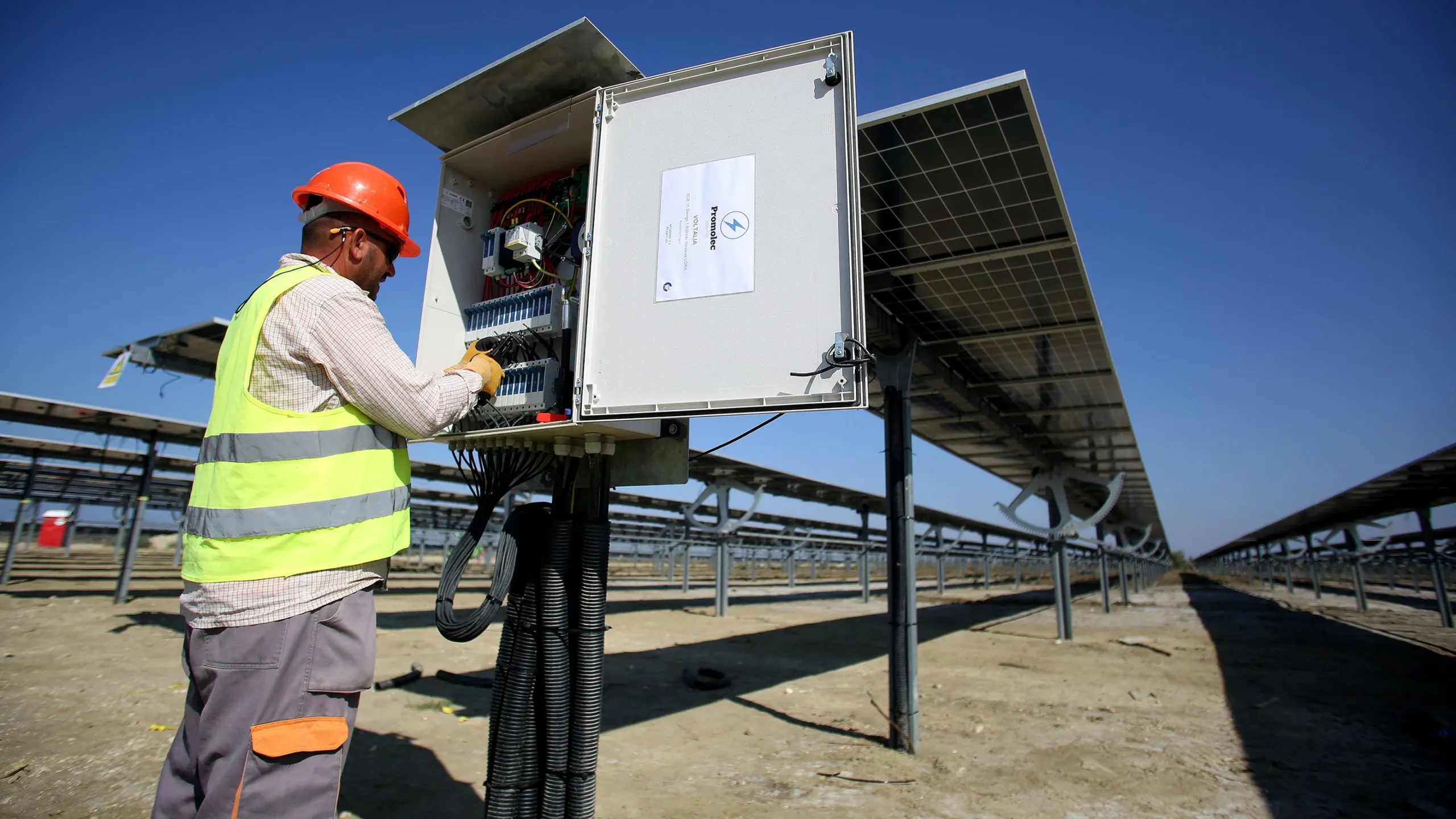
Green financing is developing rapidly in Albania, while major commercial banks and international development institutions are introducing new financing programs that could transform investments in the economy in the coming years.
As one of the European countries most exposed to natural disasters, Albania needs around 6 billion dollars in investments for climate change adaptation over approximately the next ten years. Meanwhile, according to the World Bank, climate-related damages could reach up to 7% of Gross Domestic Product (GDP) by 2050 alone.
Alessandro de Concini, head of the European Investment Bank (EIB) representation in Albania, says these conditions “create an urgent need for investments in climate change resilience, clean energy, and sustainable infrastructure.”
Albania’s heavy dependence on hydropower makes electricity supply particularly vulnerable to changes in rainfall regimes. This increases the need to diversify production through other renewable sources.
“The greatest opportunity lies in the energy sector. Diversifying energy sources through solar and wind power, along with modernizing the transmission and distribution network, is essential for strengthening energy security,” says de Concini.
However, financing these objectives also requires clearer rules to determine which investments can be considered environmentally sustainable.
Albania prepares the first national green taxonomy
On October 8, the Bank of Albania presented the final draft of the first national green taxonomy, prepared with the support of the European Investment Bank.
This document sets common criteria that will help banks, businesses, and investors identify economic activities considered environmentally sustainable.
“The adoption of a national green taxonomy is a decisive step towards mobilizing green investments. Albania’s efforts to develop the capital market and to unite all relevant actors are particularly encouraging,” de Concini states.
On its part, the Bank of Albania has intensified efforts to integrate climate factors into financial supervision, including the development of initial climate stress testing exercises.
“We consider green financing and climate-related risk management as important elements for strengthening the resilience of the financial system and supporting sustainable economic development,” says Holta Zaçaj, First Deputy Governor of the Bank of Albania.
According to her, the taxonomy will also help banks “assess physical and transition risks, improve risk management practices, and more systematically integrate climate considerations into financial decision-making.”
Meanwhile, commercial banks are expanding their green financing activities, offering investment opportunities in renewable energy, energy-efficient buildings, and sustainable infrastructure, among other areas.
According to the National Commercial Bank (BKT), environmental and social factors are increasingly being involved in loan evaluation and financing decision-making. By the end of 2025, the bank’s green financing portfolio reached around 25 million dollars.
“BKT sees the greatest opportunities for green financing in renewable energy, especially solar and photovoltaic projects, investments in energy efficiency, sustainable agriculture, recycling initiatives, and green infrastructure,” says Fatih Karli, Deputy Executive Director of BKT.
For this purpose, the bank has developed special products, including Eco Loan and Go Green Loan, as well as partnerships with institutions such as the Green for Growth Fund.
“Albania’s transition towards a lower-carbon and more sustainable economy creates significant opportunities for both businesses and financial institutions,” says Karli.
Electric vehicles and new constructions, opportunities for green financing
Meanwhile, OTP Bank Albania has been incorporating ESG (environmental, social, and governance) assessments into its lending decision-making for several years.
The bank’s CEO, Bledar Shella, identifies electric vehicles, especially in the taxi industry, as well as new real estate development projects, as new opportunities for green financing.
Multilateral development institutions are also supporting Albanian commercial banks in expanding green lending.
In 2025, Tirana Bank secured a 5 million euro loan from the European Bank for Reconstruction and Development (EBRD) to help small businesses invest in green technologies.
Within this financing, borrowers who meet the criteria can benefit from financial incentives in the form of reimbursement of part of the investment, up to 10% of its value.
However, Albania still has a long way to go to meet its needs for financing climate change adaptation in the medium term.
“Albania has already made considerable progress, creating a strong foundation for expanding green investments in the coming years,” says de Concini.
According to him, the next challenge is to transform the country’s investment priorities into a sustainable portfolio of financially feasible projects, capable of attracting private and institutional investors. /Adapted from The Banker, ekofin.al
