


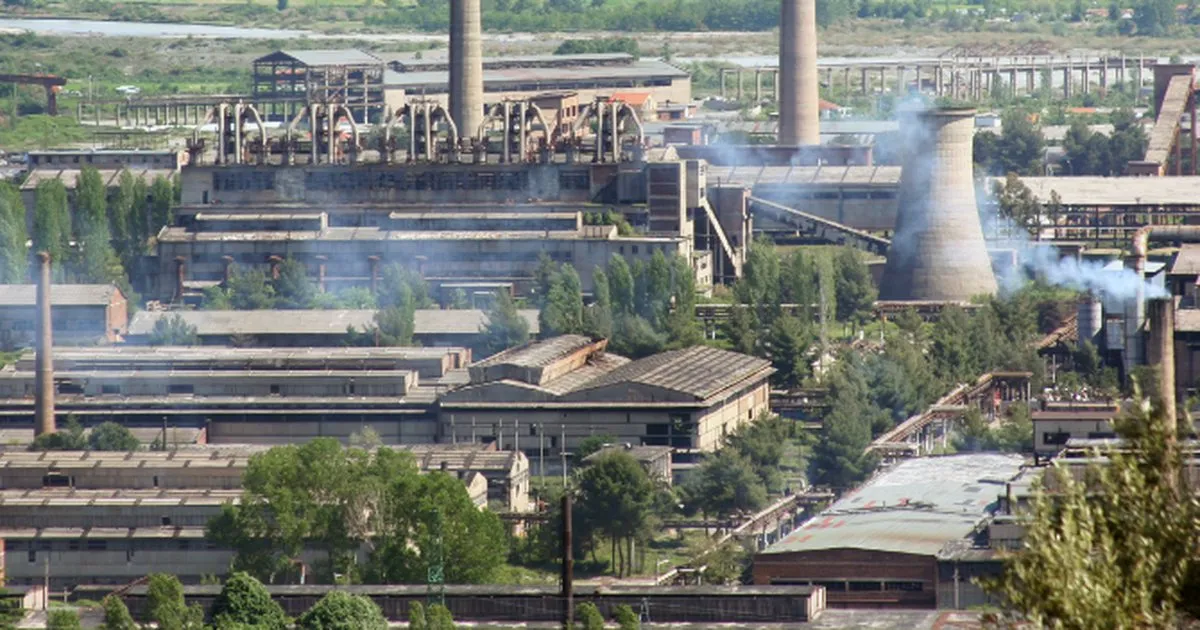
Over 1.5 million tons of industrial waste containing heavy metals continue to be deposited in the area of the former Elbasan Metallurgical Combine, posing a constant risk to the health of residents and the environment. Despite the scale of pollution and the years that have passed since the suspension of some heavy industry activities, the responsible institutions still do not have a concrete plan for their removal and treatment.
The situation was identified by the Supreme State Audit during the environmental pollution audit in the municipalities of Elbasan and Krujë during the period 2023–2025. The deposited waste contains heavy metals, including ferrochrome and ferronickel, and according to the report, they contribute to soil pollution, groundwater, and the Shkumbin River.
The problem is related to Elbasan’s industrial heritage, which during the 1970s and 1990s was one of the largest centers of heavy industry in the country. The long-standing activity of metallurgy and other industries has left behind large amounts of waste, which continue to exert pressure on the environment even today.
In addition to the former Metallurgical plant, KLSH also identifies the village of Balëz, where the former cement factory operated, as one of the areas with pollution problems. In the territory of Elbasan, activities related to steel production, ferrochrome, metal processing, and other industries with environmental impact continue to be concentrated.
The main concern is that the inherited industrial waste has not been treated with a special plan. The audit finds that central and local institutions have not taken the necessary actions to transfer it to places where it can be treated or disposed of according to technical and environmental conditions.
The Supreme State Audit (KLSH) has also found deficiencies in documenting the waste generated by companies operating in the industrial zone. For some of the waste that needs to be transferred, recycled, or disposed of, there is a lack of complete information about the quantities and methods of their management.
This means that, alongside inherited pollution, institutions do not have a complete overview of the hazardous waste remaining in the territory. The lack of data complicates both the assessment of environmental risk and the determination of measures for the rehabilitation of the area.
According to the SSA, the National Environment Agency should have exerted more pressure on the entities managing waste and cooperated with the Elbasan Municipality and other institutions to find a solution. The absence of an action plan for the removal of hazardous waste is considered by the audit to be contrary to the requirements of environmental protection legislation.
In conclusion, the Supreme State Audit recommends immediate and ongoing intervention for the transfer of industrial waste containing heavy metals from the area of the former Metallurgical Plant. The involvement of central institutions, the Municipality of Elbasan, and the County Council is seen as necessary to prevent further deterioration of pollution and to reduce the risk to the community./ekofin.al
