


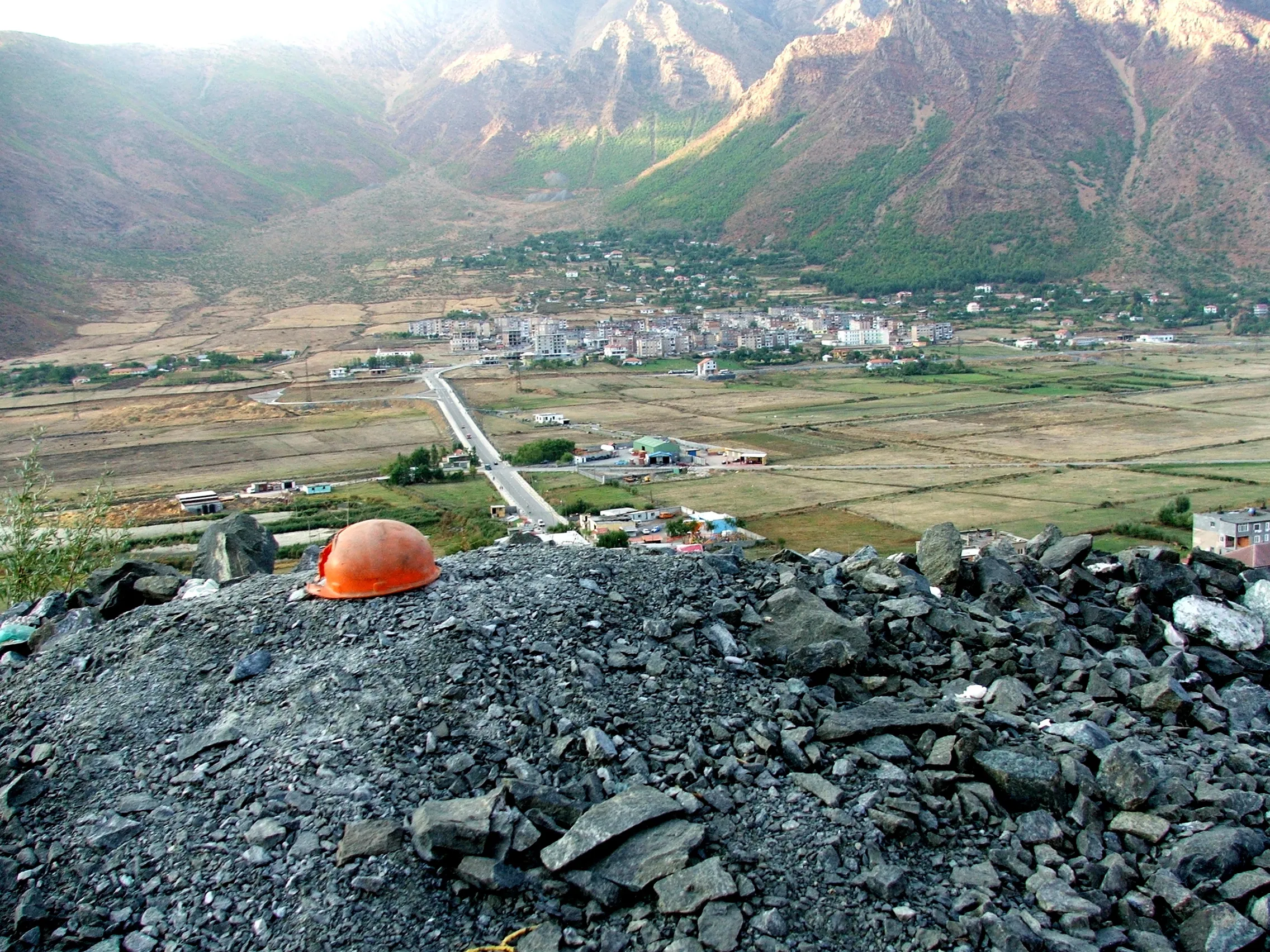
The new draft law foresees inspections every six months, financial guarantees for the closure and rehabilitation of establishments, as well as accountability for companies even after the completion of their activities. It also foresees the creation of a national inventory of closed and abandoned establishments that may pose a risk to people and the environment.
The management of mineral waste is expected to take place under a more detailed framework of rules, with clearer obligations for companies and continuous control by the authorities. The draft law “On the Management of Mining Waste,” proposed for approval by the Assembly, aims to prevent soil and water pollution, reduce the risk of accidents, and ensure the rehabilitation of areas affected by mining activity.
The main innovation is the treatment of mining waste throughout its entire life cycle, from creation and disposal to the closure of facilities and monitoring after the completion of the activity. The draft law also foresees the approximation of Albanian legislation with the European Union Directive 2006/21/EC on the management of waste from extractive industries.
Financial guarantee before starting the activity
One of the most important changes is the obligation for operators to provide financial guarantees before starting the construction or operation of the mining waste facility.
This guarantee aims to cover the costs of rehabilitation and recultivation of the territory, the closure of the facility, monitoring and maintenance after closure, as well as the necessary measures to protect human health and the environment in case the company fails to fulfill its obligations.
The value of the guarantee will be calculated based on the characteristics of the facility, the quantity and hazard of the waste, as well as the costs of rehabilitation and monitoring. It will be updated every two years, taking into account market prices and inflation, as well as whenever the facility’s capacity, management plan, or related costs change.
In this way, the financial guarantee will not simply be a formal obligation at the time of obtaining the permit, but an instrument that must remain sufficient to cover the operator’s responsibilities.
Inspections every six months and mandatory reporting
The draft law foresees inspections of mining waste facilities before the start of disposal and during the construction, operation, closure, and post-closure phases.
During operations and other relevant periods, the inspections specified in the draft law will be carried out every six months, without excluding extraordinary controls.
The responsible authorities will have the right to enter the premises, request technical and operational documentation, verify monitoring results, take samples, conduct analyses, and request corrective measures.
It is also foreseen that companies will report every six months on the stability of facilities, water quality, the functioning of environmental protection systems, monitoring results, and possible incidents.
Another important obligation is to notify the authorities within a maximum period of 48 hours about events that could threaten the stability of the facility or cause significant negative environmental impacts.
These requirements aim to strengthen the timely identification of problems and enable intervention before they turn into greater risks.
Responsibility even after the mine was closed
The termination of mining activity will not automatically mean the termination of the company’s responsibilities for the waste facilities.
According to the draft law, the operator will be responsible for monitoring, maintaining, and controlling the facility for as long as it may pose a risk to human health or the environment.
For Category A facilities, classified as high risk for serious accidents, the planned monitoring period after closure is 10 years. For Category B objects, the period is five years.
However, obligations do not automatically end after these deadlines have passed. They only end once the responsible authority determines that the facility no longer poses a risk to people or the environment.
This provision links the administrative closure of the activity to the actual security status of the facility.
National inventory of abandoned buildings
The draft law foresees the creation, management, and updating of a national inventory of closed and abandoned mining waste facilities that may pose a risk.
The inventory will contain data on the location, type of waste, preliminary risk assessment, technical condition, and necessary measures for monitoring, rehabilitation, or security.
For objects that present significant risk, the responsible structure will carry out or order a risk assessment and propose the necessary measures.
This mechanism aims to create a more organized information base on issues inherited from mining activities, especially in cases where the initial operator or their legal successor does not exist or is unknown.
Stronger rules for pollution prevention
The draft law sets obligations for preventing or minimizing pollution of soil, surface water, and groundwater, as well as for controlling dust, gases, and leaks from storage facilities.
Companies will be required to take measures for the collection, control, and treatment of wastewater when required by the characteristics of the facility and the applicable legislation.
For sterile ponds containing cyanide, the draft law stipulates that the concentration of dissociable cyanide in weak acid at the discharge point from the processing plant to the pond must not exceed 10 milligrams per kilogram.
The use of spaces created by mineral extraction for waste disposal will only be allowed when foreseen in the relevant plan and approved by the responsible authority, ensuring stability and environmental protection.
Another objective of the draft law is to encourage the reuse, recycling, and exploitation of mineral waste as a secondary resource, when this is environmentally appropriate.
The public will have more information about the risks
For Category A facilities, the draft law foresees the publication of information about the operator, the location of the facility, hazardous substances, the nature of the hazards, and the possible consequences for people and the environment.
The public should also be informed about how to notify in case of an accident, the measures that need to be taken, and the external emergency plan.
During the permit procedures for these buildings, citizens and interested parties will have the opportunity to submit comments and suggestions within 30 days. Information about operators holding Category A permits will be published through the portal of the responsible structure.
In addition to transparency, the draft law foresees internal and external emergency plans aimed at limiting the consequences of serious accidents and protecting the population.
Fines up to 2 million lek and the possibility to revoke the license
Administrative sanctions are foreseen for the violations specified in the draft law.
Carrying out mining waste management activities without a permit is punishable by a fine of 2 million lek for each violation. Failure to comply with the obligations related to the management plan carries a fine of 500,000 lek, while other violations specified in the draft law are punishable by fines of up to 1 million lek.
In case of repeated violations, the fine is doubled and may be accompanied by suspension of the permit until the obligation is fulfilled.
The permit can be revoked, among other reasons, when the operator abandons the facility, fails to fulfill the obligations of the management plan, does not provide the reassessed financial guarantee within the specified deadline, or obstructs inspections.
Suspension or revocation of the license does not release the company from the obligation to rehabilitate the area or from civil liability for the damages caused.
Existing companies have 12 months to adapt
The draft law stipulates that operators currently managing mining waste must adapt their activities to the new requirements within 12 months from the law’s entry into force.
Meanwhile, the Council of Ministers must approve part of the subordinate acts within six months from their entry into force, while the minister responsible for mining activities will approve other acts for the implementation of the provisions. /ekofin.al
