


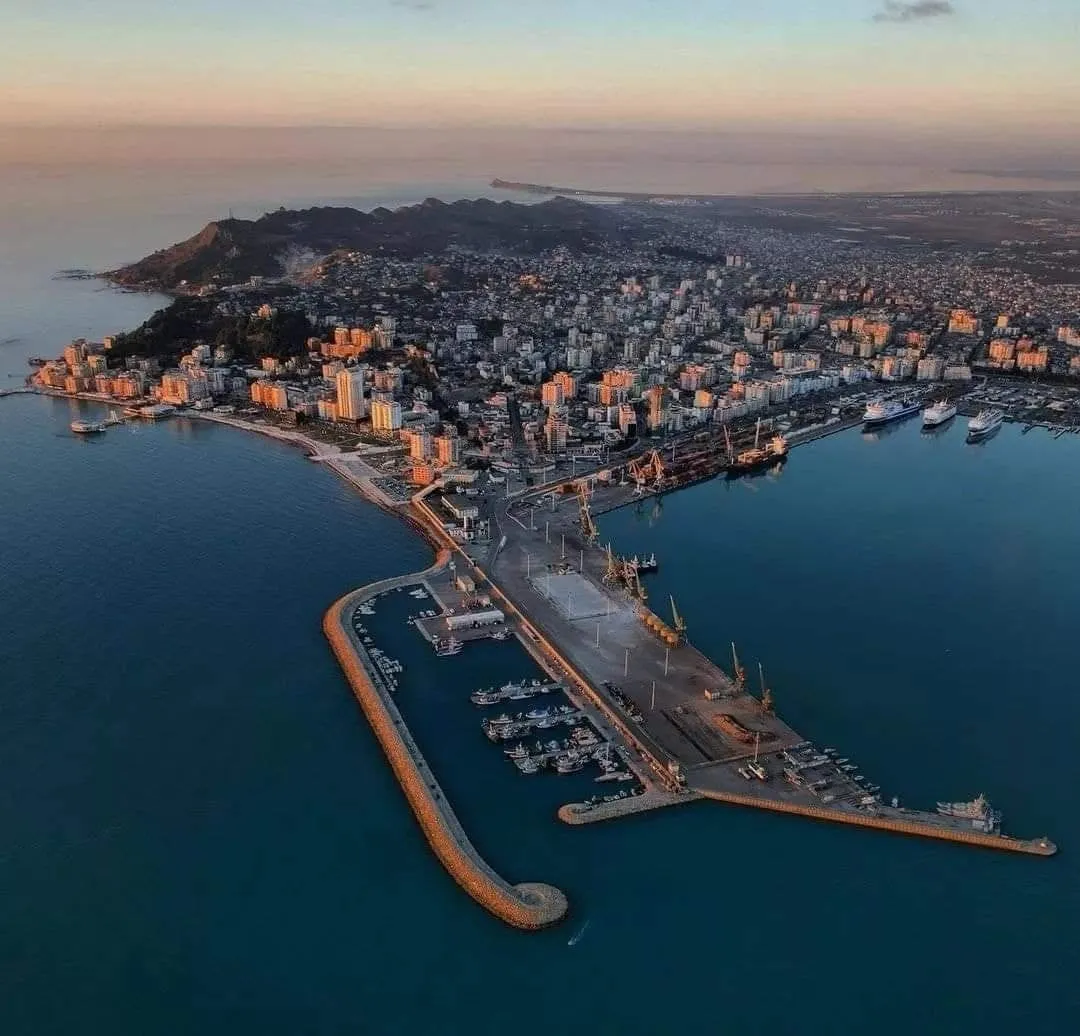
Albania ranks among the European countries where buying a home is more difficult relative to citizens’ incomes. Durrës recorded the highest annual increase in new housing prices among all the analyzed cities, while Vlorë turns out to be the city where the most annual salaries are needed to buy an apartment. Meanwhile, the average price of new housing in Albania has reached 1,720 euros per square meter, surpassing even Serbia.
The Albanian real estate market continues to show a strong contrast between the rise in housing prices and citizens’ financial ability to buy them. The latest Deloitte report, Property Index 2026, consulted by ekofin.al, places Albania at the center of some of the most prominent developments in the European housing market.
According to the report, Durrës recorded the highest annual increase in new housing prices among all the cities included in the study, with 24.1%. The average price in this city increased from 1,330 euros to 1,650 euros per square meter.
This trend places Durrës at the top of the European ranking for housing price increases, reflecting strong demand pressure in one of the most important real estate markets on the Albanian coast.
The report links this development to the demand for second homes, a factor that has influenced price dynamics in coastal cities.
The price increase in Durrës is particularly high even compared to European capitals, where Belgrade recorded the largest annual increase at 20.04%.
Vlora, the most unaffordable city for buying a home
Another indicator that places Albania at the top of European rankings is the affordability of housing relative to income.
According to Deloitte, Vlora turns out to be the least affordable city among all the cities analyzed in the report, in terms of the number of gross annual salaries required to buy a new home with an area of 70 square meters.
To buy such an apartment in Vlora, an average gross annual salary of 21.28 is needed, a significantly higher level than in other European cities included in the comparison.
In second place is Prague, with 16.88 annual salaries, followed by Athens with 16.02, Košice with 15.02, and Brno with 15 annual salaries.

The difference is considerable. A family or individual with an average income in Vlora would need over 21 years of gross income to cover the price of a standard apartment, if theoretically they could save their entire salary without incurring any other expenses.
In comparison, in Turin, Italy, the most affordable city under study, buying a new 70-square-meter apartment requires only 4.7 years of gross annual salaries.
Deloitte points out that even in the case of Vlora, the demand for second homes is an important factor influencing the market.
The indicator highlights a structural problem in the Albanian real estate market: housing prices are not necessarily determined solely by the purchasing power of local residents, but are also influenced by investment demand, tourism, and purchases for seasonal use.
Albania with an average price of 1,720 euros per square meter, more expensive than Serbia
At the national level, the Deloitte report highlights that the average price offered for a new home in Albania has reached 1,720 euros per square meter, marking an annual increase of 6.17%.
At this level, Albania ranks above Serbia, where the average price is 1,706 euros per square meter, while the annual change has been negative, with a decrease of 2.51%.
The difference between the two countries is relatively small in absolute value, but the price trend is different: while the market in Albania continues to rise, in Serbia the report highlights a correction of the average prices.
On the other hand, Albania ranks below Romania, where the average price of new homes is 1,917 euros per square meter, and Greece, with 1,931 euros.
In Croatia, the average price reaches 2,861 euros per square meter, while in Italy it is 2,734 euros.
However, the comparison of nominal prices does not provide the full picture of affordability. Although housing in Albania costs less than in many European Union countries, differences in wage levels make the financial burden for Albanian buyers much greater.

At the other end of the European ranking, Luxembourg remains the most expensive country for buying a new home, with an average price of 9,160 euros per square meter. Following it are the Czech Republic with 5,412 euros, Germany with 5,200 euros, and Austria with 5,199 euros.
Turkey has the lowest average price among the countries included in the report, at 864 euros per square meter, also registering an annual decrease of 8.99%, according to values calculated in euros.
Tirana with a 5% price increase, more than Berlin, Vienna, and Paris
The Albanian capital also continues to record increases in new housing prices, albeit at a more moderate pace than Durrës.
According to Deloitte, the average prices offered for new apartments in Tirana have increased by 5% year-on-year.
This increase is higher than in some of the most important European capitals.
In Vienna, the annual growth was 4.34%, in Berlin 4.17%, in Madrid 2.42%, in Lisbon 2.18%, while in Paris only 1.54%.
Rome also recorded a lower increase, of 0.84%.
On the other hand, some capitals of Central and Eastern Europe have recorded significantly stronger growth than Tirana.
Belgrade leads the ranking of capitals with an increase of 20.04%, followed by Bratislava with 17.22%,
Bucharest with 15.30%, Budapest with 11.07%, and Prague with 9.90%.
This shows that the pressure on housing prices is not a phenomenon unique to Albania, but part of a broader trend in several European markets, especially in Central and Southeastern Europe.
However, Albania’s uniqueness lies in the combination of rising prices with a relatively low level of income.

Europe at two rates: some markets are becoming more expensive, others are recording declines
The Deloitte report highlights significant differences in the performance of housing markets in Europe.
At the national level, among the highest increases in average new housing prices are in Romania with 14.38%, Croatia with 14.26%, Slovakia with 12.46%, and Hungary with 10.89%.
Albania, with a growth of 6.17%, ranks below these countries, but above some developed European economies, including Luxembourg, Austria, Portugal, and Finland.
Meanwhile, at the city level, some markets have recorded significant declines.
Dublin recorded a 15.30% decrease in average new housing prices, while Luxembourg-City saw a decline of 4.58%, Oslo 4.47%, and Ankara 3.81%.
These developments indicate that the European housing market is not following a consistent direction. In some cities, demand continues to push prices higher, while in others corrections are being observed.
Prices are rising, but affordability remains Albania’s main challenge
Deloitte’s data highlights a paradox in the Albanian housing market.
On one hand, Albania is not among the countries with the highest nominal prices in Europe. With an average of 1,720 euros per square meter, it stands significantly below developed European countries.
On the other hand, the report shows that in cities like Vlora, the relationship between housing prices and incomes is more problematic than in any other city included in the study.
This suggests that the housing market in some areas of Albania is increasingly being influenced by factors that go beyond the demand for permanent housing.

The demand for second homes, investments in real estate, and the development of tourism are factors that can influence market prices, especially in coastal cities.
Under these conditions, price increases are not necessarily accompanied by an improvement in citizens’ ability to secure housing.
On the contrary, when property prices rise faster than incomes, buying a home becomes increasingly difficult for families who rely on wages and bank financing. /ekofin.al
