


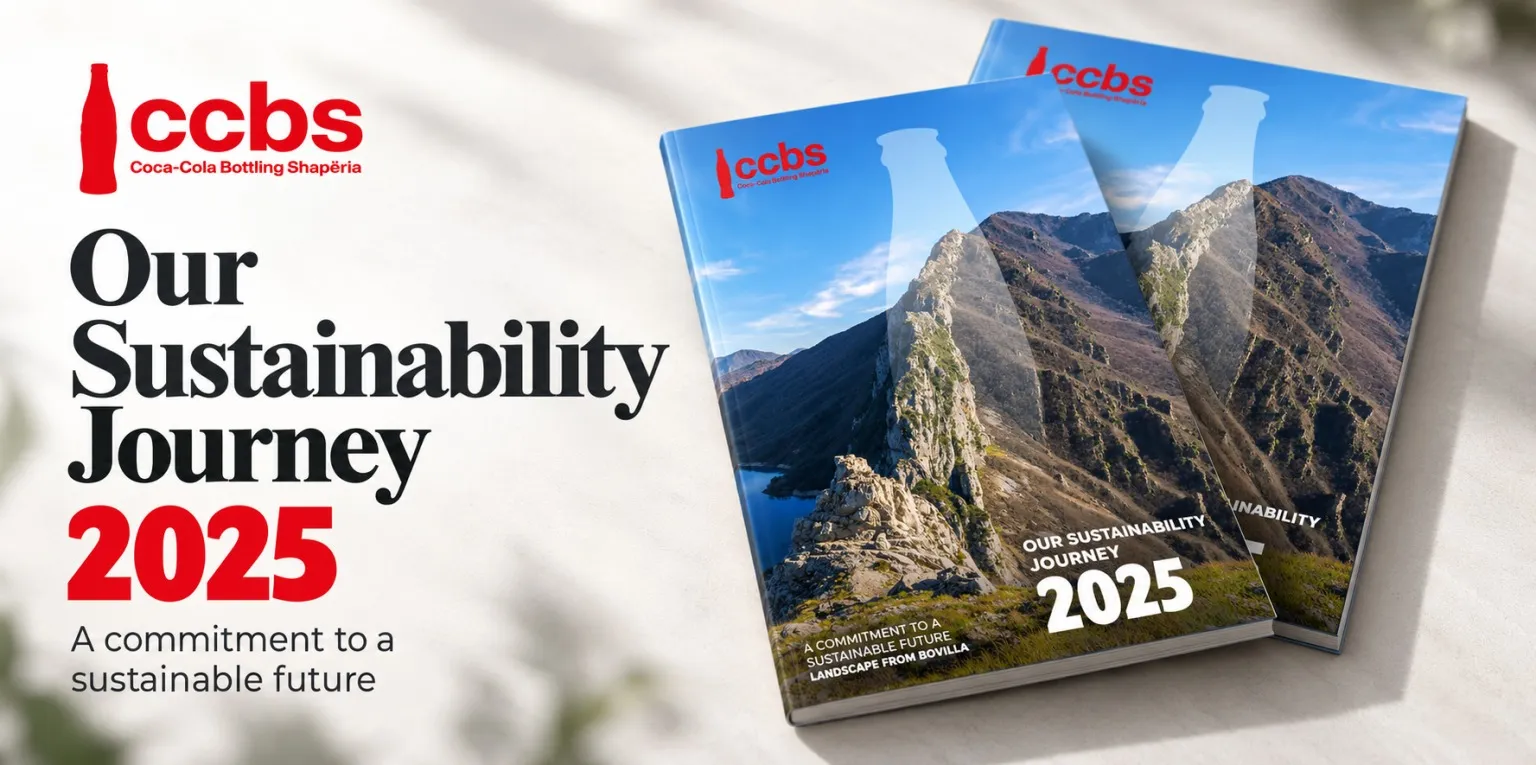
In the third report, CCBS presents its industrial transformation in Albania: revenues increase by 3.4%, waste recovery reaches 85%, self-produced energy by 31%, and the challenge of carbon neutrality. President Luca Busi: Growth and sustainability in the same direction.
Economic growth, industrial investments, and an ambitious challenge: to become the first Carbon Neutral industrial company in Albania by 2030. This is the development direction of Coca-Cola Bottling Albania (CCBS), which presents its Third Sustainability Report, reflecting a year 2025 characterized by positive economic results and progress in environmental resource management.
Revenues increased by 3.4%, reaching 6.13 billion lek, while photovoltaic energy covered 31% of electricity consumption. Waste recovery at the factory reached 85%, while the use of recycled materials in packaging rose by 7 percentage points, from 46% to 53%.
These indicators reflect an ongoing industrial transformation, where sustainability becomes part of the company’s strategic decision-making and accompanies investments aimed at making production processes increasingly efficient. “For us, growth and sustainability are not two separate paths: they must go in the same direction,” emphasizes Luca Busi, President of CCBS. “Sustainability is no longer simply a goal added to our core activity. It is part of the decisions we make every day, the investments we choose to make, and the value we aim to create for our clients, our people, communities, and the environment.”

Renewable materials accounted for 74% of the total materials used, including raw materials and packaging. A significant improvement was also noted in waste management: the recovery rate at the factory increased from 79% to 85%, despite the rise in production volumes and the commissioning of the new line for returnable glass bottles.
Precisely the modernization of the plants represents one of the strategic investments of the year. This transformation has supported production growth and aims to gradually improve industrial efficiency.
The report also documents the challenges associated with this development phase. In 2025, Scope 1 direct emissions increased by 606 tons of CO₂ equivalent compared to the previous year, mainly due to operational factors related to the commissioning and stabilization of new lines. The company anticipates that the benefits of these investments will gradually emerge during the 2026–2027 period.
Another priority of the environmental strategy is the management of water resources. The new Water Efficiency Roadmap sets the goal of improving water use efficiency by 25–30% by 2030 through investments in plants, more advanced monitoring systems, wastewater reuse, and low-consumption technologies.
“We have a clear objective: to become the first industrial company with Carbon Neutral in Albania by 2030,” Busi emphasizes. “It is an ambitious goal, and we know that simply declaring it is not enough. We need to invest, change processes, improve efficiency, and measure every step forward.”
The sustainability of CCBS is also measured through its contribution to the domestic economy. About 80% of the supplier base consists of Albanian businesses, confirming a strategy that prioritizes deeply rooted economic relations in the country and the construction of long-term supply chains.
In 2025, the number of employees reached 400. At the same time, investments in training also increased: a total of 6,420 hours, compared to 6,020 hours the previous year, a 7% increase with a special focus on the environment, quality, and safety. The company’s social commitment has also been expressed through support for inclusion and responsible citizenship initiatives, including the partnership with Special Olympics Albania.
The Third Sustainability Report confirms the transformation path undertaken by CCBS, based on industrial investments, technological innovation, responsible resource management, and people appreciation.
“Sustainability is not limited to a single year of reporting,” concludes Luca Busi. “It is measured by the ability to keep improving, to fix what doesn’t work, to invest, and to keep long-term goals clear.”
