


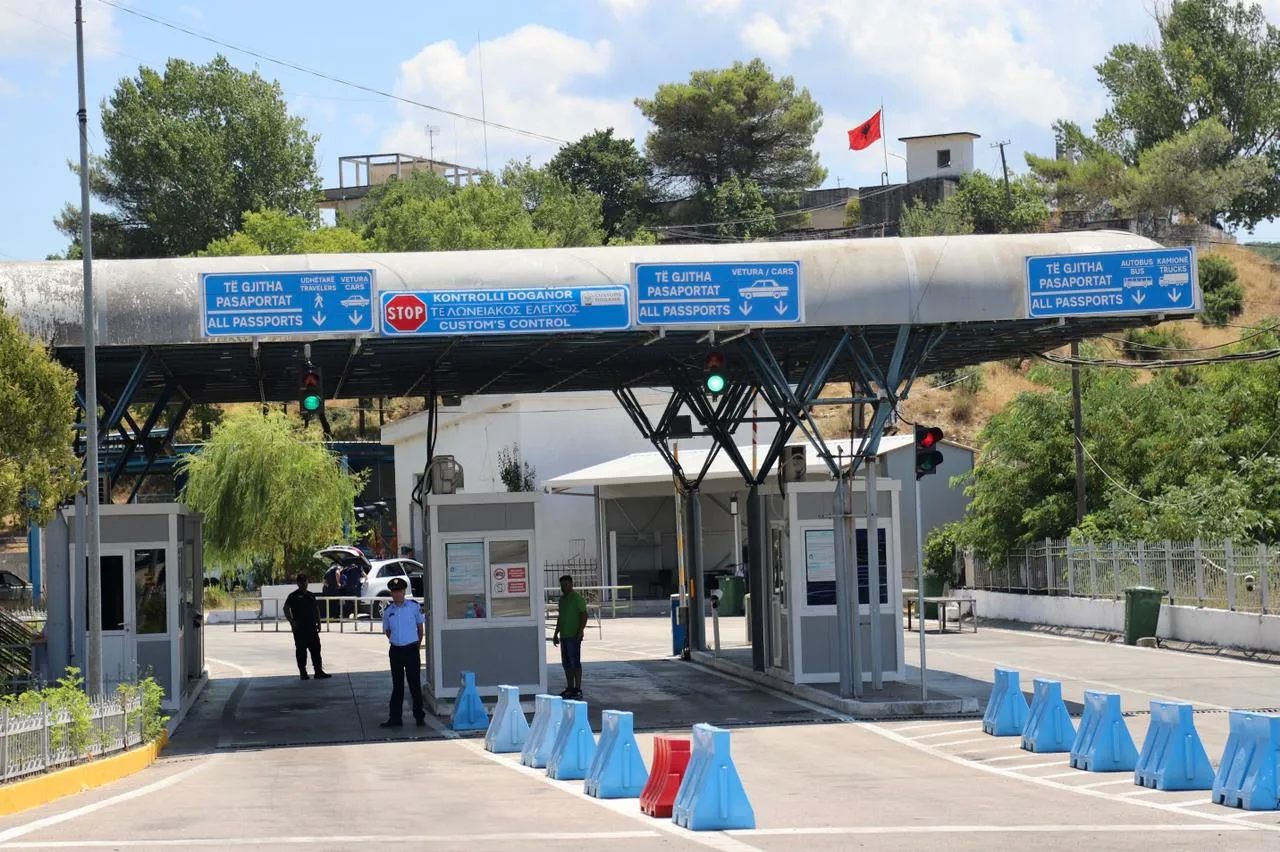
The government has prepared a new action plan for integrated border management for the period 2026–2027, with a total cost of 3.13 billion lek, or about 32.5 million euros. The funds will be used to strengthen border security, modernize crossing points, install radars for monitoring maritime and lake areas, improve customs systems, and facilitate the movement of citizens and goods.
According to the draft decision prepared by the Ministry of Internal Affairs, which aims to amend decision no. 1117, dated December 16, 2020, the new plan will replace the 2024–2025 Action Plan, whose deadline ended in December of last year.
The document is part of the Intersectoral Strategy for Integrated Border Management 2021–2027 and is directly related to Albania’s fulfillment of obligations in the process of integration into the European Union, especially within Chapter 24, which covers justice, freedom, and security.
Of the total planned cost, 2.35 billion lek, or 75.3%, will be covered by the Medium-Term Budget Program 2026–2028, while 772.6 million lek, or 24.7%, will be financed by the European Union and other international partners.
For 2026, 1.74 billion lek are forecasted, or 55.8% of the total, while for 2027, 1.38 billion lek, or 44.2%, are planned.
The explanatory report emphasizes that there is no financial gap, as all planned activities are considered covered by budget funds and confirmed foreign financing.
About 19.3 million euros for border security and migration management
The majority of the funds will be focused on border security and the management of migratory flows.
For this objective, 1.85 billion lek have been allocated, or about 19.3 million euros, representing 59.3% of the total cost of the plan.
The funds will be used to strengthen the capacities of the Border and Migration Police, improve border control and surveillance, develop joint operations with the European agency FRONTEX, and increase cooperation with neighboring countries.

One of the concrete measures is the installation of new radars for monitoring the maritime and lake areas, as well as equipping border structures with watercraft.
It is also planned to improve risk analysis according to the European CIRAM model, aiming for faster identification of threats related to cross-border crime, smuggling, and irregular migration.
Another measure is the activation of the National Coordination Center for Integrated Border Management, through the completion of the organizational structure, technical equipment, and personnel training.
About 13.2 million euros for facilitating the movement of goods and citizens
The second objective of the plan is related to facilitating the legal movement of citizens and goods at the border.
For this purpose, 1.27 billion lek, or about 13.2 million euros, are planned, representing 40.5% of the total cost.
The measures include improving infrastructure at border crossing points, modernizing control equipment, increasing capacities for identifying forged documents, and improving personnel organization according to movement flows.
An important direction is the expansion of cooperation with neighboring countries for the operation of joint border crossing points and customs.
The document specifically mentions Montenegro and North Macedonia, aiming to continue work on signing protocols that will enable joint inspections.
These measures aim to reduce administrative obstacles at border crossing, improve the processing of passenger flows, and facilitate the international transport of goods.
For the economy, the modernization of border points is of particular importance for foreign trade, road transport, and tourism, as delays in border procedures translate into additional costs for economic operators.
Capital investments reach 841 million lek, 80% financed by donors
Of the total cost of 3.13 billion lek, the majority, about 2.28 billion lek or 73%, represents current expenses.
These mainly include human resource costs, joint operations with FRONTEX and neighboring countries, risk analysis, and the modernization of customs systems.
Meanwhile, capital expenditures reach 841.5 million lek, or about 8.75 million euros, representing 27% of the total cost.
About 670.7 million lek of capital investments, or 80%, are expected to be financed by international donors. These funds will be primarily used for border control and surveillance systems, tools, and equipment.
The remaining part, 170.7 million lek, will be financed by the state budget and is mainly related to improving the infrastructure of border crossing points, the Bllatë customs branch, as well as equipment and access to databases for the control of travel documents.
For the third objective, which is related to respecting the fundamental rights of persons crossing the border, approximately 5.7 million lek have been allocated. The funds will mainly serve for the training of police and customs officers, improving procedures, and controlling the quality of border services.
Albania aims to align with Schengen standards
The new plan also aims to align legislation, procedures, and institutional capacities with European standards for border management.
For this purpose, changes are planned in the legal and sub-legal framework, strengthening cooperation between the State Police, the Customs Administration, and the National Food Authority, as well as developing joint operations with European agencies.
Another objective is to improve the readmission system for foreign and domestic nationals, in accordance with international agreements, as well as to strengthen capacities for the search and rescue of persons in dangerous situations at sea.
The draft decision was prepared by the Ministry of Internal Affairs and foresees that its implementation will be carried out in cooperation with the responsible ministries and institutions.
According to the report, the plan does not create additional financial effects on the state budget beyond the funds foreseen in the budget ceilings of the respective institutions. /ekofin.al
