


The payment system and the infrastructure of financial markets in Albania are expected to be subject to a new legal framework aimed at increasing transaction security, protecting payments in case of financial institution bankruptcy, and expanding the instruments that can be used as collateral.
The draft law “On the payment system and financial collateral,” released for public consultation, expands the regulatory and supervisory powers of the Bank of Albania and aligns Albanian legislation with European Union standards.
The legislative initiative aims to replace the existing framework of law no. 133/2013 by creating a more comprehensive regulation of payment systems, securities settlement, central depositories, central counterparties, and financial collateral agreements.
One of the main objectives is to eliminate legal uncertainties that may arise when a bank or other financial institution faces insolvency while transactions are in the settlement process.
Protection for payments even in the event of a bank’s bankruptcy
One of the most important innovations of the draft law relates to strengthening the principle of finality of settlement.
This principle determines the moment when a transfer order is considered final and cannot be revoked according to the rules of the relevant system.
In practice, this is especially important for the relationship between banks and financial institutions, as it aims to avoid situations where the bankruptcy of a participant undermines the validity of transactions carried out through the system.
The draft law provides special legal protection for transfer orders and settlements that meet legal requirements, reducing the risk that the financial problems of one institution spread to other participants.
This does not mean that every bank transfer automatically becomes irreversible, but that systems recognized by law will have clear rules regarding the moment the order enters into force and the finality of settlement.
The Bank of Albania with broader supervisory powers
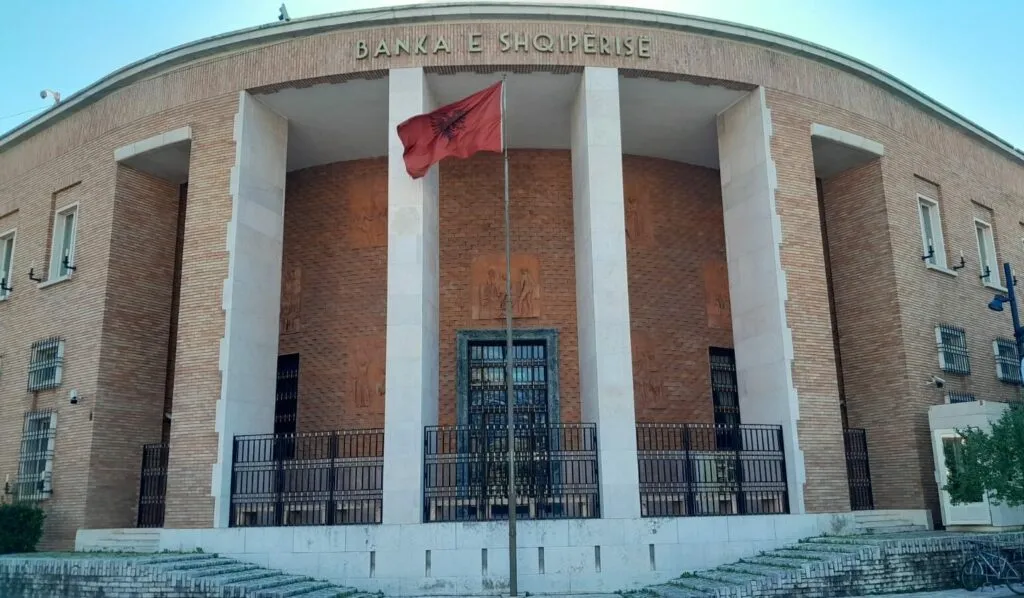
The draft law strengthens the role of the Bank of Albania as the authority responsible for regulating, licensing, and supervising payment systems.
The central bank will continue to perform three main functions: supervising systems, promoting and coordinating reforms in the field of payments, and administering the systems it operates.
The main change is the expansion of the scope of supervision beyond traditional payment systems to include other financial market infrastructures.
According to Article 6 of the draft law, systems in Albania can only be operated by legal entities licensed or approved by the Bank of Albania.
For entities holding a banking license or a license for payment services, an approval procedure for operating the system is foreseen.
Meanwhile, for securities settlement systems, clearing houses, central depositories, and central counterparties, the Bank of Albania will cooperate with the Financial Supervisory Authority.
The central bank will also have the authority to inspect, impose supervisory measures and administrative sanctions, as well as suspend or revoke licenses in cases provided for by law.
Reasons for intervention include failure to meet licensing criteria, suspension of activity, operator’s insolvency, or threats to financial stability.
Financial collateral, new opportunities for banks and financial institutions
Another important change concerns the expansion of instruments that can be used as financial collateral to guarantee obligations.
The draft law foresees the recognition of credit claims as a form of financial collateral. This would create the possibility for credit institutions to use the rights arising from loan agreements as collateral in certain financial relationships.
According to the report, the measure aims to expand the range of eligible collateral assets, improve liquidity management, and facilitate access to financing.
However, the draft law foresees restrictions for certain categories of credit claims, including those related to consumers and micro or small enterprises.
An important element is that the provisions related to financial collateral consisting of credit claims are expected to come into effect only after Albania’s accession to the European Union.
Execution of financial collateral without prior approval from the court
The draft law also foresees more direct procedures for the execution of financial collateral in case of non-fulfillment of obligations.
According to Article 33, under the conditions set by law and the relevant agreement, financial instruments placed as collateral may be realized through sale, appropriation, or compensation of value.
For cash collateral, the possibility of compensation or direct use to settle obligations is foreseen.
One of the innovations is that the execution of these agreements is not conditioned by prior court approval or by special public announcement procedures.
However, the valuation of collateral must respect the principle of commercial reasonableness, relying on market value or accepted financial methods.
This change aims to accelerate the implementation of guarantees and reduce uncertainties in relationships between financial institutions.
Financial agreements are also protected in case of insolvency.
The draft law also more clearly regulates the final netting mechanism, internationally known as close-out netting.
This mechanism allows that, in case of non-fulfillment of obligations or the occurrence of another situation foreseen in the agreement, the claims and reciprocal obligations of the parties are calculated and converted into a single net amount.
Regulation is important for banks and financial institutions conducting transactions with financial instruments, as it reduces legal uncertainty and exposure to counterparty risk.
According to the report, the new framework also aims to establish the legal basis for obtaining a legal opinion from the International Swap and Derivatives Association (ISDA) for Albania.
Such an opinion is considered important for the development of the financial instruments market and for increasing the credibility of the Albanian legal framework in international transactions.
Electronic transfer documents are also recognized as evidence.
The draft law includes provisions related to the admissibility of electronic and optical evidence in payment processes.
According to Article 42, the existence, content, time of access to the system, and execution of a transfer order can be proven through documents and electronic records, including their printed copies.
This evidence can be used in civil, criminal, and administrative cases.
Meanwhile, Article 43 gives the Bank of Albania the possibility to organize, through subordinate acts, the procedures for the electronic substitution of payment instruments.
These changes aim to adapt the legal framework to the digitalization of financial services and the development of modern payment infrastructures. /ekofin.al
