


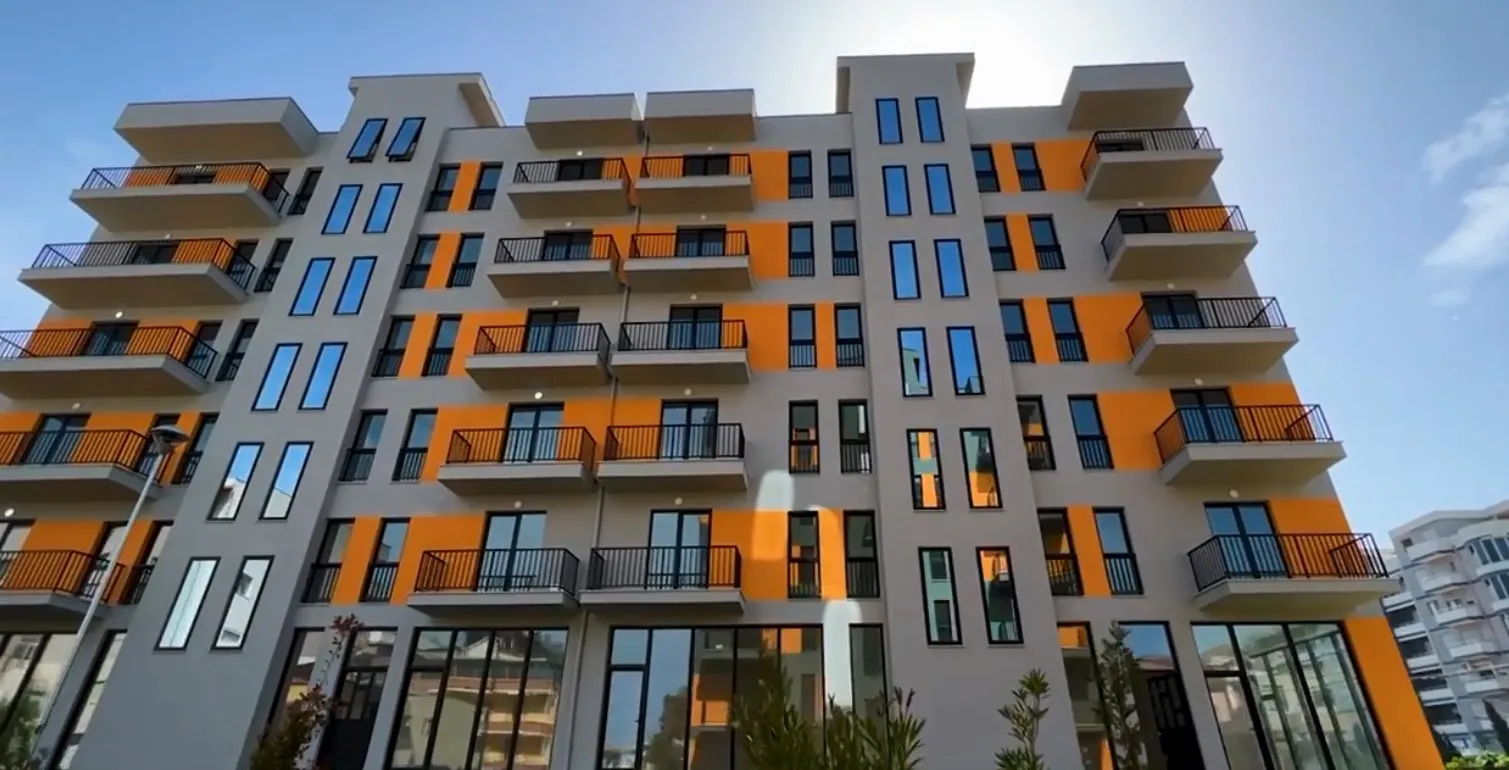
The government has approved a new regulation for the management of apartments and co-owned buildings, defining the financial obligations of owners, the management of apartment buildings, the maintenance of common areas, and measures that can be taken against those who do not pay fees.
Decision no. 687, dated September 11, 2026, published today in the Official Gazette, foresees a more structured management system, where owners of apartments and commercial units must financially contribute to the maintenance of the building, regardless of whether they use their property or not.
One of the most important changes relates to strengthening the mechanisms for collecting financial obligations. The regulation sets late payment interest at 30% of the monthly fee for each month of delay, while in certain cases, non-payment may lead to the registration of a restriction on immovable property in the Cadastre.
Administration fee, highest for commercial units
According to the regulation, the administration fee constitutes a monthly obligation for each co-owner and serves to cover the expenses of maintenance, cleaning, elevator operation, and other shared services.
The amount of the fee is approved by the assembly of co-owners, taking into account administrative expenses and the share of co-ownership.
For units used for commercial activities, the fee must be higher than that applied to residential apartments. In determining it, frequenting premises, use of elevators, wear and tear of common areas, and cleaning expenses are taken into account.
If co-owners do not reach an agreement on the fee, the reference fee approved by the municipal council will be applied, differentiated according to the area and building type.
Not paying for three months? The obligation can be pursued through enforcement
The regulation stipulates that owners are obliged to pay the fee even when their apartment or unit remains vacant, except in cases where the assembly individually approves a reduction.
If the fee is not paid within the specified deadline, a penalty equal to 30% of the fee will be applied for each month of delay. Owners who enjoy special legal status and protection are excluded from this measure.
When payments are not settled for three consecutive months, the administrator must inform the board and assembly in writing, as well as display in the building premises the list of debtors and the unpaid amounts.
The Presidency verifies the respective obligations and late payment interest. Its decision regarding monetary obligations constitutes an enforceable title, enabling the pursuit of compulsory enforcement procedures.
Restriction in the Cadastre for unpaid obligations
Another important provision foresees the possibility of imposing restrictions on the property of a co-owner who fails to fulfill financial obligations.
The administrator or management company may request the State Cadastre Agency to register the restriction when the obligations have not been settled for at least 12 months, or when the unpaid amount reaches at least 0.5% of the value of the owned unit.
The decision is made by the presidency with a qualified majority, after the owner has been notified in writing at least 10 days in advance.
The Cadastre is given a 15-day deadline to register the decision, after submitting the documentation and paying the relevant fees.
As long as the restriction remains in effect, the property cannot be sold, alienated, given for use, or encumbered with other real rights without the payment of obligations being verified.
After full repayment, the owner can request the removal of the restriction, while the Cadastre must do this within five days from the submission of the relevant certificate.
Management by a company or an individual administrator
The regulation stipulates that the management of buildings can be entrusted to a specialized company or to an individual administrator, who may be a co-owner or an external person.
The administrator must be registered and equipped with a tax identification number, while the administration contract is concluded for a period of no less than three years, with the possibility of renewal.
The Assembly of Co-owners remains the main decision-making body. It must convene at least once a year to approve the budget and the management plan.
Meanwhile, the palace presidency must consist of at least three and no more than 11 members, with a three-year mandate.
Assembly meetings can also be held online, while notification for regular meetings must be given at least 10 days in advance.
Reserve fund and bank account for each co-ownership
The regulation foresees the creation of a reserve fund, which will be used for emergencies, repairs, and improvements to the building.
This fund is divided into special categories according to the purpose of use, while the assembly approves the criteria for its administration.
For financial management, the opening of dedicated bank accounts is foreseen, one for management fees and another for the reserve fund.
The leadership and administrator must document the use of funds, while the assembly has the right to request a financial audit.
In the case of selling an apartment, the portion of the reserve fund belonging to the unit passes to the new owner. The seller cannot request the return of the amount they contributed to this fund.
Maintenance of elevators, terraces, and common areas
The regulation defines detailed responsibilities for the maintenance of common parts of the building, including elevators, stairs, terraces, water tanks, sewage systems, yards, and parking.
All co-owners must contribute financially in proportion to their shares in the co-ownership.
For terraces used individually, maintenance responsibility lies with the respective owner or user. However, when installations that also serve other owners pass through these spaces, the maintenance costs are shared among the beneficiaries.
The installation of water tanks on shared terraces requires approval of at least 75% of the participating quotas and preliminary assessment by licensed specialists regarding the durability of the structure.
Quiet hours from 10:00 PM to 6:00 AM
The regulation also includes provisions related to cohabitation in apartment buildings.
Nighttime quiet must be observed from 10:00 PM to 6:00 AM. During this period, repairs, noisy work, and the use of household machinery that cause disturbances are prohibited.
Also, activities that cause noise, pollution, or property damage in common areas are prohibited.
The obligations to comply with the rules of cohabitation extend not only to the owners but also to the tenants and other users of the units.
Municipalities will oversee administrative standards
Municipalities also play an important role in enforcing the regulation, overseeing compliance with minimum administrative standards.
If the failure to perform mandatory maintenance services is found, the municipality may order their execution by other specialized entities.
Expenses for these services will be calculated according to a methodology approved by the municipal council, with the aim that prices do not exceed market prices.
The municipality’s act regarding the expenses incurred constitutes an enforceable title and can be enforced through enforcement against co-owners who fail to fulfill their obligations. /ekofin.al
