


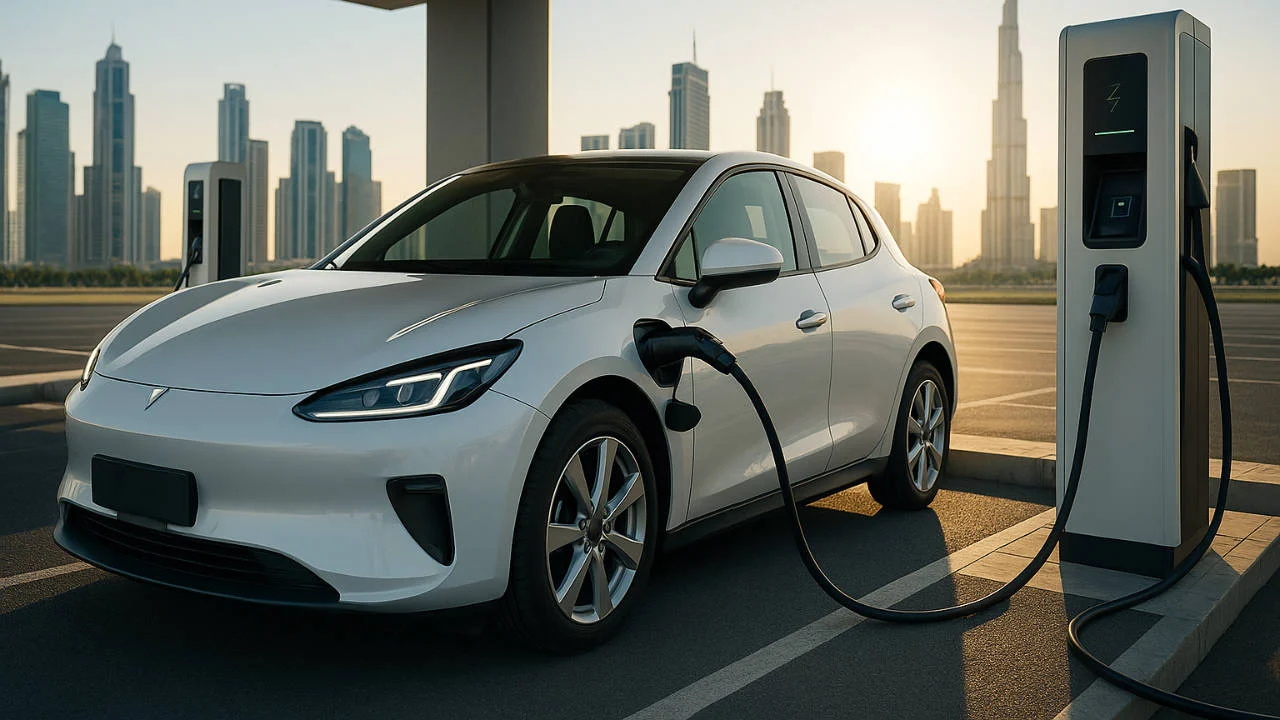
The vehicle market continued to expand throughout 2026, with an important development being the increase in the presence of electric vehicles. From January to October, 81,761 vehicles were registered for the first time in Albania, of which 64,845 were passenger cars. Meanwhile, 8,891 registered vehicles are electric, representing about 10.9% of the total.
Data published by the General Directorate of Road Transport Services (DPSHTRR) show that passenger cars make up 79.3% of new registrations in the country. However, first-time registration does not necessarily mean purchasing a newly produced vehicle, as this category also includes used vehicles imported from abroad.
According to statistics, 51.9% of passenger cars registered during this period are between 9 and 15 years old, while 20.3% are older than 15 years. This means that over 72% of passenger cars registered for the first time in Albania are at least 9 years old, demonstrating that the market continues to rely mainly on the import of used vehicles.
Only 20.2% of registered passenger cars are up to 4 years old, while 7.6% belong to the 5–8 year age group.
Nearly 9,000 electric vehicles, cars dominate the market
One of the most important market developments during 2026 is the share that electric vehicles have gained in first-time registrations.
According to DPSHTRR, during the January–October period, 8,891 electric vehicles were registered, of which 8,215 were passenger cars. The latter represent about 12.7% of all passenger cars registered during the ten-month period.
This means that approximately one in eight passenger cars registered for the first time in Albania during this period is electric.
The rest of electric vehicles include other categories, such as transport vehicles, work vehicles, and other road vehicles.
However, diesel engines continue to dominate the market. In ten months, 43,889 diesel vehicles have been registered, or about 53.7% of the total, while 22,790 vehicles use gasoline, accounting for 27.9%.
Additionally, 2,365 gasoline/gas vehicles have been registered, while the statistics also include other categories of hybrid technologies and alternative fuels.
In the category of passenger cars, the differences are even more noticeable. There were 38,055 diesel passenger cars, 13,285 petrol cars, 8,215 electric, and 2,294 petrol/gas.
Although electric vehicles have gained a considerable share in the 2026 censuses, the ten-month statistics are not sufficient to determine their growth rate compared to last year, without a comparison with the same period in 2025.
June, the month with the most registrations
Monthly data show that the highest number of vehicles registered for the first time was recorded in June, with 9,915 vehicles, followed by July with 9,614 vehicles.
In January, 6,895 vehicles were registered, in February 7,306, in March 7,891, and in April 8,707 vehicles.
After a decline in May, when registrations reached 8,116 vehicles, the market hit its highest level in the following two months.
In August, registrations dropped to 8,085 vehicles, in September to 7,639, and in October to 7,593 vehicles.
Thus, October registrations are about 23.4% lower compared to the June peak, while compared to September the decline is only 0.6%.
On average, during the first ten months of the year, about 8,176 vehicles were registered per month.
South Korea and China, the main sources of tools
Another interesting element is the structure of the countries of origin of registered vehicles.
South Korea ranks first with 21,530 vehicles, representing about 26.3% of the total. China ranks second with 13,284 vehicles, or 16.2%.
Germany ranks third with 9,828 vehicles, followed by Italy with 9,315 vehicles, the United States of America with 6,633, and Switzerland with 5,621 vehicles.
3,242 vehicles have been registered from Canada, while 3,230 originate from Albania, according to the classification used on the DPSHTRR platform.
Data shows that South Korea and China together account for about 42.6% of vehicles registered for the first time in the country.
This structure highlights the important role that Asian markets have played in supplying the Albanian vehicle market. However, the origin data do not separately show how many of the vehicles coming from these countries are electric.
Volkswagen and Mercedes-Benz, the most registered brands
In the ranking by brands, Volkswagen and Mercedes-Benz continue to hold the leading positions.
During the ten-month period, 13,181 Volkswagen vehicles and 12,007 Mercedes-Benz vehicles were registered.
In third place is Audi with 8,138 vehicles, followed by Hyundai with 6,091, Toyota with 2,943, and BMW with 2,245 vehicles.
Next are Ford with 2,150 and Land Rover with 1,799 vehicles.
These figures show that German brands continue to have a strong presence in the Albanian market, despite the expansion of offerings from Asian manufacturers.
Electrification is advancing, but fleet aging remains a challenge
DPSHTRR statistics highlight two important trends that are simultaneously developing in the Albanian vehicle market.
On one hand, electric vehicles are occupying a significant share of registrations, reflecting interest in alternative transport technologies and vehicles with lower operating costs.
On the other hand, the vast majority of registered passenger cars continue to belong to age groups over 9 years old, indicating that fleet renewal remains a challenge.
This situation is also of particular importance within the framework of new policies for transport and the environment, including discussions on limiting imports of old vehicles and promoting vehicles with lower emissions. /ekofin.al
