

The Ministry of Agriculture and Rural Development has changed the minimum rules for the protection of chickens intended for meat production, establishing limits on bird density in farm facilities, the requirements for the training and certification of the persons responsible for their rearing, as well as the procedures for inspection and reporting.
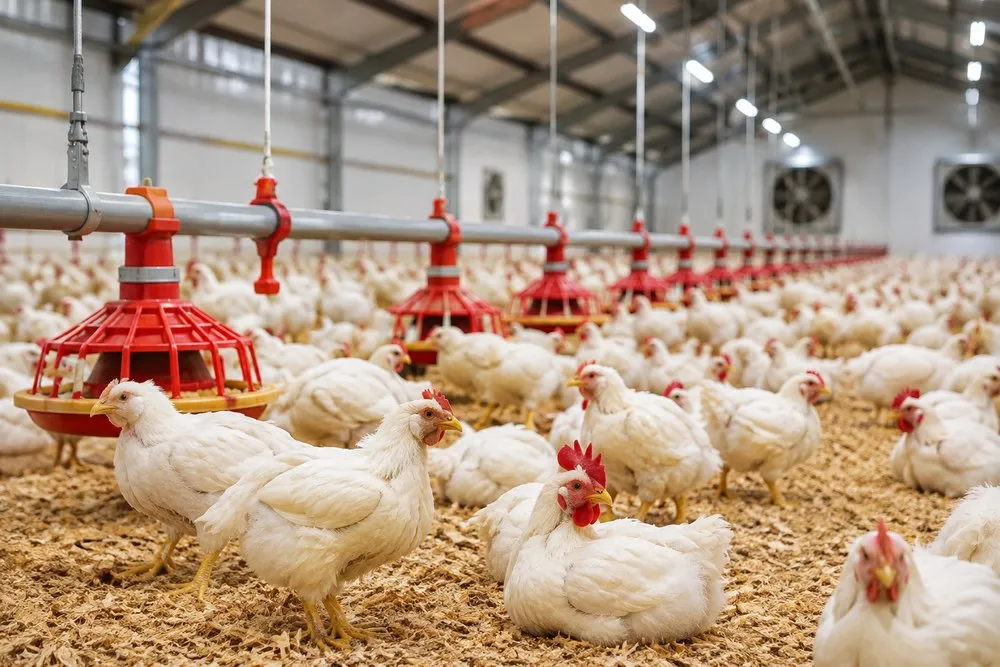
According to Order No. 1142, dated November 6, 2026, by Agriculture Minister Andis Salla, the maximum density of chickens in a production unit or in a farm’s housing facilities shall not exceed 33 kilograms of live weight per square meter.
In cases where an exemption from this limit is allowed, the National Veterinary and Plant Protection Authority must ensure that the maximum poultry density does not exceed 39 kilograms per square meter.
The changes are significant for operators in the chicken meat production sector, as bird density is directly linked to production capacities and the organization of farm facilities.
The order also sets out the professional qualification requirements for persons involved in poultry breeding. The competent authority must ensure the establishment and operation of a system for the control and approval of training courses.
Persons responsible for keeping poultry must be issued a certificate recognized by the competent authority, which attests to completion of the training course or recognizes prior professional experience as equivalent to this training.
Under the regulation, responsibility for keeping poultry may be held by any natural or legal person who has assumed care of them, on a permanent or temporary basis.
The amendments also provide for the promotion of the development of guidelines for good farm management practices. The competent authorities must facilitate the distribution and use of these guidelines by economic operators. When necessary, a veterinarian must also be contacted.
Another element of the order concerns monitoring compliance with poultry welfare standards.
By August 31 of each year, the competent authorities must submit an annual report on the inspections carried out during the previous year. The report must be accompanied by an analysis of the most serious cases of non-compliance with legal requirements and a national action plan for their prevention or reduction.
The amendments harmonize the sector’s regulatory framework with Law No. 61/2026 on official controls, food safety, animal health, and welfare, and will take effect on August 1, 2027. /ekofin.al