


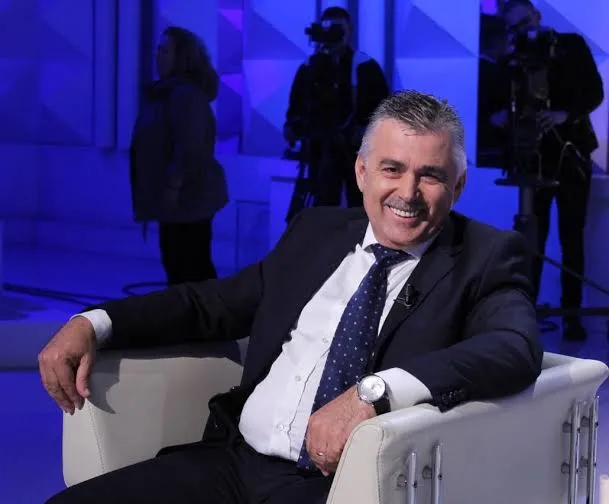
By Ilir Pilku
The 2027 fiscal package carries a contradictory approach. The government presents it as a redistribution in favor of families, while the increase in certain rates risks burdening consumption, domestic production, and investment plans. For agriculture and agribusiness, this is especially evident in the split between products that receive a 6% VAT and those that will be taxed at 21%.
General VAT increase to 21%. The rise from 20% to 21% could put pressure on the prices of goods and services subject to the standard rate. If the entire increase is passed on to the consumer, a product priced at 120 lekë becomes 121 lekë. Even the American Chamber of Commerce warns that the effect could offset part of the basket relief.
Misguided basket protection. The government proposes a 6% VAT on 54 products. The reported list includes milk and plain yogurt, while cheese and butter are excluded. The final list is expected to be determined by a government decision. According to INSTAT, food and non-alcoholic beverages accounted for 39.8% of household spending in 2025, and the milk, cheese, and egg category accounted for 15.5% of spending on food and non-alcoholic beverages. Excluding cheese and butter weakens the relief for families and could encourage sales without invoices, to the detriment of domestic processors operating formally. The Dairy Processing Industry Association proposes that the 6% rate also include cheese and butter. Meanwhile, the German Chamber of Commerce (DIHA) welcomes the cut for basic foods but calls for consultation with businesses.
VAT asymmetry in agriculture. The 2026 scheme provides a 10% compensation for qualifying farmers on documented sales to collectors and processors. The VAT that the processor pays depends on the sales tax and on the deductions allowed on purchases. When these deductions are limited, the 21% rate on sales can strain liquidity and add pressure to the purchase price or to the shelf price in markets. Thus, this package creates an imbalance between the VAT on the purchase of raw materials and the 21% VAT on sales.
Capital and dividend taxes. The increase of the dividend tax from 8% to 15% reduces the net return on distributed capital. For 1 million lek gross dividend, the tax would rise from 80,000 to 150,000 lek. This could affect the decisions of domestic and foreign investors regarding new investments in Albania.
Increase of VAT in tourism from 6% to 10%. If the increase is passed on entirely to the customer, the accommodation price rises by about 3.8%. Albania would maintain a lower rate than the usual one for hoteliering in Greece (13%) and Montenegro (15%), but the fiscal advantage would be narrowed. According to the government’s presentation, the increase excludes agritourism.
Payroll tax. The 13% rate bracket is expanded to 300,000 gross leks per month, easing the burden on part of the middle class. The new 30% rate applies to the portion of salary above 700,000 leks. The effect on net income must be assessed especially for professionals with higher salaries.
2). Comment on the 2026 Progress Report and IPARD III Funds
The non-activation of IPARD III is one of the most critical issues for agriculture in Albania’s 2026 Progress Report, published on November 4, 2026. In my assessment, the delay reflects the difficulty of building a fund management system that ensures integrity and financial control. Farmers, agro-processors, and agritourism enterprises that have postponed investments are bearing the consequences.
OLAF investigations and the suspension of funds. OLAF documented serious irregularities in IPARD II, including requests to applicants to transfer part of the grant to a consulting company, no-real-competition contracting, and inflated prices. In July 2023, the Commission announced the temporary suspension of reimbursements for IPARD II. OLAF recommended that around €33 million be considered ineligible for funding. In September 2026, the Commission confirmed that the procedure to determine the actual amount to be returned is still under decision-making. For IPARD III, the initial decision provided for up to €112 million in EU contribution, while these funds remain blocked and only one year remains for implementation—six years lost due to the problems caused by the AZHBR and the entire operational structure.
Failure to keep government promises. In 2024, the Albanian authorities declared that the IPARD III program would become operational in 2025 and, in January 2026, expressed the expectation that the funds would be opened in September of that same year, but both deadlines passed without applications being opened.This uncertainty has concrete consequences for entrepreneurs who had prepared projects and needed to decide on loans, equipment orders, and investment deadlines.
Lack of professionalism and formatting of the AZHBR according to European standards. The report acknowledges progress in identifying parcels and in creating the farm data network, but calls for strengthening administrative capacities and meeting conditions for sound financial management. In my assessment, the AZHBR still needs to reach the required level of professionalism and administrative independence, with merit-based recruitment, a clear separation of assessment, control, and payment, as well as full audit trails.
Accreditation challenges and duration. Albania submitted its applications to DG AGRI (the EU’s Directorate-General for Agriculture) on April 1 and June 18, 2026. In practice, the Commission assesses the delegation of budget implementation tasks for the entire IPARD III management and control system, which includes the AZHBR. The review of documentation, possible on-site verifications, and the subsequent financial agreement may require a relatively long time. For this reason, the opening of applications depends on evidence that the corrective measures implemented by the IPARD Albania operational structure guarantee reliable functioning in practice. /ekofin.al
