


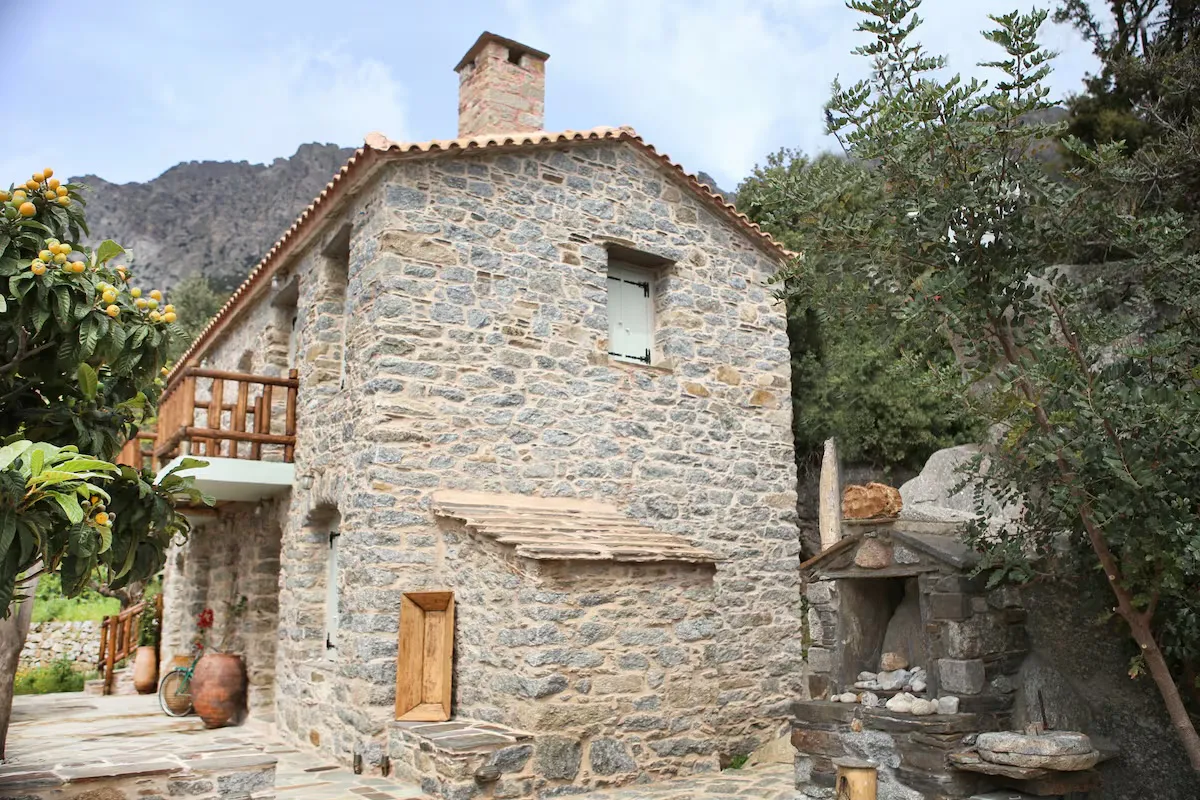
Sunlight filters through a small stone window, while the floorboards creak as they warm up. From afar, the sound of sheep bells can be heard as a flock passes by. The aroma of the bread being baked mixes with the smoke from last night’s fire. I wake up feeling that I have been transported to another time, but in reality, I am in today’s Albania.
I am staying in a tower, one of the traditional stone residential houses found throughout northern Albania, Montenegro, and North Macedonia. Once, they protected families during times of conflict and sheltered weary travelers along trade routes, before most were neglected and destroyed during the 20th century.
A new long-distance hiking trail, developed by the Albanian Agrotourism Association, aims to restore some of these towers to their former glory and give visitors the opportunity to discover a part of Albania almost untouched by tourism.

The Tower Trail passes through some of the least visited areas of northeastern Albania, with stops in the regions of Mirdita, Mati, Bulqizë, and Dibra. Designed to be walked on foot with a guide, over nine days, the journey stretches over more than 160 kilometers, passing traditional villages, high plateaus, forests, and river valleys.
In the future, routes for bicycles and 4×4 vehicles are also planned. Some stages of the trail are long and can be easily split into two days or shortened by a car transfer.
Opportunities to stay in guesthouses, farms, and towers connect travelers to the region’s cultural heritage, in a way that is becoming increasingly difficult to experience in the most frequented parts of the country.
The tower, in its various forms, is the central element of this itinerary. Traditionally built with limestone and wood from the surrounding mountains, the towers follow a regular architectural structure while also reflecting the character of the families who commissioned them.
Built by skilled craftsmen, the first towers were designed to withstand the region’s harsh weather conditions and even harsher historical realities, including the 15th-century Ottoman invasion and frequent conflicts between clans.
Many others were built during the 18th and 19th centuries, but under the communist regime of Albania, from 1944 to 1991, many families had their towers confiscated, which they found ruined when they regained ownership.
Today, many of them remain empty, following the massive exodus from rural areas to cities during the 1990s and 2000s.
“We are losing traditions because people are no longer staying here,” Nik Nikolli tells me as we walk through the hilly village of Lufaj during the first stage of the trail.
Nikolli is the director of Infokulla, a small museum and cultural center in the city of Rubik, which offers free walking maps and historical information about the region.
He explains that many of the villages along the route have been left with only one or two families. The introduction of the tourism idea has been slow because the concept of accepting money from a guest clashes with the deeply rooted traditions of hospitality.
He hopes the trail will encourage local residents to open their towers or farms as guesthouses, offering visitors unique experiences while simultaneously providing additional income for families.
Under the communist regime of Albania, many families had their towers confiscated, which they found ruined when they regained ownership.
Following the trail, it is easy to understand what Nikolli means when he talks about the lack of people in the villages and the hospitality of those who remain.
On some days, our trip lasts longer than expected, as my guide and I are regularly invited to sit down for coffee and are served plenty of freshly picked grapes, plums, and walnuts.
Agriculture is the main pillar of life in these areas, and people work the fields from dawn until dusk. However, they always seem ready to take a break, welcome visitors, and share stories from the past with them.

Most of the Tower Trail follows old roads through karstic hilly terrain, filled with caves, chestnut trees, and cornfields.

The route signs are still scarce, and in some parts you have to clear your own path through the bushes, but the trail allows travelers to walk along the trails still used by villagers, creating many opportunities for interaction with them.
At the end of the second day of the journey, in the village of Derjan, 91-year-old Hajrija Qerimi smiles joyfully as she tells me about her childhood in a large nearby tower.
Her father was a successful farmer, still remembered for his generosity, and the family regularly welcomed travelers.
She tells me that there were never fewer than 10 people at the dinner table.
“My father advised me early on that anyone who comes home should be offered food and drink, and he taught me what I should serve and how I should serve them,” she says proudly.
“The important thing was that no one left without receiving the best possible hospitality.”
Embracing the tower and its strong tradition of hospitality, rural areas may have found exactly what they have to offer visitors.
One of the trail’s highlights is the opportunity for travelers to experience traditional hospitality by staying in restored towers.
On the fourth day, in the hilly village of Dushaj, I stayed at the Hupi Tower, which opened as a guesthouse in 2021.
The owner, Luli Hupi, spent years working in a nearby mine and saving money to restore the house, room by room.
“When you come here, a family is waiting for you and you feel as if you are at home,” he says.
Seeing this as more than just a business venture, Hupi is committed to supporting the local community.
He collaborates with more than 10 families, who supply the restaurant with meat, cheese, honey, bread, and other products, while also serving as guides for hiking, horseback excursions, and cooking courses.
He keeps the number of visitors low and has no interest in the trend towards mass tourism in Albania.
“People say I’m stupid for not having 50 tables in a restaurant,” he laughs, as we sit by a large fire in the traditional room after a simple dinner with warm cornbread, fig jam, pickled salad, goat cheese, and ricotta.
“But I don’t want 50 tables, I want 10, and I want people to be forced to book a month in advance.”
Hup’s influence is clearly felt in the surrounding area, where many towers are undergoing restoration and the idea of a slower form of tourism is increasingly embraced.
On the penultimate night of the trip, I stay at Butterfly Camping, a small campsite located in a canyon on the banks of the Black Drin River.
The owner, Labinot Murrja, lights a fire outdoors, fills me a glass of local grape rakia, and tells me how he and his father cleaned and leveled the land themselves along the riverbank.
They kept things simple by building three small cabins, leaving space for setting up some tents, tables, and a hut with a basic kitchen.
Murrja says he is not interested in attracting as many tourists as possible, but aims for people with an adventurous spirit, an interest in nature, and a desire to experience life in the nearby village, where he still lives with his family.
He tells me that the local residents were skeptical when he started this venture, wondering why anyone would be interested in coming to the middle of nowhere.
However, when they saw that visitors were arriving, they were convinced, and Murrja says that similar ventures are already appearing throughout the region.
Like Hupi, Murrja also emphasizes that he is interested in offering visitors a unique experience, rather than making a big profit.

“I love this job,” he says with a smile.
“It doesn’t make you rich, I do it purely out of passion.”
The tourism industry in Albania has experienced significant growth in recent years.
However, the ongoing protests, fueled by plans to build a luxury resort in a protected coastal area, have led local residents to express their dissatisfaction with the pace and unsustainable nature of development in the country.
With a large part of Albanian tourism concentrated on the coast and in the Northern Alps, the inland rural areas have struggled to find what they can offer visitors.
Embracing the tower and its strong tradition of hospitality, they may have found exactly what they need.

A double room in a tower costs around 35 pounds per night. /Adapted from The Guardian, ekofin.al
