


A tragedy at the Novi Sad railway station, a student movement without traditional leaders, and an electoral list of personalities from various fields of public life. This is the story of a civic mobilization that, after nearly two years of protests, changed the political balance in Serbia.
Aleksandar Vučić, one of the longest-serving figures leading Serbia, has conceded defeat in the parliamentary elections of October 25, 2026, against a political force born from student protests and not from traditional party structures.
According to preliminary results, the Student List received 51.47% of the votes, compared to 40.42% secured by Vučić’s list. The Serbian president stated that, based on initial estimates, student representatives are expected to win 135 to 140 seats in the 250-member parliament, securing a parliamentary majority.
The result marks a turning point in Serbian politics, where Vučić has been the central figure of power since 2014, initially as prime minister and later as president.
But the most unusual development of these elections is not only related to the result. It concerns how a protest movement, initially organized in universities, managed to build an electoral alternative.
A tragedy that changed the public debate in Serbia
The origin of this movement dates back to November 1, 2024, when the collapse of a shelter at the Novi Sad railway station caused the death of 16 people.
The incident raised numerous questions about the safety of public buildings, reconstruction procedures, and the responsibility of the institutions that had overseen the project.
The students were among the first to demand transparency regarding the documentation of the works and the identification of those responsible. Their demands were accompanied by university blockades and protests that gradually extended beyond academic premises.
As the months passed, the demonstrations took on national proportions. Alongside the students stood citizens from various professions and age groups, including professors, farmers, artists, and representatives of liberal professions.
In March 2025, Belgrade became the scene of a massive mobilization, demonstrating that dissatisfaction had gone beyond the initial issue.
Criticism of the lack of transparency, suspected corruption, and the functioning of institutions became the main topics of the protests.
Without a party leader, but with a new organization
One of the characteristics that distinguished the student movement was the way it was organized.
Unlike political parties, which are usually built around a chairman and leadership structures, the students chose collective decision-making.
University assemblies served as spaces for discussion and coordination, while important decisions were made through consultations among participants.
This model made it difficult to identify a single leading figure and gave the movement a different profile from the parliamentary opposition.
However, to move from protest to electoral competition, students needed concrete political representation.
The solution they chose was the inclusion of public figures with professional experience outside traditional politics.
From cardiology to basketball, who are the figures on the Student List?
At the top of the list that challenged Vučić was Ilija Srdanović, a cardiology professor in Novi Sad.
Alongside him, well-known names from Serbian sports, culture, and economy were involved.
Among them are Dejan Bodiroga, one of the most well-known figures in Serbian and European basketball, actor Tihomir Stanić, as well as Dejan Shoshkić, former governor of the National Bank of Serbia.
The inclusion of these personalities aimed to give the movement a broader social and professional representation.
Instead of a structure mainly based on party careers, the Student List presented candidates who had built their reputations in universities, financial institutions, sports, and culture.
Another element was maintaining distance from the traditional opposition. The students refused to integrate into regular party coalitions, while some opposition forces chose not to run in order to support the new list.
This strategy enabled students to preserve their political identity and seek support even from citizens who did not identify with existing parties.
From the demand for justice to the governance program
Preparing for the elections required more than just a list of candidates.
The Movement drafted an 11-point program, focusing on the fight against corruption, strengthening institutional accountability, and changes in public sector administration.
Among the proposals were measures for investigating and punishing violations of the law, removing officials involved in abuses against protesters, as well as creating a special police structure to detain those responsible.
The program also envisaged interventions in the management of public media and state enterprises.
In this way, the demands that had mobilized students after the Novi Sad tragedy gradually turned into a political platform with institutional objectives.
The October 25 elections and Vučić’s acceptance of defeat
After nearly two years of demonstrations and political clashes, the electoral race became the decisive test of the support the movement had gained.
Preliminary results showed a difference of more than 11 percentage points between the Student List and Vučić’s political force.
The Serbian president publicly admitted that the list supported by the students had won the elections.
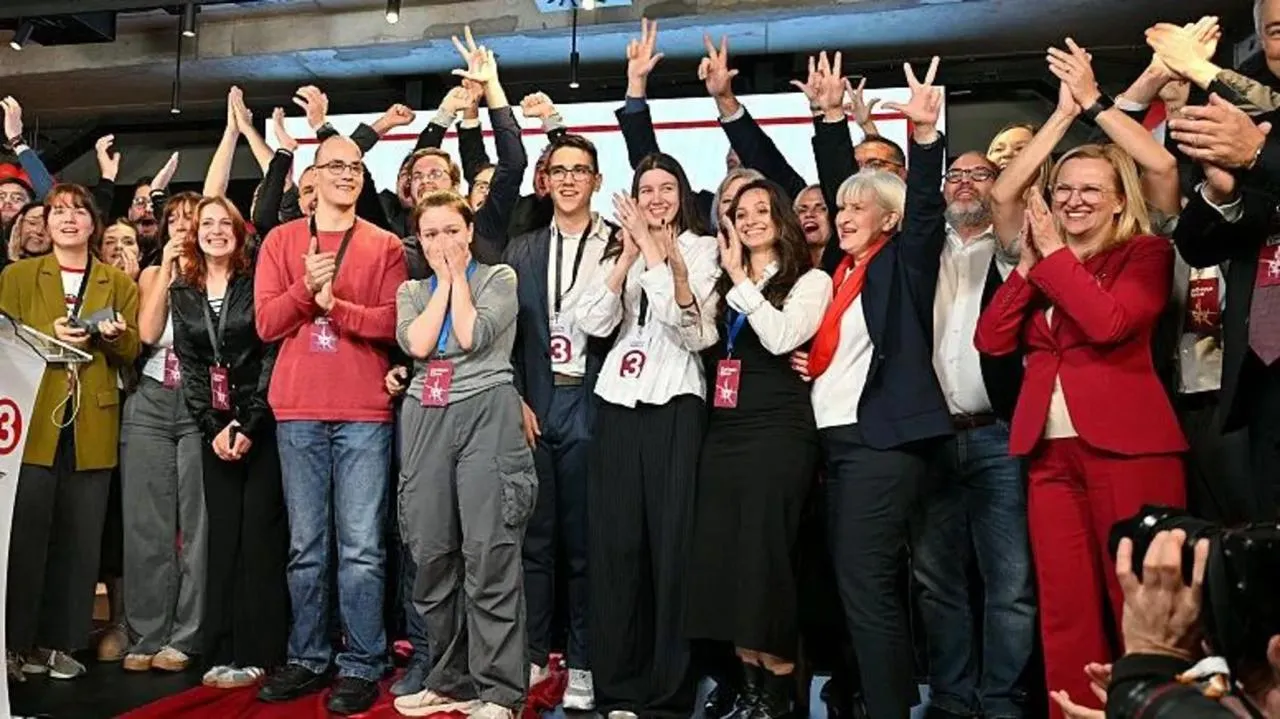
At the student camp, the result was welcomed with celebrations and the song “Srbija se budi,” which translates in Albanian to “Serbia is Awakening.”
For the movement, the vote represented a shift from mobilization on the streets toward representation in the country’s institutions.
For the Serbian political system, the result opens a new phase after more than a decade during which Vučić and his political force have held key positions of power.
The next challenge: To govern by the same standards you demanded in the protest
By securing a parliamentary majority, the Student List faces a reality different from that of organizing protests.
So far, the movement has aimed to demand accountability from institutions. If it forms the government, its representatives will have to take responsibility for leading it.
This includes the management of public finances, the economy, administration, citizen services, and international relations.
The collective decision-making model that characterized student organization will also face the demands of a government functioning, where responsibilities and competencies are institutionally defined.
Another challenge will be maintaining the support of a broad electorate, initially united by the demand for justice and change, but which may have different expectations for economic and social policies.
The October 25 elections showed that a civic movement can transform into a parliamentary force even without following the traditional path of party organization.
The political history that began with the tragedy of Novi Sad has now entered another chapter. After the electoral success, attention will shift to the ability of the new representatives to implement the institutional changes they have promised.
For Serbian students, the challenge is no longer just to demand accountability from the authorities, but to demonstrate how they will exercise it. /ekofin.al
