


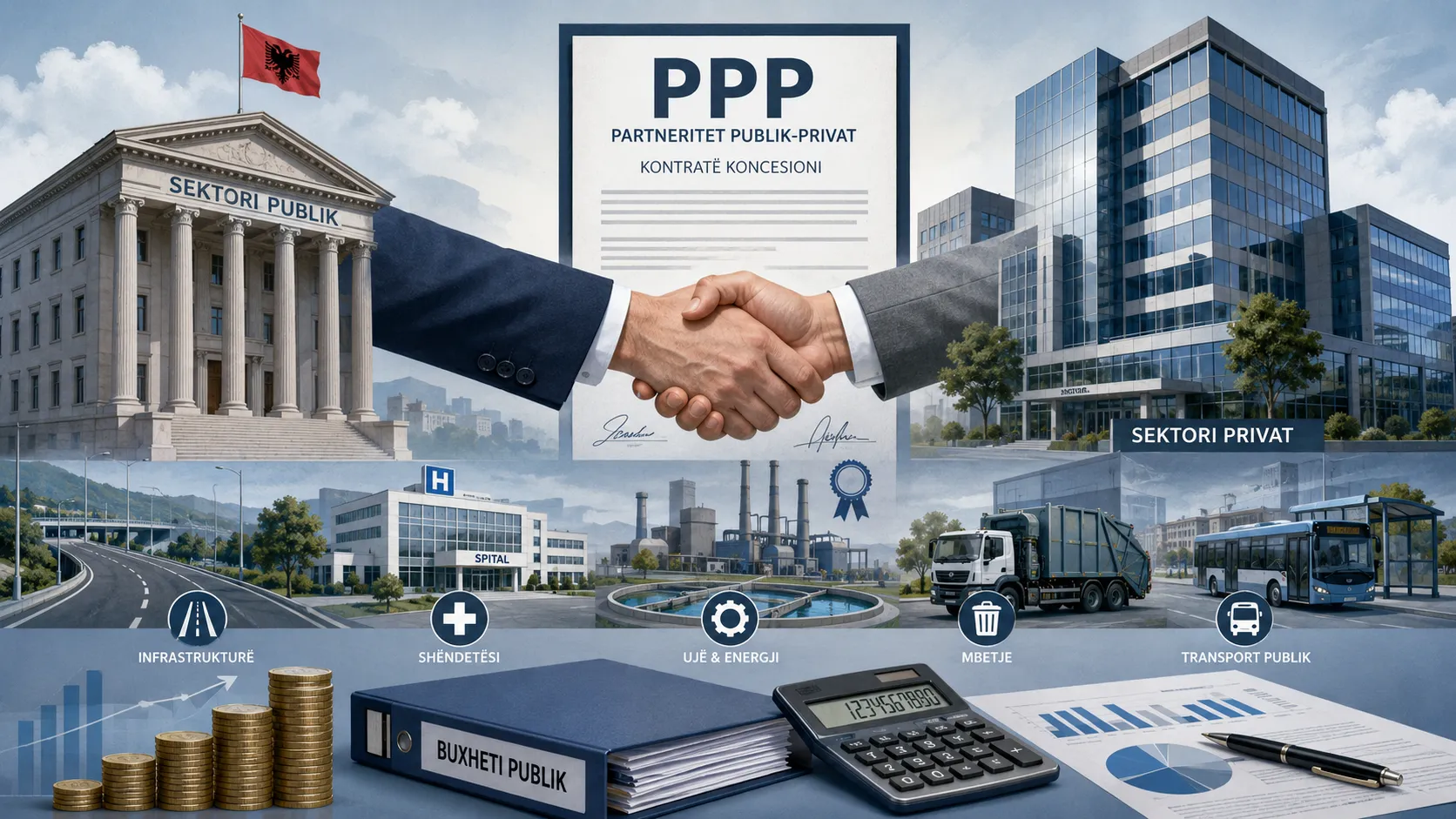
The government has approved new rules for the operation of the Electronic Registry of Concessions and Public-Private Partnerships (PPP), expanding from 9 to 19 categories of primary data that the system must contain and setting specific deadlines for the verification and publication of documentation. The changes aim to provide more comprehensive information about concession awarding procedures, financial conditions, and contract implementation.
The new decision replaces the one from March 16, 2016, on the basis of which the existing registry was created. Unlike previous rules, which mainly focused on basic contract information, the new framework also foresees the inclusion of documents related to the preparation, evaluation, and monitoring of concession projects.
The new decision expands the documentation that must be registered and, within legal limits, made public.
In the 2016 decision, the registry included data on the contracting authority, the object, type and duration of the contract, its value, the price of the public service, the concession fee, and the contract text.
With the 2026 regulations, this list explicitly includes feasibility studies, tender documentation, execution guarantees, data on subcontracting, contract transfers, and documentation on property rights related to their enforcement. The register will also include annual and final implementation reports, as well as documentation for contract amendments.
This means that the information will not be limited only to the terms of the signed contract but will also extend to the documents on which the project approval is based and to reporting on its implementation.
Likewise, the decision foresees the registration of the investment value separately from the contract value, allowing the distinction between the two financial indicators.
However, the decision stipulates that the publication of contracts and feasibility studies will be done only for the parts permitted by legislation. Information classified as confidential or subject to legal restrictions will not be published.
The changes also affect the way existing contracts are managed. According to the 2016 decision, contracting institutions were obliged to submit copies of all contracts signed before its entry into force within 30 days.
The new rules foresee the transfer and integration of existing data into the new register, without requiring the re-submission of the documentation already available. If deficiencies are found during verification, institutions are given a deadline of 30 working days from the receipt of the request to complete or update the information.
The decision explicitly also defines the responsibility of contracting authorities for the accuracy, completeness, and timely updating of the data they submit.
There is also a change in the division of institutional responsibilities. According to the 2016 regulations, the costs of creating, maintaining, and administering the registry were covered by ATRAKO’s budget.
With the new decision, the National Agency for Information Society (AKSHI) takes responsibility for the development, technical maintenance, and security of the registry, while the Agency for the Treatment of Concessions and PPPs remains the institution responsible for functional administration. /ekofin.al
