
From August 1, 2027, livestock farms in Albania will have to comply with the updated requirements for the protection and welfare of calves, relating to housing conditions, lighting, water supply, hygiene, and the restriction of the use of restraint devices.
The new order of the Minister of Agriculture, published in the Official Gazette, amends the minimum standards for the protection of calves, originally established in 2014.
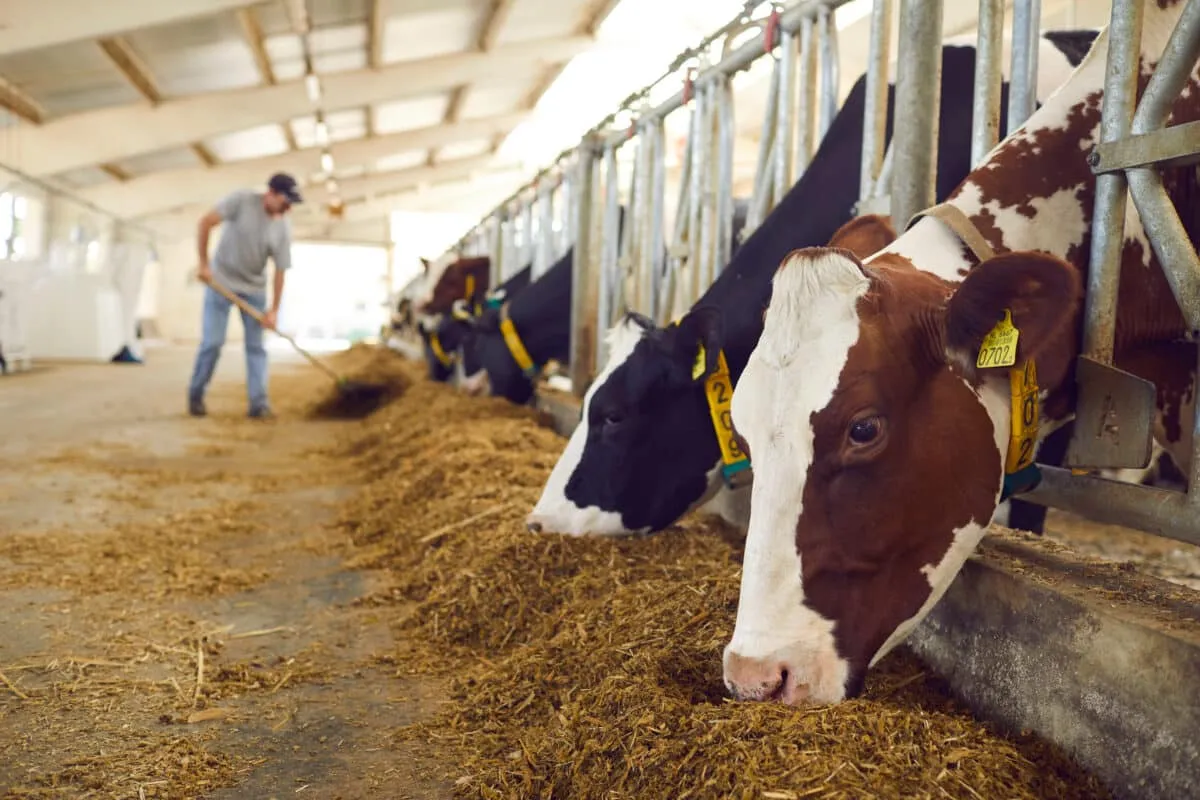
According to the changes, the individual stalls where calves are kept must not have solid walls, but partitions that allow direct visual and physical contact between the animals. The only exception is for areas used to isolate sick animals.
Farmers must also ensure adequate natural or artificial lighting, as calves must not be kept continuously in darkness. In the case of artificial lighting, its duration must be at least equal to the period of natural light normally available between 9:00 AM and 5:00 PM.
The facilities must also have adequate lighting to allow inspection of the animals at any time.
The order stipulates that calves must not be kept tied, except for those kept in groups who may be tied for a period not exceeding one hour during feeding with milk or milk replacer.
Tying devices must be regularly inspected and must not cause injuries, pose a risk of strangulation, or unduly restrict the animals’ movement.
Specific requirements are also set for hygiene on livestock farms. The shelters, stalls, equipment, and utensils used must be cleaned and disinfected to prevent the spread of infections and the buildup of disease-carrying organisms.
All calves over two weeks old must have access to sufficient amounts of fresh water or meet their fluid needs through other sources. During periods of high temperatures and for sick animals, drinking water must be available at all times.
The changes also affect the import of calves. Animals imported into Albania must be accompanied by a certificate issued by the competent authority of the country of origin, which certifies that they have been treated according to standards at least equivalent to those applicable to animals of origin from European Union countries.
The competent authorities will have to submit by August 31 of each year a report on the inspections carried out during the previous year. The report must contain an analysis of the most serious violations found, as well as a national action plan for their prevention or reduction. /ekofin.al