


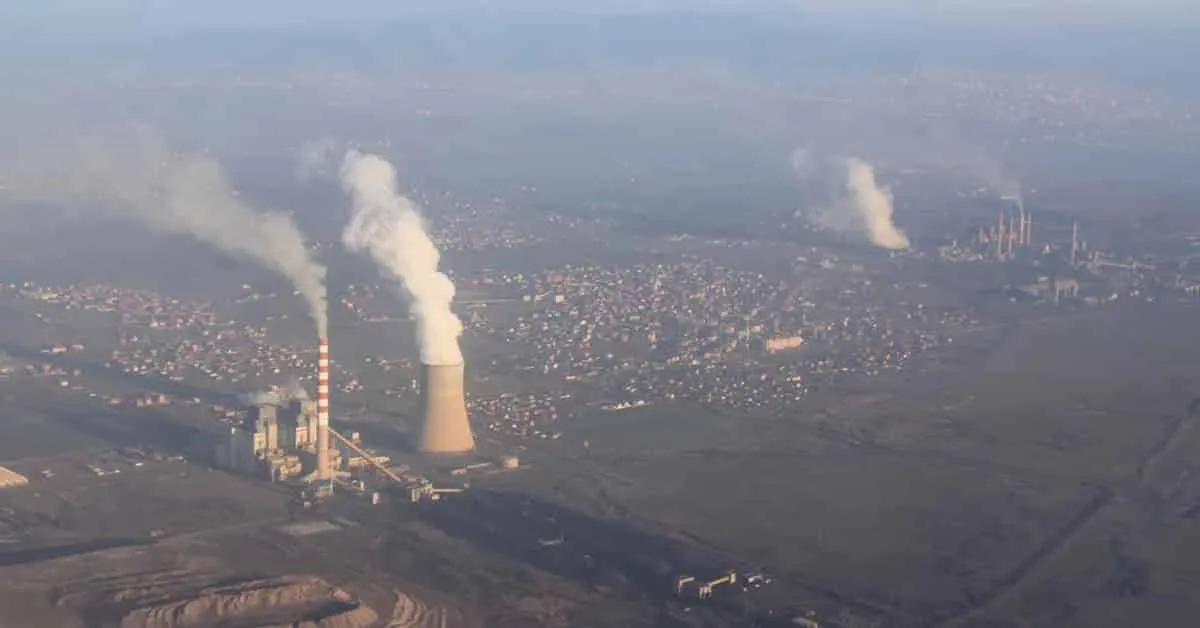
Air pollution in Albania is linked to around 3,551 premature deaths during 2023, while its cost to economic and social well-being is estimated to be equivalent to 7% of Gross Domestic Product (GDP). Although mortality indicators related to pollution have improved over the past two decades, exposure to fine particles in the air remains a serious public health problem, especially for children, the elderly, and the most vulnerable families.
According to the World Bank’s report on Air Quality Management in the Western Balkans, the estimate for 3,551 premature deaths in Albania during 2023 is based on health impact modeling from the European Environment Agency (EEA). The figure represents the mortality attributed to exposure to PM2.5 particles, which, due to their very small size, can penetrate deep into the lungs and affect the cardiovascular system.
The World Bank also refers to a previous estimate by the World Health Organization, according to which PM2.5 pollution was linked to around 4,600 premature deaths in Albania in 2021. However, the institution clarifies that these two figures cannot be directly compared to determine the reduction in mortality, as they were calculated based on different methodologies and databases.
A more stable indicator of the long-term trend is the approximately 53% reduction in premature mortality related to PM2.5 during the period 2005–2022. Despite this improvement, the risk level remains significant. According to an OECD assessment for 2022, cited in the report, premature mortality from air pollution in Albania is estimated at around 164 cases per 100,000 inhabitants.
The cost of pollution amounts to 7% of the economy.
Besides the health consequences, air pollution also constitutes a significant economic burden. The World Bank estimates that the cost to well-being caused by outdoor air pollution in Albania is equivalent to 7% of GDP.
This indicator does not represent a direct expenditure of the state budget or a measured loss of economic output. It is a monetary assessment of the damage to welfare, based on data from the 2021 Global Burden of Disease study, which includes the health consequences of pollution.
At the regional level, the World Bank estimates that the costs to well-being from air pollution range from 7% to 19% of GDP in Albania, North Macedonia, and Serbia. The report identifies pollution as an obstacle to sustainable economic development, since health damages are also associated with loss of productivity, absenteeism due to illness, and consequences on individuals’ cognitive abilities.
In the Western Balkan countries, exposure to pollution is particularly concerning in urban areas. According to a study cited by the World Bank, the average mortality attributed to air pollution in the region’s cities ranges from 137 to 158 cases per 100,000 inhabitants, roughly double the average of 69 cases per 100,000 inhabitants in European Union cities.
Pollution in Albania, above three times the WHO guideline
Despite improvements in long-term mortality indicators, concentrations of harmful particles in the air remain above the recommended levels for health protection.
According to IQAir data cited in the report, the average annual concentration of PM2.5 in Albania was 16.7 micrograms per cubic meter in 2023, more than three times the level of 5 micrograms per cubic meter recommended by the World Health Organization.
This level was also 67% above the new annual European Union limit of 10 micrograms per cubic meter, which must be met by 2030.
Data on other pollutants show that the problem is particularly pronounced in some cities. During 2023, the average annual concentration of PM10 particles in Tirana was 35.4% above the European limit, while in Elbasan it was 19.6% above this level.
In Korçë, 60 days exceeding the daily PM10 limit were recorded, while at a monitoring station in Tirana, 58 days were recorded compared to the allowed limit of 35 days per year.
The World Bank says that one of the main sources of fine particulate pollution is home heating. According to GAINS modeling, the combustion of heating materials in the residential sector generates approximately 50% of national PM2.5 emissions. Industry and transport are also important resources, while the weight of each sector varies by city.
However, the report warns that the assessment of the population’s exposure to pollution in Albania remains uncertain due to the limited and uneven coverage of the monitoring network. The concentration of stations in urban areas and near traffic may result in levels higher than the national average, so an expansion of measurements is required.
To reduce health and economic consequences, the World Bank emphasizes the need to transition to cleaner heating systems, stronger control of industrial emissions, improvement of urban transport, and increased investments in air quality.
According to the Bank, the implementation of measures should focus especially on areas where pollution levels and population exposure are higher, as interventions in these zones could bring the greatest benefits to public health. /ekofin.al
