


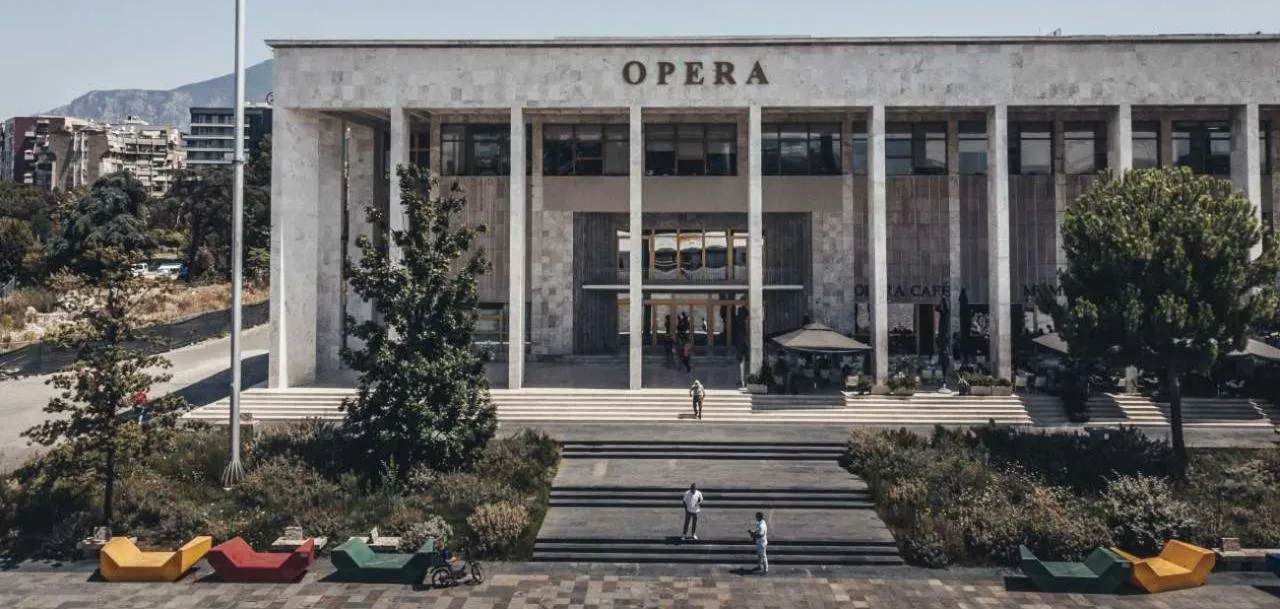
Public art and culture institutions will have the opportunity to use 90% of the revenues generated from ticket sales, the exploitation of assets, artistic works, and cultural services, while 10% will go to the State Budget. Meanwhile, new rules are planned for the composition and appointment of artistic boards, financial management, service fees, and the expansion of the categories of institutions covered by law.
These are some of the main changes to the draft law “On some additions and amendments to law no. 10352, dated 18.11.2010, ‘On Art and Culture'”, which has been submitted for public consultation by the Ministry of Tourism, Culture and Sports.
The initiative aims to modernize the legal framework of the cultural sector by expanding funding opportunities for institutions, more clearly regulating their functioning, and including new forms of artistic creativity, including digital art and multidisciplinary activities.
Institutions will retain 90% of the revenues
One of the most important changes concerns the way the revenues of central public art and culture institutions are managed and used.
According to the draft law, 90% of the revenues from ticket sales, administration and use of properties and assets, economic exploitation of artistic works, and certain cultural services will be used to finance the activities of the institution that implements them.
The remaining 10% will be transferred to the State Budget.
Revenues will be managed through the treasury system, and their use will be carried out through the institution’s approved budget.
The funds available to institutions can be used for the realization of new artistic productions, financing the annual repertoire, organizing performances, promoting cultural activities, staff training, and purchasing or collecting works of art.
Another element is the possibility of using these revenues for rewards related to artistic quality, according to criteria approved by artistic boards and the limitations of legislation on salaries and rewards in public institutions.
According to the explanatory report, the change aims to increase the financial sustainability of institutions and their capacity to develop new projects.
Artistic boards with 7 members, appointments by the minister
The draft law also revises the manner of composition and appointment of artistic boards in central public institutions of art and culture.
According to the proposed formula, the artistic board will consist of seven members.
Two of them will be representatives of ministries responsible for finance and for art and culture, while the other five will be distinguished personalities in the field of art or related social activities.
Members will be appointed by order of the minister responsible for art and culture.
For the five personality positions in the field, the head of the institution will present at least three candidates for each position, from which the minister will make the appointment.
The mandate of the members will be four years, with the right to be reappointed.
The draft law also stipulates that board members cannot be employed by the institution to which the board operates.
In addition to artistic boards, institutions may also have other collegial bodies with advisory or professional functions, in accordance with the statutes and relevant legislation.
New fees for cultural services, relief for certain categories
The changes also foresee regulating the method of setting fees for services of central public art and cultural institutions.
According to the draft law, fees will be based on the cost of the service, respecting the principles of proportionality, transparency, equal treatment, and guaranteeing public access.
For certain categories of citizens, reduced fees or exemptions from payment may apply.
These categories include children, pupils, students, pensioners, persons with disabilities and their companions, researchers, and groups participating in educational activities.
However, the draft law does not specify concrete values for fees or the amount of reductions.
These will then be approved by a decision of the Council of Ministers, upon the joint proposal of the minister responsible for culture and the minister responsible for finance.
The National Library and the Film Archive are included in the law
Another change concerns the expansion of the list of central public institutions for art and culture.
The law explicitly proposes to include the Central State Film Archive, the National Library of Albania, and the National Center for Books and Reading.
Additionally, the possibility of involving other central public institutions that perform functions in the field of art and culture is foreseen.
For institutions operating under special laws, the provisions of the general law shall apply only insofar as they do not conflict with specific legislation.
Legal recognition for digital art and the independent cultural scene
The draft law also expands the definition of art and cultural activities covered by legislation.
In addition to traditional forms of creativity such as music, theater, literature, cinematography, and visual arts, the law also includes digital arts, multimedia, graphic and industrial design, audiovisual creativity, and innovative forms of artistic expression.
Another element is defining the concept of the independent cultural scene, which includes artists, cultural professionals, non-profit organizations, and private entities operating outside the structures of public institutions.
The definition of an artist is expanded to include individuals who create, perform, produce, or contribute to artistic activities, regardless of their employment relationship or form of organization.
The draft law also foresees that foreign cultural entities and institutions operating in Albania may receive public funding, in accordance with the criteria of the relevant programs and the legislation in force.
More responsibility for the heads of institutions
The legal changes define clearer responsibilities for the heads of public art and culture institutions in managing revenues.
The head of the institution will be responsible for the lawful, economical, efficient, and effective use of funds.
Institutions will be required to report periodically to the ministry responsible for culture on the realization, administration, and use of revenues.
The Ministry will exercise a monitoring function over financial administration and the activities of institutions.
Meanwhile, the regulations on internal organization and functioning will be approved by order of the minister responsible for culture, upon the proposal of the head of the institution, except in cases where special laws specify other procedures. /ekofin.al
