


The National Association of Real Estate Intermediaries (NAREA) has presented five concrete proposals to amend the 2027 Fiscal Package, seeking more favorable treatment for small businesses, relief of capital gains tax from property sales, stimulation of the rental market, and a revision of the reference price methodology.
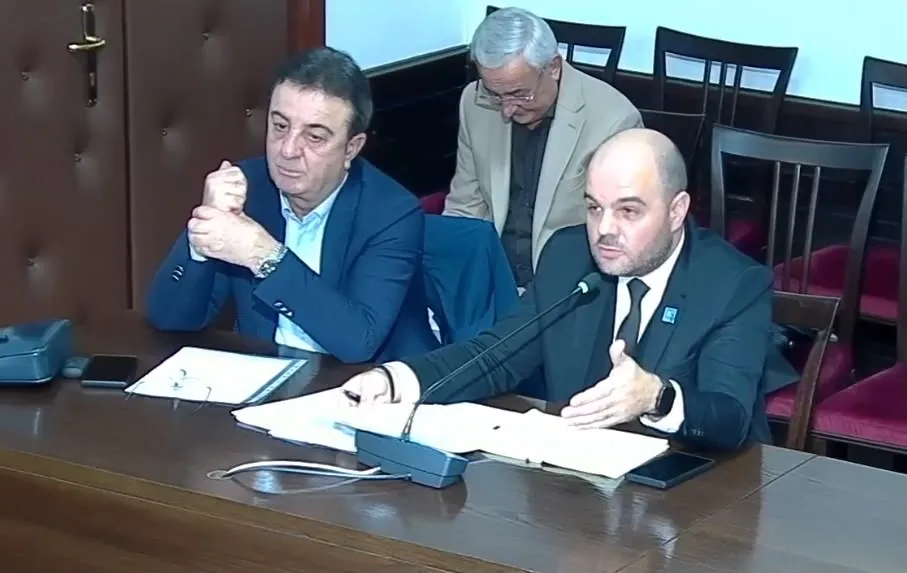
At the hearing held on November 12 at the Parliamentary Committee on Economy and Finance, the executive director of NAREA, Reinaldo Pipiria, stated that the proposals are based on data from the State Cadastre Agency, the tax administration, OSHEE, INSTAT, and the price index built by the association based on more than 25,000 market data points in 16 municipalities.
Pipiria emphasized that NAREA supports the objectives of formalizing the economy and aligning with the European Union, as well as several measures in the package, including maintaining the 15% profit tax, easing the tax on wages for the middle class, and setting a 6% VAT on basic food items.
However, according to him, some of the proposed changes require revision to avoid negative consequences for businesses and the real estate market.
1. The VAT threshold should not be lowered to 5 million lek, but set at 8.5 million
One of NAREA’s main demands concerns lowering the VAT registration threshold from 10 million to 5 million lek, starting from January 1, 2027.
According to Pipiria, this change will include around 17,500 new entities in the VAT scheme, which had only two months to prepare.
The executive director of NAREA argued that European legislation does not require Albania to lower the threshold to 5 million lek. Referring to Directive 2006/112/EC, as amended by Directive 2020/285, he emphasized that the threshold of 85,000 euros for exempting small businesses from VAT represents a ceiling and not a mandatory minimum threshold.
NAREA proposes that the VAT threshold should not be lower than 8.5 million lek.
The association also demands that for businesses with turnover from 8.5 to 10 million lek, the new obligation start on July 1, 2027, giving them more time to adapt.
Another proposal is the inclusion of a 10% tolerance for businesses that exceed the threshold during the year, according to the mechanism provided in the European directive.
At the same time, NAREA proposes establishing rules against the artificial fragmentation of businesses by calculating together the turnover of related entities.
According to Pipiria, this would enable the fight against informality without burdening small businesses that operate regularly.
2. 15% tax relief for property sales
Another important demand relates to the capital gains tax from the sale of real estate, which is currently 15%.
NAREA proposes changing the method of calculating this tax, taking into account inflation, the duration of ownership, and cases when the proceeds from the sale are used to purchase another property.
According to Pipiria, Albania is among the countries in Europe with the least favorable fiscal treatment for property sales, while in many European countries the main residence is exempt from tax after a certain period of ownership.
He also highlighted the progress of budget revenues from this tax.
According to data presented by NAREA, apartment sale contracts increased by 88% compared to 2024, while revenues from property sales tax reached 8.3 billion lek in just the first nine months of 2026.
This amount has exceeded the revenues generated throughout the entire year of 2025.
NAREA argues that reducing the tax burden could encourage more transactions, offsetting part of the fiscal effect through market expansion.
The proposal includes indexing the property value with inflation, reducing the tax depending on the years it has been held, and providing tax relief for cases of reinvestment.
According to the association, these measures would encourage the entry of old apartments into the market, limit speculation, and positively impact housing affordability.
3. Three years without rent tax and a reduction of the rate from 15% to 10%
NAREA has also called for a different approach to unoccupied homes, instead of the immediate imposition of an additional tax on vacant properties.
Pipiria argued that electricity consumption data show that a significant portion of the homes without consumption are located in areas with the highest rental demand pressure.
In Tirana, according to data presented by the association, only about one in ten family contracts shows no energy consumption, a level half the national average.
Meanwhile, a large portion of homes without consumption are located in Gjirokastër, Kukës, Shkodër, and Vlorë, areas affected by emigration.
NAREA estimates that around 45,000 homes are used just during the summer season.
For this reason, Pipiria warned that imposing a general tax on vacant apartments could impact emigrants’ properties, without necessarily having an effect on increasing the rental supply in Tirana.
NAREA proposes exempting from rent tax for 36 months apartments that enter the formal rental market.
After this period, the association demands that the long-term rental tax rate be reduced from 15% to 10%.
Regarding the additional tax for vacant apartments, NAREA proposes that it be considered only as a last resort, after 2029, when the Fiscal Cadastre becomes operational and a reliable property register exists.
Even in this case, the tax should only be applied in areas under high pressure on the housing market and should include exemptions for migrants’ homes.
The association argues that promoting registered leasing could bring more revenue to the budget in the medium term.
In an illustrative calculation, NAREA estimates that introducing 10,000 apartments with a monthly rent of 40,000 lek into the formal market would generate about 480 million lek in tax revenue per year, if the 10% rate is applied.
4. Property reference prices should be based on actual sales
Another issue raised by Pipiria concerns the methodology for determining the reference prices of real estate, which are used for fiscal purposes.
According to NAREA’s analysis, the prices at which sales transactions are carried out are generally 10–15% lower than the prices published on real estate portals.
The differences are also significant between different areas of the capital.
In Tirana, according to the association’s data, prices range from less than 1,300 euros per square meter in some areas, to over 3,000 euros per square meter in other areas.
For this reason, NAREA requests that reference prices be determined based on the actual transaction values and not simply on the prices announced in the market.
The association proposes dividing the territory into more detailed zones, updating reference prices at least once a year, and gradually implementing the changes.
Pipiria emphasized that data on this process exists, as during 2026 alone the State Cadastre Agency registered over 16,000 apartment sale contracts.
5. Fiscal changes must be notified at least six months in advance
NAREA’s fifth proposal relates to the predictability of fiscal policies.
Pipiria requested that any tax change affecting businesses be notified at least six months before it comes into effect.
Also, any change must be accompanied by a regulatory impact assessment, analyzing costs and benefits for businesses, citizens, and the state budget.
According to him, the acts of the 2027 Fiscal Package are not accompanied by such an assessment.
NAREA argues that implementing this standard would increase legal certainty and predictability for investors, without creating additional costs for the budget.
Concerns also about the 21% VAT and the dividend tax
In addition to the five main proposals, NAREA raised two other issues in the material submitted to the Assembly.
The first relates to the proposed increase of VAT to 21%, which would also affect real estate brokerage commissions.
The association warns that a higher tax burden could increase informality if control over unlicensed operators is not strengthened.
For this reason, stronger enforcement of law no. 9/2022 on real estate brokerage and the use of non-cash payments above a certain threshold is required.
The second issue concerns the proposed increase of the dividend tax from 8% to 15%.
According to NAREA, the combined tax burden on distributed profits would increase from 21.8% to around 27.8%.
The association requests a transitional period, proposing that the 8% rate be maintained for profits realized up to December 31, 2026, even if their distribution happens later.
Pepper: The goal is a more transparent market and more affordable housing
At the end of his speech at the Committee on Economy and Finance, the executive director of NAREA, Reinaldo Pipiria, announced that the proposals have been submitted in writing to the Ministry of Finance.
The association has expressed its willingness to contribute to technical working groups by providing market analyses and European expertise through CEPI, the European organization of real estate professions.
NAREA believes that market formalization should not rely solely on increasing the tax burden but also on incentives that encourage the registration of transactions, lawful leasing, and the circulation of properties.
The objective, according to Pipiria, is to create a more transparent and formalized real estate market, as well as to guarantee more affordable housing for citizens. /ekofin.al
