


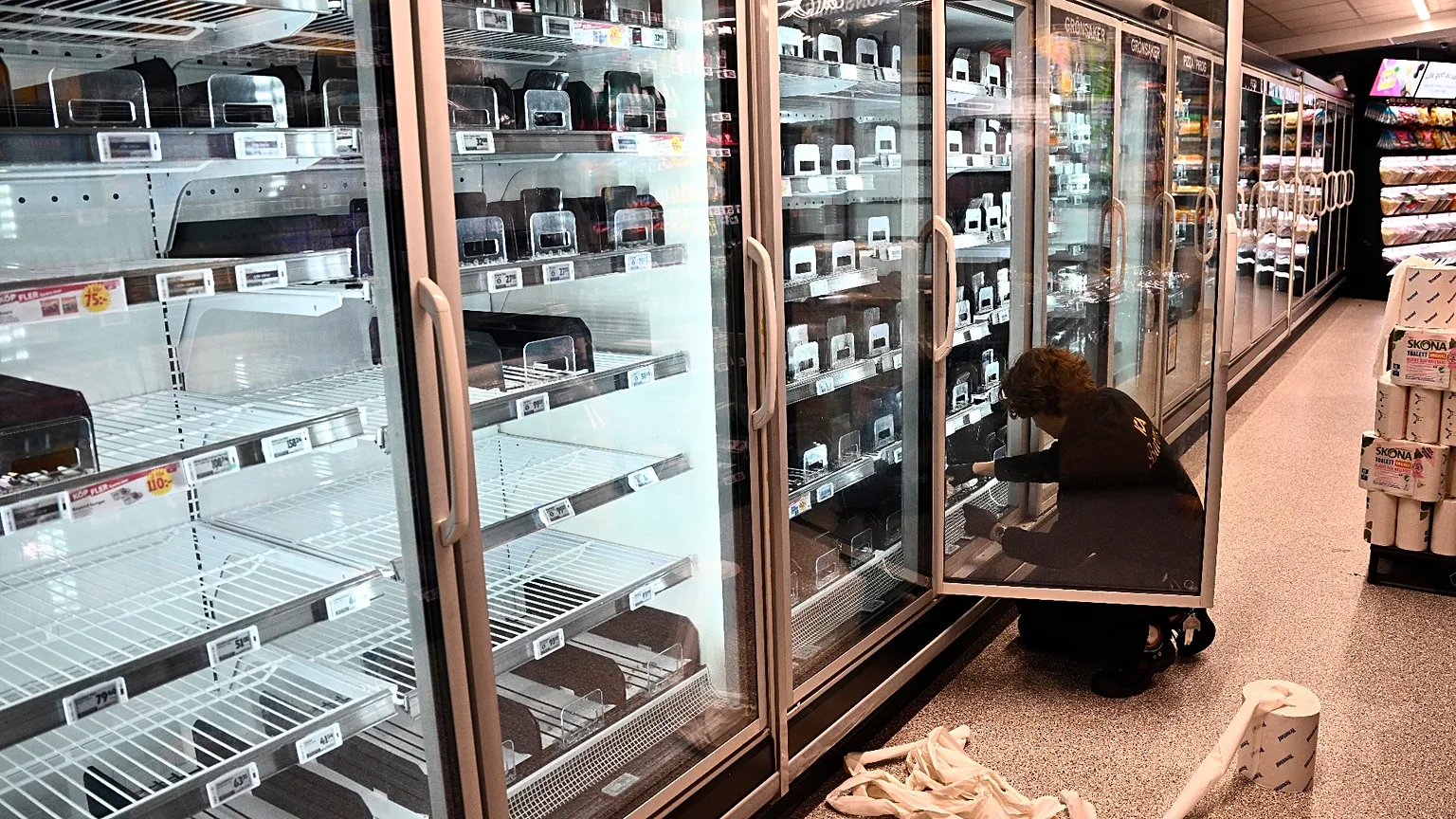
After recent cyberattacks on supermarket refrigerator systems, household appliances could be the next target. The warning was issued by the head of the European Union Agency for Cybersecurity (ENISA), who called on European countries to increase investments to protect themselves from ever greater threats in the digital space.
The warning comes at a time when Europe has faced a large number of cyber incidents in recent months. These developments have increased concerns not only among governments but also among citizens regarding society’s vulnerability to cyberattacks and the continent’s readiness to face future threats.
“Safety should not and cannot be treated as secondary,” Juhan Lepassaar, ENISA’s executive director, told AFP.
“Today it was refrigerators, tomorrow it could be routers, the day after tomorrow household appliances, and so on,” he warned.
According to Lepassaar, incidents can be prevented, but cybersecurity has considerable costs. The main question, according to him, is whether Europe is willing to invest enough to guarantee this protection.
“When we analyze the threat landscape, the situation is far from optimistic,” he emphasized.
Recent incidents include a security vulnerability in the PHP programming language, which forced some EU governments to temporarily take their websites offline to prevent exploitation by hackers.
Another wave of attacks hit refrigeration systems in supermarkets and blood banks in France and eight other countries, due to security vulnerabilities in outdated software.
Cyber threats are evolving and becoming increasingly visible, partly due to artificial intelligence. Organizations must now rapidly follow the developments of the most advanced AI models, in what is turning into a technological race between attackers and defenders of digital systems.
“Recent developments, both in the most advanced artificial intelligence models and in cyber incidents affecting cooling systems in the EU, highlight operational shortcomings and the need for rapid information exchange and coordination,” Lepassaar said.
ENISA describes artificial intelligence as a “power multiplier,” as it enables both hackers and companies protecting their systems to identify security vulnerabilities more quickly.
“Data processed by researchers show that the time between discovering a vulnerability and exploiting it for attacks is approaching zero,” the report states.
This means that, in the future, companies may have almost no time to protect their systems as a security vulnerability becomes known.
However, the report also highlights the positive impact of advanced artificial intelligence models on managing security vulnerabilities. AI can shorten the response time and installation time of protective updates, giving companies the ability to identify and fix problems before they are exploited by hackers.
In addition to using artificial intelligence to detect large-scale security vulnerabilities, the report warns that this technology will make existing cyberattack methods even more effective.
For example, AI tools enable attackers to carry out increasingly convincing scams through fake videos, audio, and fake messages using deepfake technology. These are used to deceive individuals or inject inaccurate data into systems with the aim of disrupting companies’ operations.
What drives cyberattacks?
The report reveals that 57.3% of cyber incidents during 2025 had ideological motives, driven by geopolitical developments such as Russia’s war against Ukraine and the conflict in the Middle East. However, most of these attacks had limited impact.
Meanwhile, 29.3% of incidents had financial motives, with ransomware-type attacks that lock systems or data and demand payment for regaining access and remain among the most damaging to businesses.
The report warns that the ease with which cybercriminals can exchange ransomware programs and other malicious tools is driving the development of an increasingly organized cybercrime ecosystem.
ENISA also notes that European countries have been targeted by attacks resembling operations organized by state actors. These aim at cyber espionage, information gathering, and intellectual property theft.
According to the agency, groups known as hacktivists, who carry out attacks for political or ideological motives, dominate the statistics in terms of the number of incidents.
However, most of their attacks have low impact and are carried out through DDoS methods, which involve overloading websites or systems with artificial traffic, temporarily making them inaccessible to users.
How is Europe responding?
The European Union has adopted a series of rules to strengthen cybersecurity in member states. However, ENISA assesses that further measures are needed, especially following the recent wave of incidents.
One of the main pillars of the European cybersecurity framework is the NIS2 Directive, which requires economic sectors to implement digital protective measures for critical infrastructure.
Although the directive began to be implemented in October 2024, it has still not been incorporated into the national legislation of all EU member states.
Recent attacks on refrigeration systems in nine EU countries showed that there are still gaps in cybersecurity in some economic sectors, as well as in how critical infrastructure is defined.
Cybersecurity experts explain that many businesses, including supermarkets, continue to treat digital security in the traditional way, focusing mainly on protecting financial systems.
Meanwhile, internet-connected infrastructure, such as cooling systems or technical equipment, often falls under the responsibility of maintenance teams, which have different budgets and priorities than the information technology departments.
Another instrument is the Cyber Resilience Act, adopted in 2024, which will be fully implemented from December 2027.
This act establishes obligations for incident reporting through a single portal, aiming to accelerate the exchange of information and coordination between institutions and economic operators.
Meanwhile, the Cyber Solidarity Act, which came into effect in February 2025, has strengthened the EU’s capacities for identifying, preparing for, and responding to cyber threats and incidents.
According to ENISA, this has been achieved through the creation of the European Cybersecurity Early Warning System, the Cybersecurity Emergency Mechanism, and the EU Cybersecurity Reserve.
Europe needs more cybersecurity and artificial intelligence experts
Despite the broad regulatory framework that Europe has built, one of the biggest problems remains the lack of qualified professionals to guarantee the protection of digital systems.
The ENISA report finds that organizations in almost all sectors of the economy are facing difficulties in attracting and retaining cybersecurity specialists.
According to a study on investments for the implementation of the NIS directive, published in 2025, 45% of surveyed organizations stated that they had difficulties finding professionals with the necessary skills in cybersecurity.
The report warns that this situation could deepen the skills gap in Europe, prioritizing wealthier organizations that have greater financial capacity to compete for a still limited number of specialists.
For this reason, ENISA calls on member states to take concrete measures to address the shortage of qualified personnel by expanding training programs and strengthening European initiatives in the field of cybersecurity./Adapted from Euronews, ekofin.al
