


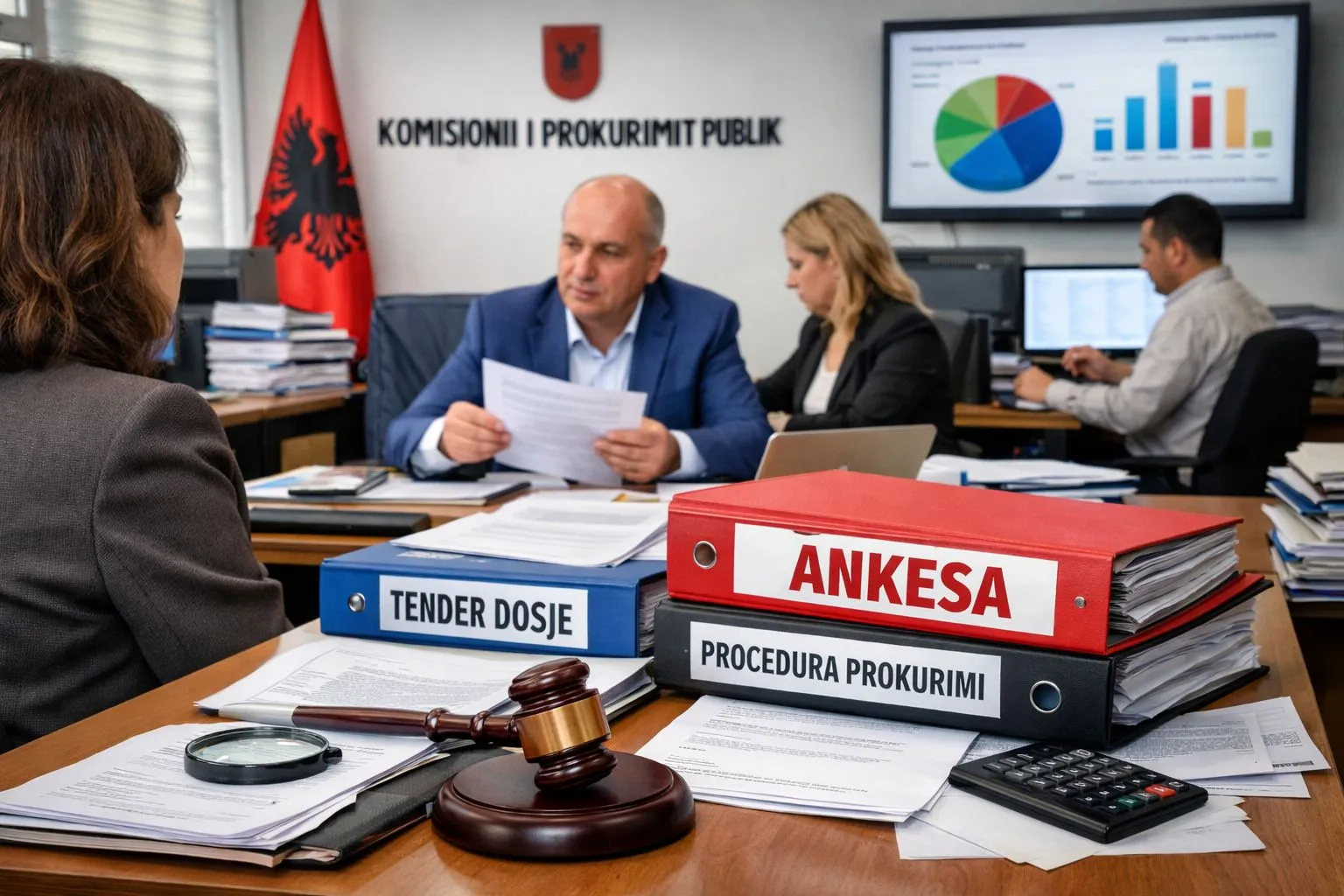
Businesses that contest the results or documents of public tenders may lose the appeal fee even when the Public Procurement Commission (PPC) partially accepts their complaint.
According to the current law no. 162/2020, the fee paid by the economic operator is refunded within five days from the decision of the PPC, if the complaint is fully or partially accepted.
The draft law with amendments to the public procurement law proposes to limit this rule by linking the refund of the fee to the impact that complaints have had on the decision-making of the contracting institution.
If the complaint is fully accepted, the business continues to benefit from a refund of the fee. But when the complaint is partially accepted, the payment will only be refunded if the decision changes the tender documents or the bid evaluation process.
If the PPC partially accepts the claims of an economic operator, but the decision does not change the result or the documents of the procedure, the fee will not be refunded.
This means that partial acceptance of the complaint will no longer be sufficient, in itself, for the company to recover the amount paid.
The PPC’s decision, three members regardless of the tender value
The draft law also changes the rules for reviewing complaints by the Public Procurement Commission.
According to the current law, the PPC reviews complaints when at least three of its five members are present. However, for some declarative decisions related to procedures above the low monetary threshold, decision-making by all five members is required.
With the proposed changes, the review and decision-making on complaints will be made by at least three members, regardless of the value of the procurement procedure.
One of the participating members must be the chairman or vice-chairman, while decisions are made by majority vote.
The draft law also stipulates that if new leaders or members have not been appointed by the end of the mandate, those in office may continue to exercise their functions, but for no more than six months after the end of the mandate.
Deadlines for contesting signed contracts are changing
The amended provisions foresee the possibility of contesting public contracts once they have been signed.
The current law stipulates that when a contract is concluded without the required procurement procedure or the relevant notices have not been published, economic operators may appeal within 60 days from its establishment, but no later than six months from the date of signing.
The draft law proposes a new regulation for requests aimed at declaring contracts invalid.
In cases where the winner’s notice has been published or the contracting authority has informed the bidders about the contract conclusion, fulfilling the legal requirements for the reasoning of the decision, the request for review of invalidity must be submitted within 30 calendar days. The deadline is calculated from the day after the publication of the notice or the relevant information.
For other cases, the draft law foresees the submission of the request before the end of a period of at least six months from the day after the contract is signed. The wording does not explicitly specify a single maximum deadline, which requires clarification to ensure clarity in implementation.
The current law now recognizes cases when a contract can be declared absolutely null and void, including its signing under conditions of conflict of interest, violation of the right to appeal, or non-compliance with a decision of the PPC.
The draft law preserves these grounds but regulates in more detail the procedure and deadlines for reviewing requests.
Tenders without announcement, the notices must also include the reasoning
The changes also affect negotiated procedures without prior publication of the contract notice.
The current law stipulates that when a voluntary transparency notice is published, economic operators have 10 days to challenge the conditions of use of this procedure and the tender documents.
The proposed amendment specifies in more detail the information that the notification must contain, including the subject of the contract, the reasoning behind the decision to use the procedure without prior publication, and the data of the selected economic operator.
The draft law also sets out the conditions under which a contract may not be declared invalid if the authority has published the voluntary transparency notice and has respected the waiting period of at least 10 calendar days before signing.
The PPC will continue to have the possibility not to declare a contract invalid when such a decision would harm essential public interests. In these cases, alternative measures may be applied, including fining the contracting authority or shortening the contract term. The maximum fine limit remains 10% of the contract value. /ekofin.al
