


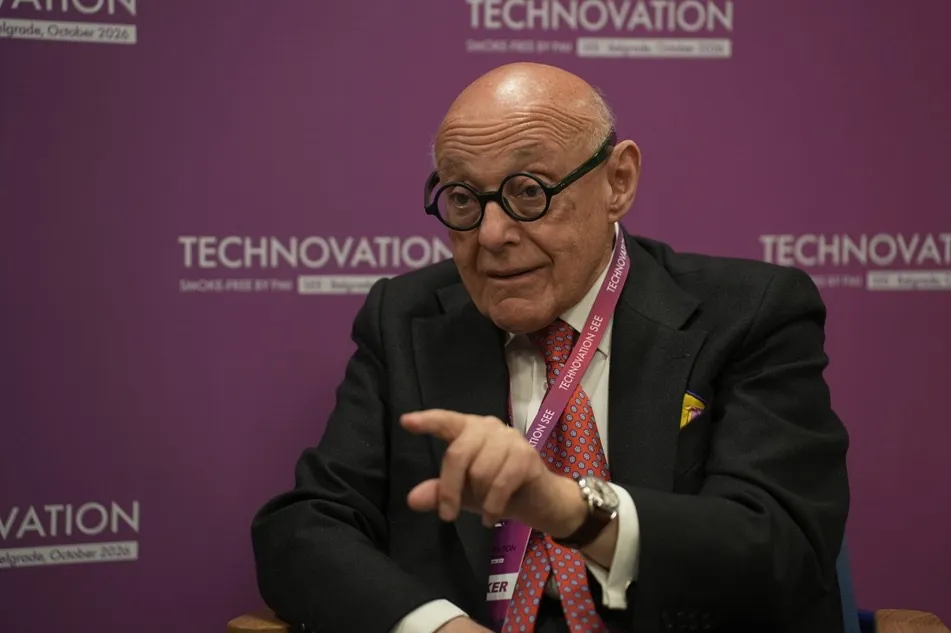
“Don’t start smoking, or quit.” This is the message that Dr. Peter Harper, a physician and oncologist, places at the core of every public health discussion. In an interview during the “Technovation Smoke Free by PMI” conference in Belgrade, he emphasizes that quitting smoking remains the best choice. But health policies, according to him, must also take into account adults who, despite efforts, continue to smoke.
According to Harper, a significant part of the harm from conventional cigarettes is linked to burning tobacco and inhaling smoke, which contains toxic and carcinogenic substances. For this reason, he supports the scientific discussion about harm reduction for adult smokers who do not quit. However, he makes a crucial distinction: lower exposure to certain harmful substances does not mean a product is risk-free. The health impact should be assessed through evidence and measurable results.
In the interview, the oncologist emphasizes that quitting smoking brings benefits at any age. Therefore, according to him, harm reduction should not be seen as a substitute for quitting smoking, but as part of a broader discussion on disease prevention. He calls for decision-making to be based on scientific data and a careful assessment of benefits and risks.

Another obstacle, according to him, is stigma. Harper notes that nicotine addiction and the difficulty in changing behavior cannot simply be treated as a lack of willpower. Blaming and feelings of shame do not help patients, he argues. On the contrary, open communication, without prejudice and adapted to individual circumstances, can create more opportunities for support and change.
Harper links this approach to a greater challenge for healthcare systems: moving from treating diseases after they appear to their prevention. As an example, he cites HPV vaccination, which has changed the possibilities for preventing cervical cancer and other diseases related to this virus. He emphasizes that the benefits of prevention often take decades to become visible, longer than usual political decision-making cycles.
The protection of minors remains a clear limit. Harper calls for regulation of advertising and the sale of tobacco and nicotine products, effective controls, and restrictions near schools. He also warns about unregulated products, about which consumers may not know what they contain. According to him, the actual enforcement of the rules is just as important as their very existence. Protecting young people, supporting quitting smoking, and evidence-based discussion, he emphasizes, must go hand in hand.
