


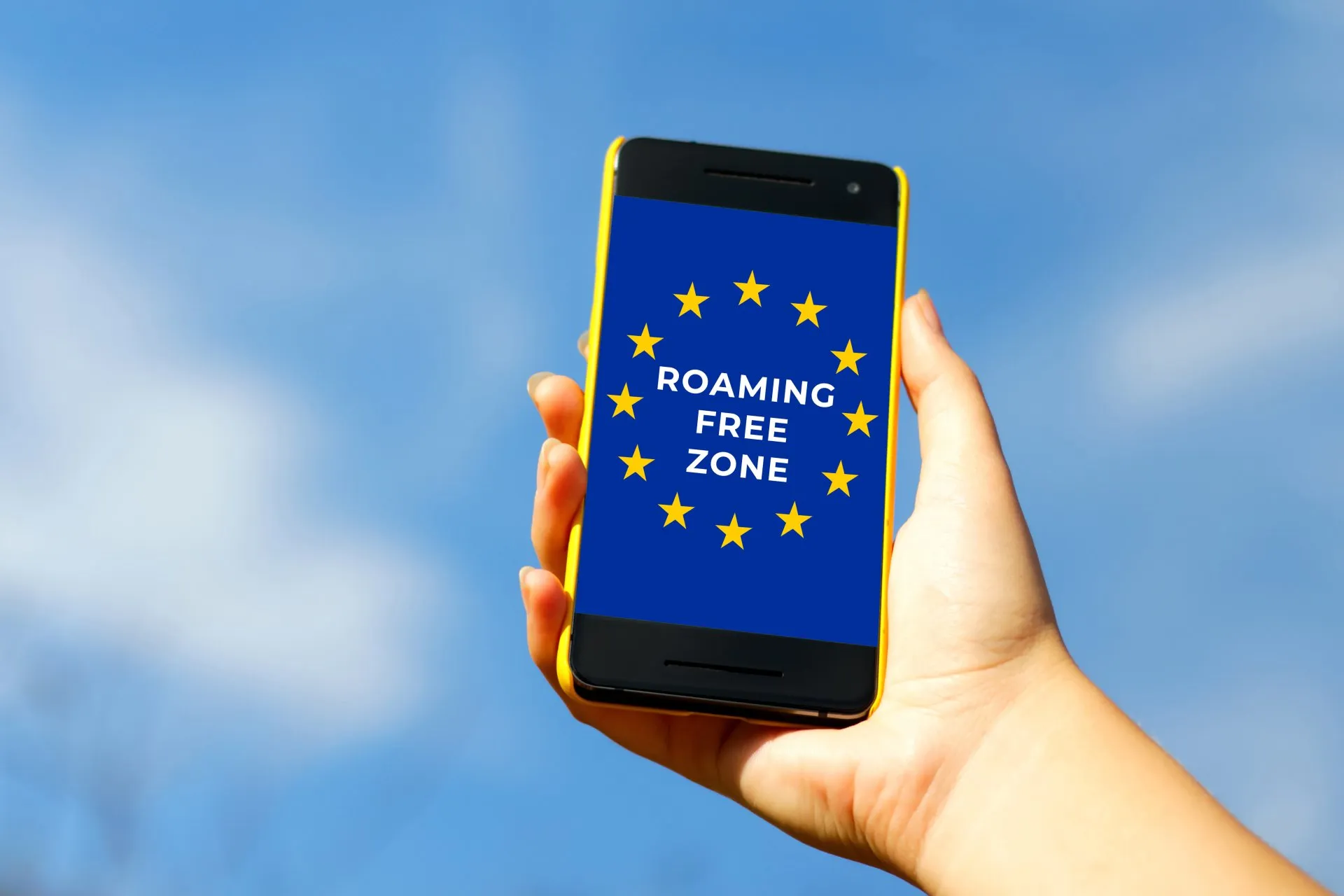
The European Commission has officially started negotiations with Albania and five other Western Balkan countries to include them in the European “Roam Like at Home” regime, a mechanism that allows citizens to use their mobile phones while traveling abroad without paying additional roaming fees.
The initiative includes Albania, Kosovo, Montenegro, North Macedonia, Serbia, and Bosnia and Herzegovina and represents another concrete step towards the region’s integration into the European Union’s single market.
According to the European Commission’s announcement, the opening of negotiations comes after the commitment declared by the President of the European Commission, Ursula von der Leyen, during her visit to the Western Balkans in October 2026.
What will change for the Albanian citizens?
Albania’s inclusion in the “Roam Like at Home” regime means that Albanian citizens traveling to European Union countries will be able to make calls, send messages, and use mobile internet without additional roaming charges, according to the terms of their national package and fair use rules.
The same principle will also apply to citizens of EU countries visiting Albania.
Currently, using mobile services while traveling between Albania and EU countries involves additional costs, depending on the operator and the subscription package.
The removal of these fees is expected to bring direct benefits to citizens, tourists, emigrants, and businesses that have ongoing relations with European countries.
For Albania, where tourism and the international movement of citizens have a significant economic weight, this measure will reduce communication costs and facilitate the use of digital services during travel.
Negotiations have started, but the removal of tariffs does not take effect immediately.
The European Commission clarifies that bilateral negotiations with the six Western Balkan partners have already been opened.
However, the benefit from the European roaming regime will not be automatic.
First, the relevant agreements must be finalized, and the countries of the region must fully align their regulatory framework with the European Union’s roaming legislation.
Only after fulfilling these conditions will the European Commission propose to the EU Council the expansion of the European roaming area to include the Western Balkan countries.
The Council of the European Union had authorized the start of negotiations as early as June 2026.
The agreements will be based on the existing framework of Stabilization and Association Agreements, which aim to strengthen economic integration and cooperation between the EU and the countries of the region.
At the moment, the European Commission has not set a specific date for when Albanian citizens will be able to benefit from the complete removal of roaming charges with the EU.
How does the European “Roam Like at Home” model work?
The “Roam Like at Home” regime is applied in the 27 member countries of the European Union, as well as in Iceland, Liechtenstein, and Norway. Ukraine and Moldova are also included in this regime.
In practice, subscribers can use their mobile services while traveling in participating countries under conditions similar to those in their country of origin.
European rules also aim to guarantee the quality of service.
Since July 1, 2022, the improved roaming framework in the EU requires users to have, when technically possible, the same connection quality as in their home country, including internet speed and access to 5G networks.
Operators must inform subscribers about possible changes in service quality during trips abroad.
However, mobile internet usage may be subject to fair use policy restrictions, especially for unlimited or very low-cost internet packages.
Another step towards the European single market
The expansion of the “Roam Like at Home” regime in the Western Balkans is considered part of the gradual integration process of the region into the European single market, ahead of full membership in the European Union.
For Albania, the process will also require adapting national electronic communications rules to European standards, as well as the involvement of mobile operators in implementing the new mechanism.
In this regard, the role of the Electronic and Postal Communications Authority (AKEP) will be important for regulatory harmonization and monitoring the implementation of the relevant conditions.
The start of negotiations represents an important development for Albania, but the concrete benefits for citizens will depend on the conclusion of agreements, alignment with European legislation, and the final decision of the EU institutions. /ekofin.al
