


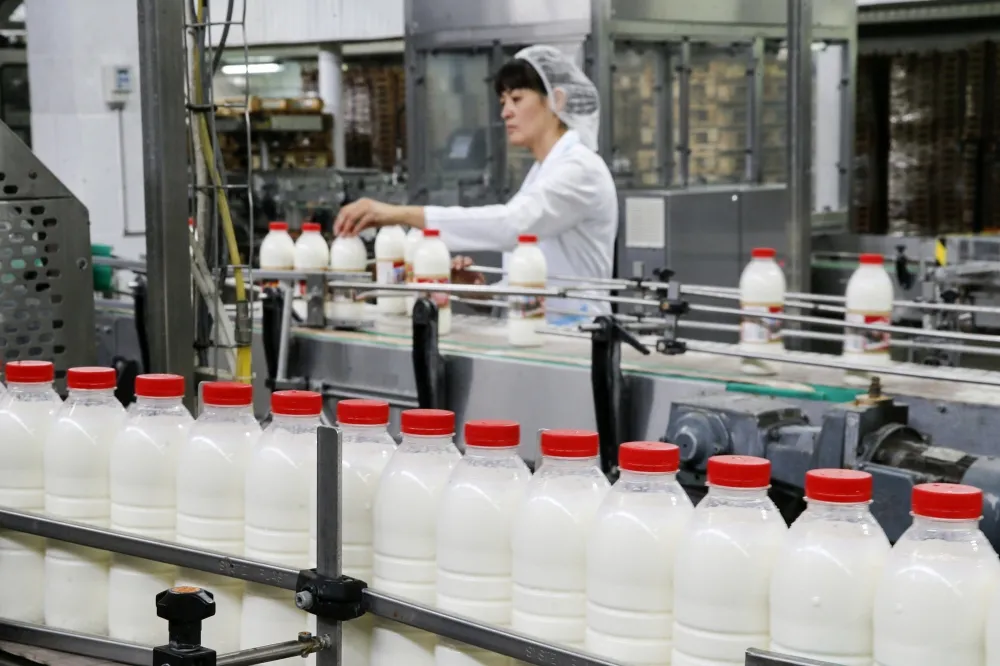
The Dairy Processing Industry Association (IPQ) has raised concerns about the fate of raw milk quantities rejected by factories because they do not meet food safety criteria. Through a public statement, the association calls on the responsible authorities to trace returned milk to suppliers to prevent it from being sold for consumption or processed through other channels.
The concern of the processing industry relates to the lack of information about milk management as it is rejected by factories, raising questions about supply chain control and the safety of products that can reach consumers.
In its response, the Dairy Processing Industry Association clarifies that member factories carry out inspections of raw milk for a range of parameters directly related to food quality and safety.
These controls include the presence of aflatoxin M1, antibiotic residues, somatic cell count, and overall microbial load. According to the association, any amount of milk found outside the allowed parameters is rejected and returned to the supplier.
But it is precisely at this stage that the industry raises its main concern: What happens to the rejected milk after it leaves the factories?
The association requests the intervention of the responsible authorities to verify the destination of these quantities and how they are managed after return. “IPQ expresses concern about where the rejected milk ends up after return. We ask the responsible authorities to track this quantity and verify how it is managed, to prevent milk that does not meet the criteria from being sold for consumption or ending up in processing through other channels,” the association’s statement reads.
This requirement highlights the need to strengthen traceability throughout the entire milk production and trading chain, from livestock farms to processing factories and the final market. If milk that does not meet acceptance standards is returned to circulation without the necessary controls, risks may arise for food safety and consumers.
However, the association’s response does not present concrete documented cases of trading refused milk, but calls for verification of its destination to prevent such a practice.
One of the main control elements in the processing industry is aflatoxin M1, a substance that can appear in milk when animals consume foods contaminated with aflatoxins.
Its presence above the allowed limits poses a problem for food safety, so controlling the raw material is essential to prevent unsuitable milk from entering the processing process.
Another important parameter is antibiotic residues, which can be found in milk if the waiting periods after treating the animals are not respected.
Meanwhile, the somatic cell count and microbial load are important indicators of the health of the animals’ udder, milking hygiene, and milk storage conditions.
The control of these parameters aims to ensure that the raw material entering the processing plants complies with safety and quality standards.
In its response, the Dairy Processing Industry Association emphasizes that it systematically works with farmers to improve production conditions.
This includes proper storage of corn, silage, and other livestock feeds, monitoring breast health, improving hygiene during milking, and rapid cooling of milk after production.
According to the association, the goal is for the milk produced in Albania to sustainably meet the quality and food safety standards of the European Union.
Meeting these standards is important not only for consumer protection but also for the competitiveness of the domestic industry and the prospect of expanding markets for Albanian dairy products. /ekofin.al

