


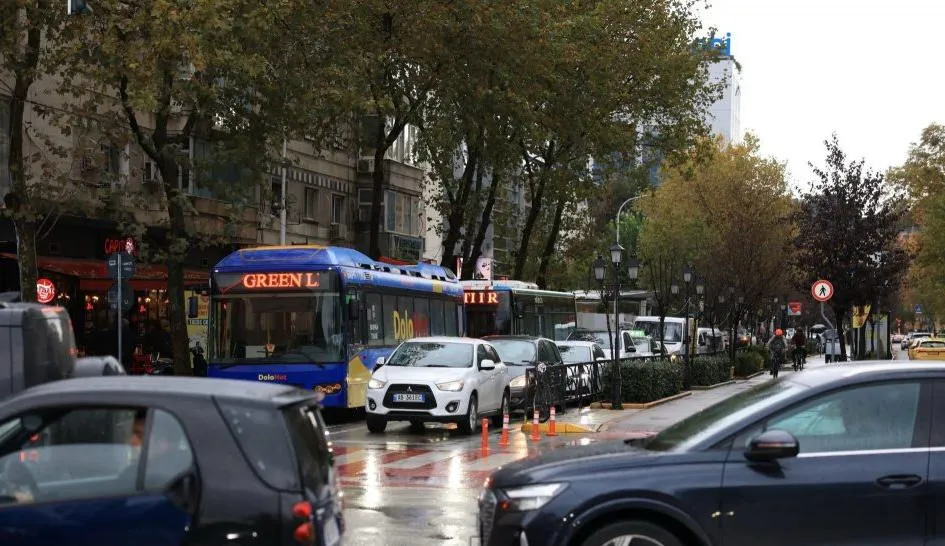
Rainfall and the malfunctioning of some traffic lights, damaged during the protests, have caused major difficulties in vehicle circulation in Tirana on the morning of Monday, November 9. Heavy traffic has caused considerable delays for citizens traveling to workplaces, including private sector professionals and public administration employees.
This morning, the capital faced a difficult road traffic situation, where the combination of rainfall, traffic flow during peak hours, and non-functioning traffic lights has caused blockages and very slow movement.
The problem was especially felt during the early hours of the day, when thousands of citizens travel towards public institutions, offices, businesses, and other employment centers.
As a result of traffic delays, many professionals and public administration employees arrived late at their workplaces, also affecting the normal start of daily activities.
The traffic lights damaged by the protests worsen the situation
One of the factors that has contributed to the worsening of traffic is the malfunctioning of traffic lights at several intersections in the capital, following the damage caused during the protests.
In conditions where traffic has been burdened by rainfall, the lack of functional signage at intersections has further complicated vehicle movement and created problems in managing road flow.
This situation highlights the importance of the swift return to traffic light operation and taking measures to normalize traffic, especially during peak hours.
Ten days of rainfall, a risk of repeated heavy traffic
The situation becomes even more concerning due to the forecast of a long period of rainfall.
This Monday marks the first day of a 10-day period during which precipitation is forecast, which could create ongoing difficulties for vehicle movement in the capital.
If the problems with the traffic lights and traffic management are not resolved, morning delays may recur in the following days.
Traffic, a cost to the economy and productivity
Beyond the daily concern for vehicle drivers, heavy traffic also has an economic cost.
Delays in arriving at workplaces affect the organization of business activities, the functioning of public administration, and employee productivity.
Time lost in traffic, additional fuel consumption, and delays in service delivery constitute direct and indirect costs for the capital’s economy.
The situation created this Monday brings back into focus the need for more efficient traffic management in Tirana, swift interventions in the damaged road signage infrastructure, and preventive measures for days of heavy rainfall.
With a long period of rain ahead, normalizing traffic remains an immediate challenge for the responsible institutions and a necessity for the thousands of citizens who travel daily in the capital. /ekofin.al
